


President Donald Trump said in an interview that he is open to declaring a national security emergency concerning the 2026 midterm elections, according to reports published earlier this week.
When asked whether he would exercise his authority to enact a national security emergency for the upcoming elections, Trump responded, "Stranger things have happened. OK, I'll leave it at that," according to NTD [1]. The question came from conservative commentator and Real America's Voice host Wayne Allyn Root, according to Just the News. Root said that if Trump declared a national security emergency and federalized the elections, he would get what he wanted without the Senate's assistance, the report stated [2].
Background: Election Fraud Claims
Trump has repeatedly disputed the 2020 election results. In a July 17 primetime address, he used the speech to dispute his 2020 loss and appeal for more restrictive voting laws ahead of the midterms. The same report described Trump's statements as "debunked theories" and said his amplification of those claims preceded the Jan. 6, 2021, attack on the U.S. Capitol [3][13].
The latest comments came as Trump and his allies in Congress push for voter ID legislation, according to 100percentfedup.com. The report said Trump is starting to entertain "more drastic possibilities" after some Republicans joined Democrats in opposing the bill [4]. Calls for emergency action over elections predate the current midterm cycle.
In December 2020, NaturalNews.com reported that retired Air Force Lt. Gen. Thomas McInerney said Trump should declare a national emergency and seize Dominion Voting Systems machines, and that "both the Insurrection Act and the September 2018 Executive Order concerning election fraud allow for Trump to take emergency action in the event of an attempted coup [5]." Another NaturalNews.com report from the same period said then-Director of National Intelligence John Ratcliffe confirmed "foreign interference in the US election [6]."
Reactions From Officials and Legal Experts
An Associated Press report said Trump used the July address to elevate his "years-long push to raise doubts about the legitimacy of U.S. elections," described his claims as debunked, and said Trump's failure to accept his loss contributed to the Jan. 6 attack on the Capitol [3].
In the courts, Trump's election-related executive actions have met a mixed response. The First U.S. Circuit Court of Appeals sided with 23 Democrat-led states and blocked the administration from enforcing "key pieces" of the president's election integrity order, according to ZeroHedge [7]. The administration then asked the Supreme Court to allow it to fully implement the order, according to 100percentfedup.com [8].
Legal Limits of Emergency Declarations
Trump did not identify an emergency statute or an executive order that would authorize a declaration related to the elections, according to NTD [1]. The reports published this week did not say what legal authority, if any, would permit the federal government to change election procedures through an emergency declaration.
The administration has instead pursued election-related changes through an executive order signed in March. A May ruling by U.S. District Judge Carl Nichols denied a request to block key pieces of the order, according to 100percentfedup.com [9]. In July, the First Circuit blocked portions of the order in 23 states, and Republican-led states filed an emergency application with the Supreme Court seeking to restore it, according to the Epoch Times [10].
Status of Trump's Proposal
As of the latest reports, Trump had not declared a national emergency or released a formal election plan [1][2]. Trump's remarks did not outline a timeline or legal basis for such a declaration, according to NTD [1].
Neither report indicated that the White House had prepared an emergency declaration or that campaign officials had provided additional details. The question was posed by Root during an interview, and Trump's response was limited to the "stranger things have happened" comment, according to Just the News [2] [13].
Root said that declaring an emergency and federalizing the elections would allow Trump to achieve his objectives without Senate approval [2]. The interview exchange came as Trump was entertaining "more drastic possibilities," according to 100percentfedup.com [4].
The exchange touches on a broader debate over whether election administration should remain with state and local officials or be subject to federal emergency powers. Some writers have linked election-security disputes to earlier federal investigations.
Sen. Amy Klobuchar (D-MN) wrote in "Antitrust" that election-security concerns were shaped by the Mueller report and by Trump's statement in 2019 that he would accept foreign dirt on opponents [11]. U.S. Attorney for the District of Columbia Jeanine Pirro wrote in "Don't Lie to Me And Stop Trying to Steal Our Freedom" that the Federal Bureau of Investigation's 2016 investigation was based on what she called "the whole phony Russian collusion delusion" [12].
References
- NTD. "Trump Open to Declaring National Security Emergency for Elections". August 12, 2026.
- Just the News. "Trump says 'stranger things have happened' than declaring national security emergency for elections". August 11, 2026.
- The Times of Israel. "Trump raises doubts about US election integrity ahead of midterms". July 17, 2026.
- 100percentfedup.com. "President Trump Addresses Possibility Of Declaring Emergency Ahead Of Midterms". August 12, 2026.
- NaturalNews.com. "Gen McInerney says Trump needs to declare national emergency seize all Dominion machines". December 9, 2020.
- NaturalNews.com. "Situation Update Dec 17th - Ratcliffe Confirmation of Foreign Interference Hands Trump Justification to SEIZE ba". December 17, 2020.
- Zero Hedge. "Appeals Court Blocks Trump Mail-In Voting Order In 23 Democrat-Led States, Setting Up SCOTUS Fight". July 27, 2026.
- 100percentfedup.com. "Trump Administration Files Emergency Request To Supreme Court Over Mail-In Ballots". July 28, 2026.
- 100percentfedup.com. "In Surprise Move, Federal Judge Sides With President Trump In New Election Integrity Ruling". May 28, 2026.
- The Epoch Times. "Republican States Ask Supreme Court to Restore Trump’s Election Integrity Order". July 30, 2026.
- Amy Klobuchar. "Antitrust”.
- Jeanine Pirro. "Don't Lie to Me And Stop Trying to Steal Our Freedom".
- TheHill.com. Max Rego. "Trump on declaring national security emergency for elections: 'Stranger things have happened'". August 11, 2026.
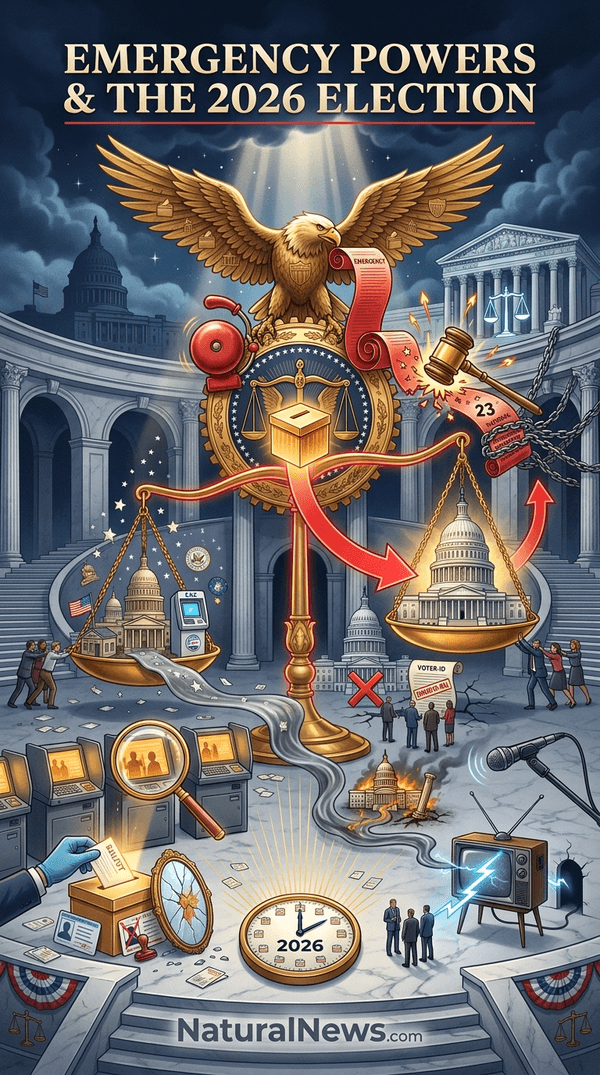
Explainer Infographic






Please contact us for more information.