


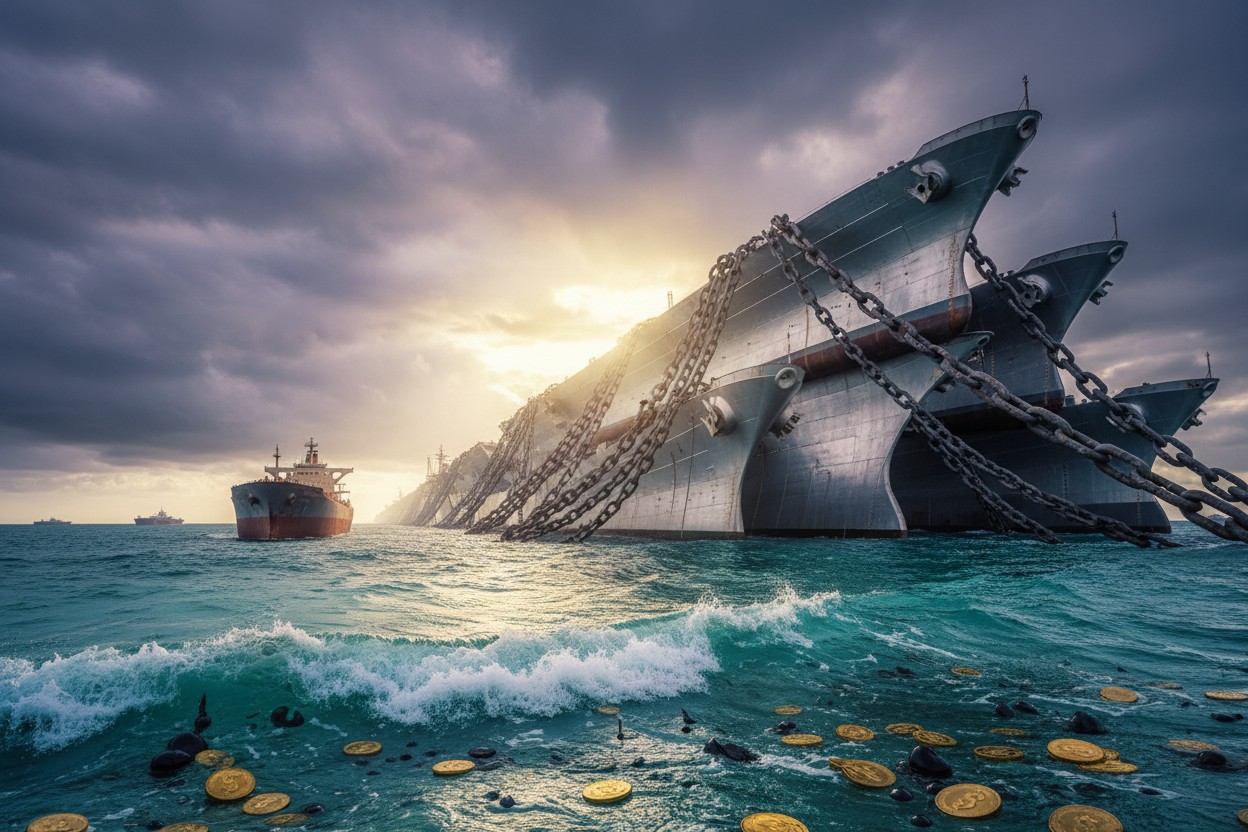
President Donald Trump's limited airstrike campaign and repeated threats have failed to force Iran to the negotiating table, according to officials and analysts, as the administration shifts toward economic warfare.
Diplomatic breakthroughs have repeatedly stalled, leading the White House to rely on sanctions and a naval blockade aimed at reopening the Strait of Hormuz. Iran's economy is severely damaged, with rising inflation, reduced energy revenues and limited access to foreign currencies, according to reports [1][2].
Trump said in an interview with Real America's Voice that aired Tuesday, Aug. 11 that the United States has three "powerful strategies" against Iran: continue to negotiate while Iran's economy struggles, carry out military strikes or beat Iran economically [1]. The regime's economy is "not sustainable," he said [1].
Iran's rial fell to a record low of approximately 1.8 million against the U.S. dollar in late April, according to currency-tracking websites such as Bonbast and AlanChand [3]. Trump said on Aug. 9 that the United States is "only semi-negotiating" with Iran, adding, "We are just watching Iran with its huge inflation and the fact they have no money" [2].
The U.S. Department of the Treasury announced sanctions on 14 individuals and companies on April 21 for aiding Iran in obtaining weapons in violation of international sanctions [5]. Treasury Secretary Scott Bessent stated that the Iranian regime must be held accountable for its actions [5]. A maritime intelligence firm reported on April 29 that a group of U.S.-sanctioned oil tankers were falsifying their location data to appear anchored off Iraq while secretly loading Iranian crude, according to Windward AI [6].
Experts Split on Whether Pressure Campaign Can Force Iranian Capitulation
Experts are divided on whether the pressure campaign can force Iranian capitulation. William Wechsler, former deputy assistant secretary of defense, said the strategy is about buying time, but Iranians believe they can outlast the United States because they have "guns that they can use against their people."
Janatan Sayeh of the Foundation for Defense of Democracies said the administration is being "reactive" and that Iran "would sabotage the entire country before compromising," though pressure could open avenues for protests. Jonathan Ruhe of JINSA called the sanctions-and-blockade approach "an admission of failure" with no real prospects for success, saying Iran's clock has more time than the president's.
Sanctions historically have been countered "in virtually every case" by sanctions-busting networks, according to R.T. Naylor's study of economic warfare [7]. U.S. intelligence officials have assessed that current strikes on Iran are unlikely to change the regime's behavior, according to leaks reported in July [8]. Tehran appears to be preparing to fight through the end of Trump's presidency, according to an analysis published by Responsible Statecraft [9].
Iran Asserts Control of Strait of Hormuz Despite U.S. Claims of "Wall of Steel"
Maritime trafficking firm Kpler reported 14 successful crossings of the Strait of Hormuz on Tuesday – far below prewar averages of more than 100 ships per day, as Iran uses missiles and drones to hit transiting vessels. Iran's Persian Gulf Strait Authority said the strait remains blocked and will not reopen until its conditions are accepted, disputing U.S. claims of control.
Iran's Islamic Revolutionary Guard Corps is holding the line, reiterating that the strait will reopen to international shipping only after the United States accepts all of its conditions, according to reports [10]. Iran is betting that military pressure will ultimately force Washington to accept its control over the waterway, and that time is on its side, according to the Times of Israel [11].
A cargo ship was reported hit in the strait by an "unknown projectile" in early August after Trump said Tehran had a "last chance before decapitation" to sign a deal [12]. Trump stated on Truth Social that the United States has "total control" over the strait, calling the blockade a "WALL OF STEEL."
Limited Options Remain as Ceasefire Collapses and Tit-For-Tat Strikes Continue
The fragile ceasefire fizzled in early July, and Trump authorized airstrikes targeting Iranian military command centers, missile and drone facilities and coastal defense sites, according to U.S. Central Command. The U.S. military launched strikes against Iran every day for about two weeks straight before Trump announced a stop in the attacks, saying they would lead to more negotiations [13].
Trump extended the ceasefire on April 21 at the request of Pakistan's leadership, tying the extension to Iran producing a unified proposal [14]. The pattern of threatening major escalation and then walking it back has repeated throughout the five-month-old war, according to an Associated Press analysis [15].
Wechsler said Trump should keep an aircraft carrier group in the region, rebuild and rearm Gulf outposts and accelerate arms shipments to allies, but noted the president has done none of those things. Ruhe said reopening the strait militarily may be required, arguing the United States must be willing to run risks given the costs of Iran keeping the waterway closed.
Conclusion
Mediators describe a stalemated situation amid what is widely seen as a Washington retreat from military confrontation, leaving Iran to press its own vision of management over the Strait of Hormuz with Oman, according to a report published Aug. 12 [16]. Iran has entered a "survival economy" as it rejects U.S. pressure, the report said [16].
Analysts have noted that U.S. geoeconomic supremacy has historically been "rapidly converted into more militarized geopolitical power," as Glenn Diesen writes in "Russia's Geoeconomic Strategy for a Greater Eurasia" [17]. Whether the economic campaign succeeds where airstrikes and diplomacy have not remains an open question, according to officials and analysts cited in this report.
References
- The Epoch Times. "Trump Outlines Strategies Against Iran, Says US Controls Iran's Money". August 11, 2026.
- Zero Hedge. "Tehran Doubles Down On Hormuz Demands As Hardline IRGC Commander Promoted To National Security Chief". August 10, 2026.
- Garrison Vance. "Iran's Rial Hits Record Low Amid U.S. Blockade and Threats of Military Response". NaturalNews.com. May 1, 2026.
- Patrick Lewis. "U.S. Enforces 'Ironclad Blockade' on Iran in Escalating Show of Force". NaturalNews.com. April 26, 2026.
- NaturalNews.com. "U.S. Treasury Imposes Sanctions on 14 Entities for Aiding Iranian Weapons Procurement". April 22, 2026.
- Garrison Vance. "Iranian Oil Smuggling Scheme Uses Fake Iraqi Ship Identities to Evade U.S. Blockade, Intelligence Firm Says". NaturalNews.com. May 1, 2026.
- R.T. Naylor. "Economic Warfare: Sanctions, Embargo Busting, and Their Human Cost".
- Zero Hedge. "CIA Distances Itself From Trump's Iran War With Media Leak". July 22, 2026.
- Responsible Statecraft. "Surprise strikes signal Iran is digging in for a long war". August 6, 2026.
- Zero Hedge. "Trump Says 'We Are Low Keying It' With Iran As Options For Walking Away Have Drastically Narrowed". August 9, 2026.
- The Times of Israel. "In risky gamble, Iran bets control over Strait of Hormuz can force Trump to bend". August 8, 2026.
- RT. "Cargo ship struck in Hormuz after Trump's 'decapitation' threat". August 4, 2026.
- The Epoch Times. "Trump Says US 'Only Semi-Negotiating' With Iran". August 9, 2026.
- Willow Tohi. "U.S.-Iran Ceasefire Extended as Pakistan Brokers Diplomatic Pause; Analysts Warn of Fragile Calm". NaturalNews.com. April 23, 2026.
- The Times of Israel. "Déjà vu in Iran: Trump keeps threatening major escalation, only to walk it all back". August 3, 2026.
- Zero Hedge. "Iran Rejects US Pressure, Enters 'Survival Economy' As Mediators Cite 'Absolutely No Progress'". August 12, 2026.
- Glenn Diesen. "Russia's Geoeconomic Strategy for a Greater Eurasia".
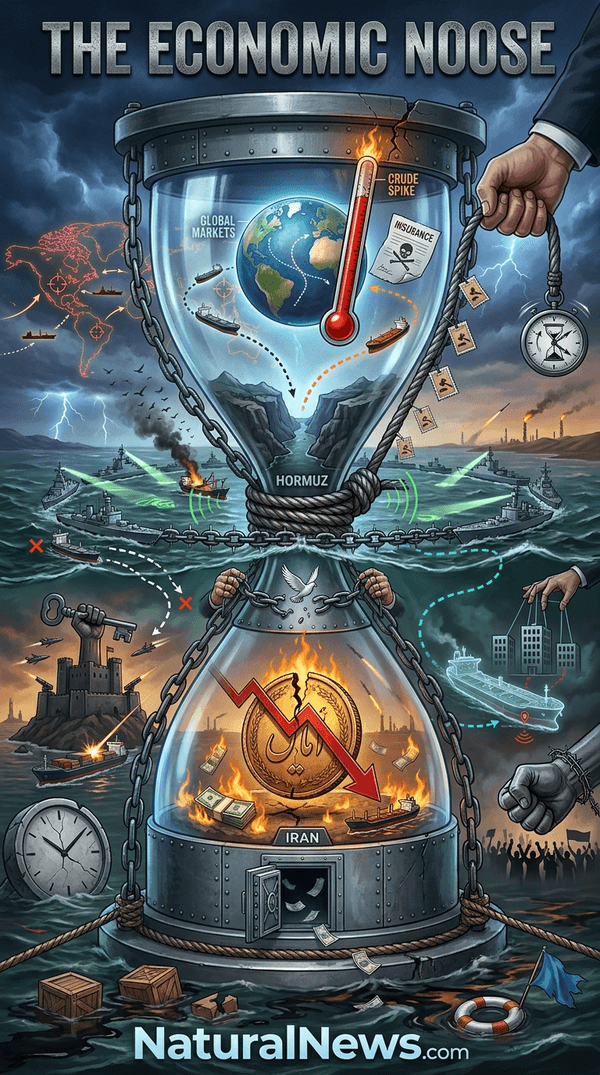
Explainer Infographic









Please contact us for more information.