


Report Traces U.S.-Iran Conflict to 1953 Coup
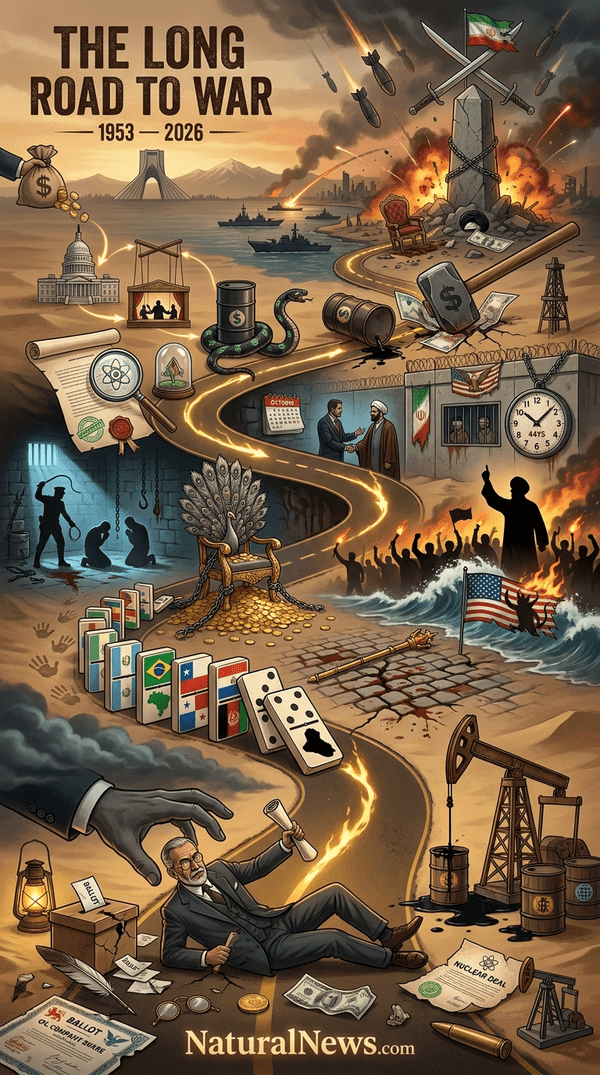
A report titled 'The Long Road to War,' published Aug. 11, 2026, by David Kasper on Antiwar.com traces the current war between the United States and Iran to events dating back more than 70 years. The report said mainstream media coverage presents the conflict as a dispute over terrorism and nuclear weapons while omitting the historical context. Kasper identifies the 1953 CIA-backed coup against Iranian Prime Minister Mohammad Mossadegh as the foundational event behind more than a half-century of antagonism.
Iran, known for most of its history as Persia, had become a semi-colonial state dominated by British and Russian influence by the early twentieth century, according to the report. Kasper wrote that a rising nationalist movement was determined to restore the country's political and economic independence.
1953 Coup and the Shah's Rule
According to the article, Mossadegh nationalized Iran's oil industry in 1951 after British companies had kept most of the profits. The CIA, working with British intelligence, organized a successful coup that overthrew his government in 1953, Kasper wrote.
In Mossadegh's place, the report said, Mohammad Reza Pahlavi was installed as Shah and ruled for 26 years. The Shah's CIA-trained Savak security force was accused of killing, imprisoning and torturing political dissidents.
Kasper wrote that the coup became deeply embedded in Iran's national memory and emboldened the CIA to undertake regime-change operations elsewhere. The report listed Guatemala in 1954, Brazil in 1964, Chile in 1973, Panama in 1989, Afghanistan in 2001 and Iraq in 2003.
Revolution, Embassy Takeover and 'October Surprise'
The report said the Shah was driven into exile in January 1979 and replaced by a theocracy under Ayatollah Ruhollah Khomeini, who called the United States the 'Great Satan.' Resistance to the Shah's rule had culminated in the Islamic Revolution, according to Kasper.
When the Shah was admitted to the United States for cancer treatment in October 1979, militants seized the U.S. Embassy in Tehran and took American diplomats hostage, the article said. The hostages remained captive for more than a year.
Kasper stated that leaders of Ronald Reagan's 1980 presidential campaign made a secret deal with Iran's leaders to delay the hostages' release until after the election, an operation known as the 'October Surprise.' The report said the hostages were released the day Reagan took office in January 1981.
Nuclear Agreement and Its Collapse
The report said the 2015 Joint Comprehensive Plan of Action limited Iran's nuclear program and that IAEA inspections consistently verified Iranian compliance. Kasper wrote that the CIA assessed with high confidence that Iran halted its nuclear weapons program in 2003, and Director of National Intelligence Tulsi Gabbard testified in March 2025 that the assessment still holds.
According to the article, President Donald Trump abandoned the deal in 2017 and imposed new economic sanctions. President Joe Biden stalled on reinstating it and demanded more concessions, Kasper wrote. In May 2025, the Trump administration imposed secondary sanctions on any country or entity purchasing Iranian oil or petrochemicals [1].
Sanctions, December 2025 Protests and February 2026 Attack
Kasper reported that anti-government protests began in Tehran in late December 2025 and spread to all 31 provinces amid a severe economic crisis. A report published Jan. 28, 2026, described a U.S. military mobilization ordered by President Trump following a crackdown on anti-government protesters [2].
According to Kasper, Treasury Secretary Scott Bessent publicly said economic sanctions were designed to trigger a collapse of Iran's currency in order to damage the economy and spark protests. The report said Israeli officials admitted to provoking the unrest by coordinating with foreign extremist groups that killed Iranian police officers.
The report said Trump launched a large-scale air attack in collaboration with Israel in February 2026 that killed Supreme Leader Ali Khamenei and family members. An article published Feb. 11, 2026, stated that Israeli Prime Minister Benjamin Netanyahu had flown to Washington urgently to sabotage diplomatic talks and push Trump toward military action [3]. The expected internal revolt did not occur, according to Kasper. By August 2026, Iran had been dealt an estimated $270 billion to $300 billion in total damage from strikes and a three-month U.S. blockade on its oil exports, according to a Zero Hedge report [4].
Explanations for Continued U.S. Support for Israel
The report attributed consistent U.S. backing for Israel to the influence of pro-Israel lobbying organizations, saying more than 90% of members of Congress rely on money from AIPAC and similar groups. The book 'The Israel Lobby and U.S. Foreign Policy' by John J. Mearsheimer and Stephen M. Walt examines the influence of pro-Israel groups on American Middle East policy [5].
Kasper wrote that neoconservative goals of U.S. global domination and Israeli expansion, including what officials call 'Greater Israel,' drive efforts to eliminate Iran as a regional power. In an interview, Ray McGovern discussed how the United States appears to be using Israel as a proxy to wage war on Iran [6].
The article stated that U.S. military aid and diplomatic protection support Israeli actions despite opposition from the international community. Scott Ritter, in 'Target Iran,' wrote that American entanglement with Israel threatened to turn a minor regional problem into a wider conflict with global implications [7].
Conclusion
Kasper wrote that nations, like people, carry the memories of their past, and for Iran the 1953 coup and the decades of tyranny that followed are not distant history but 'living wounds.'
The article said a growing number of Americans, particularly younger generations, are questioning official narratives and demanding a foreign policy that reflects their own priorities. Kasper closed by stating that the road back toward 'accountability, honesty and authentic democracy' remains open.
References
- Belle Carter. "U.S. Imposes Stiff Sanctions on Iran Oil Buyers as Nuclear Talks Linger Amid Heightened Tensions". NaturalNews.com. May 4, 2025.
- NaturalNews.com. "Escalating Tensions in the Persian Gulf: A Tinderbox of Military Might and Threats". January 28, 2026.
- Mike Adams. "The Final Plot: How Netanyahu is Manipulating Trump into a Catastrophic War with Iran". NaturalNews.com. February 11, 2026.
- Zero Hedge. "Iran's Economy Is In Shambles As War Takes Its Toll". zerohedge.com. August 8, 2026.
- John J. Mearsheimer and Stephen M. Walt. "The Israel Lobby and U.S. Foreign Policy".
- Mike Adams. "Mike Adams interview with Ray McGovern". January 29, 2024.
- Scott Ritter. "Target Iran: The Truth about the White House's Plans for Regime Change".
Explainer Infographic







Please contact us for more information.