


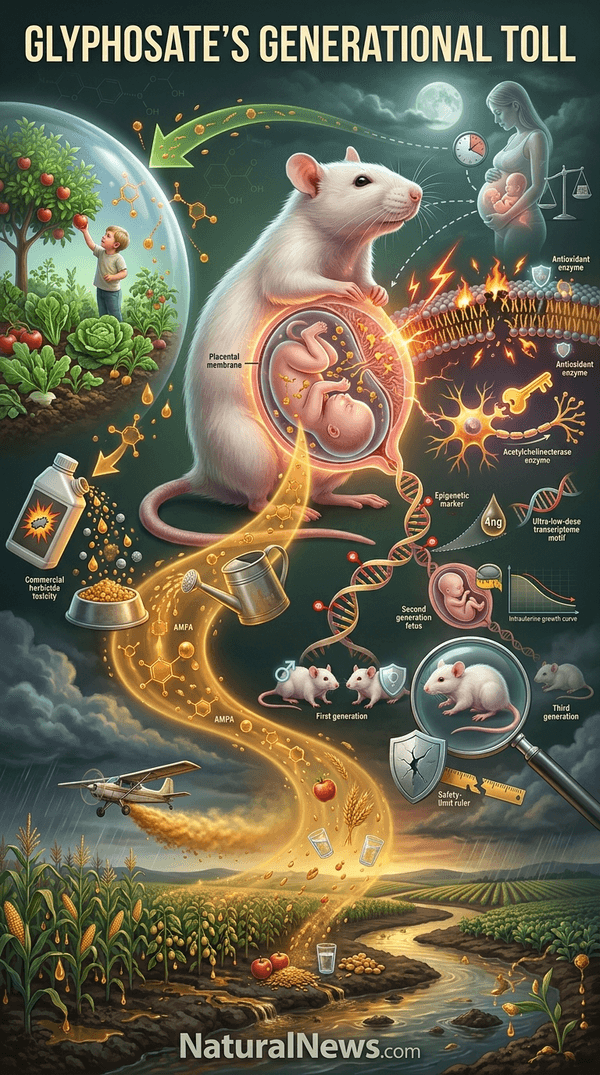
Researchers from Argentina report in a study published Aug. 6, 2026, in Environmental Toxicology and Pharmacology that perinatal exposure to glyphosate and glyphosate-based herbicides causes developmental alterations in rats across two generations. The study detected glyphosate residues in amniotic fluid, confirming transplacental transfer, and found that male offspring were more vulnerable than female offspring, according to the researchers. Commercial formulations produced more severe effects than glyphosate alone, the study reported.
The findings add to a body of research on glyphosate, the active ingredient in herbicides such as Roundup. Glyphosate exposure in pregnancy has been associated with shortened gestational length in an Indiana birth cohort, according to Stephanie Seneff in "Toxic Legacy How the Weedkiller Glyphosate Is Destroying Our Health" [1]. Glyphosate has also been linked to premature births and low birth weights in rural U.S. communities, according to a report by Children's Health Defense [2].
Study Methodology and Results
In the study, pregnant Wistar rats were orally exposed to glyphosate and glyphosate-based herbicides. Offspring were analyzed for fetal growth, oxidative stress biomarkers, postnatal growth, and survival. Glyphosate and its metabolite aminomethylphosphonic acid, or AMPA, were detected in amniotic fluid, and increased acetylcholinesterase activity was observed, according to the study.
The researchers reported that exposure altered intrauterine antioxidant enzyme activities and lipid peroxidation levels across generations, with intrauterine growth restrictions appearing in the second generation. Mothers exposed to glyphosate-based herbicides showed the greatest reduction in body weight gain during pregnancy, and male offspring showed reduced body weight and increased mortality, particularly in the second generation, the study stated.
The authors said the results point to a cumulative impact on developmental programming that may be missed in single-generation studies.
Context and Previous Research
Glyphosate is among the most widely used herbicide active ingredients worldwide, according to the researchers. Earlier work has documented effects at low doses. A transcriptome analysis of rat liver and kidney tissue after chronic ultra-low-dose Roundup exposure found organ damage at a daily glyphosate intake of 4 nanograms per kilogram of body weight, a level described as 75,000 times below the EU ADI equivalent, according to "Glyphosate Unsafe on Any Plate" [3].
Epidemiological research has linked glyphosate levels in urine with preterm birth and reduced birth weight, the study authors noted. Parvez and colleagues reported an association between glyphosate exposure in pregnancy and shortened gestational length [1]. A separate peer-reviewed pilot study found that gestational glyphosate exposure was associated with hormonal changes in infant girls, according to NaturalNews [4].
The pilot phase of the Global Glyphosate Study was presented at a European Parliament press conference, according to NaturalNews [5].
Regulatory and Public Health Implications
The new findings raise questions about the adequacy of current safety assessments. Health and safety advocates have said allowable pesticide residue limits are based primarily on acute effects and do not account for chemical mixtures or chronic health effects. The study authors stated that multigenerational effects should be included in risk evaluations.
Public statements from advocacy groups have challenged regulatory defenses of glyphosate. In a study reported by NaturalNews, glyphosate-based weedkillers caused multiple cancers in rats at doses regulators consider safe, with tumors in blood, skin, liver, and other organs [6].
For consumers seeking to reduce exposure, researchers have suggested that organic diets may lower glyphosate and AMPA intake, particularly for children. The study authors said the cumulative impact on developmental programming across generations deserves further scrutiny.
Conclusion
The Argentine researchers concluded that perinatal exposure to glyphosate-based herbicides can affect fetal and postnatal development in rats and that effects may persist into a second generation. The study adds to ongoing evidence that glyphosate and its formulations may influence developmental outcomes, according to the study authors and previous research.
Independent researchers and advocacy groups have called for updated safety standards that consider long-term, multigenerational effects. The study authors stated that further work is needed to determine whether similar patterns occur in humans.
References
- Stephanie Seneff. "Toxic Legacy How the Weedkiller Glyphosate Is Destroying Our Health."
- Pamela Ferdinand. "Glyphosate Weedkiller Linked to Premature Births, Low Birth Weights." Children's Health Defense.
- Food Democracy Now. "Glyphosate Unsafe on Any Plate Food Testing Results and Scientific Reasons for Concern."
- NaturalNews.com. "Glyphosate exposure during pregnancy causes hormonal changes in baby girls." April 12, 2021.
- NaturalNews.com. "Is Monsanto going down like Big Tobacco FAKE SCIENCE about to be exposed on a global scale." May 25, 2018.
- NaturalNews.com. "New study finds glyphosate weedkillers cause multiple cancers in rats at safe doses." June 12, 2025.
Explainer Infographic











Please contact us for more information.