


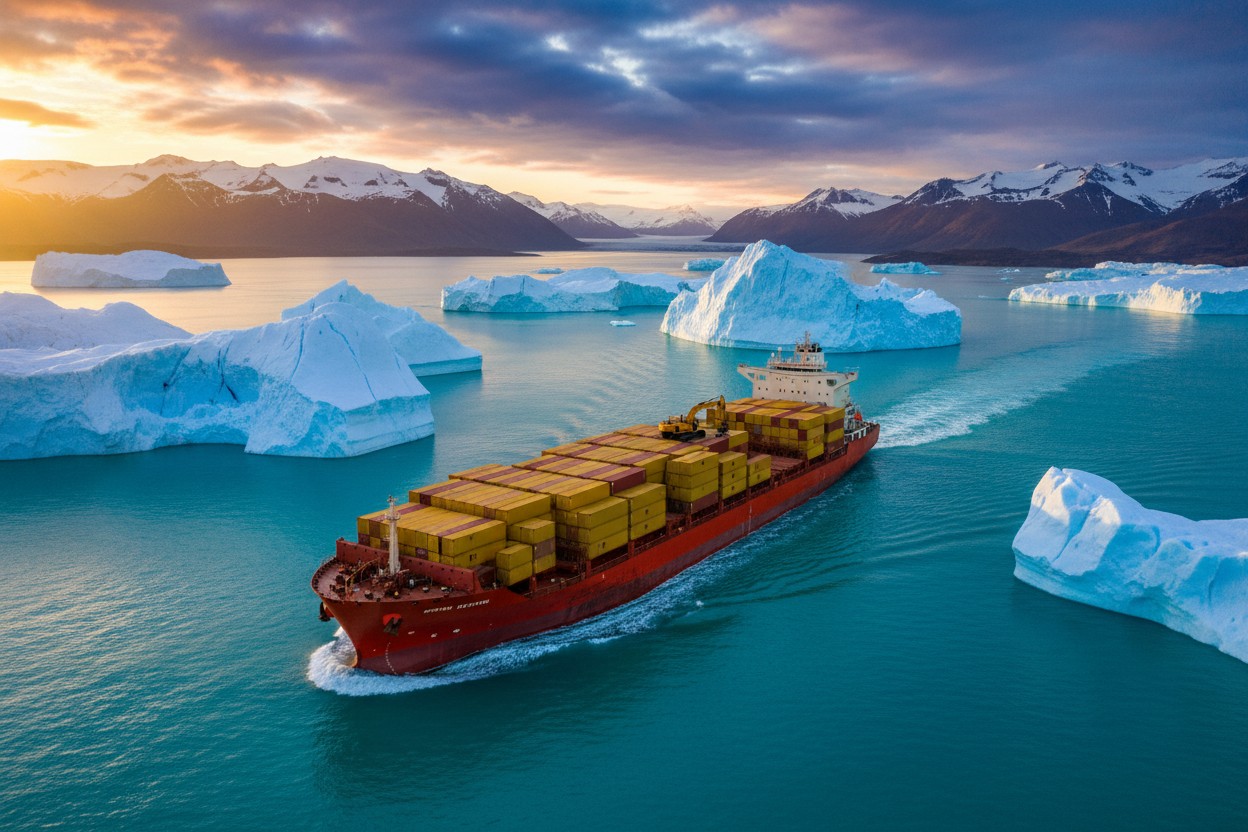
A Texas-based oil company with ties to U.S. President Donald Trump shipped drilling equipment to Greenland without authorization from the autonomous territory's government, according to officials and news reports.
Greenland Energy, established last year, offloaded the equipment on Aug. 8 on Greenland's eastern coast, the report stated. A Danish tugboat towed a cargo ship operated by Permagreen into port at Nerlerit Inaat, 450 kilometers above the Arctic Circle, where the vessel unloaded an excavator and 15 containers of equipment, according to Russia Today [1].
Greenland's Ministry of Mineral Resources said it authorized neither the shipment nor its arrival, according to the report. Residents in Jameson Land observed a tug hauling a barge carrying roughly a dozen containers, and a government statement identified Nunap Qeqqa as the planned drilling site, officials said.
Nuuk Calls Action Unauthorized, Weighs Response
The ministry issued what it called a "strong warning" that every logistical step tied to the project must be cleared in advance by the mineral resources authority, the report stated. Officials concluded that ordering the containers removed "would not be proportionate," leaving the government to choose between licensing a site that may fall under wetlands protection or refusing, according to the report.
Danish Prime Minister Mette Frederiksen responded that Greenland is "not for sale" and that Copenhagen and Nuuk expect allies to respect the island's right to self-determination, according to the report. Frederiksen and Greenlandic Prime Minister Jens-Frederik Nielsen have condemned U.S. annexation threats, describing them as a violation of international law and a threat to the North Atlantic Treaty Organization (NATO) [2]. French President Emmanuel Macron has also said Greenland is "not for sale," framing his remarks as a defense of international law and environmental protection [3].
Company Says Permission Was In Hand; Chairman Cites Confusion
Greenland Energy acknowledged that its representatives falsely told residents that permission to bring equipment ashore was in hand, a statement Chairman Larry Swets attributed to confusion, according to the report. Executives claim as much as $1 trillion worth of crude lies beneath Jameson Land, with the site chosen partly because it is isolated, the report stated.
A company representative said a vessel loaded with 300 shipping containers of drilling gear is due to leave Canada on Sept. 12, with drilling set to start in October, according to the report. Greenland's offshore potential has drawn oil companies before; Britain's Cairn Energy previously explored for oil off the coast of Greenland, a prospect activists warned could turn the Arctic into a drilling frontline [4].
Trump Pressure and Strategic Resources
Two days after the government warning, Trump posted on Truth Social an image of himself looming over a Greenlandic village amid renewed threats to seize the island, according to the report. Trump said his ambitions in Greenland are for national security, not mineral or resource extraction, and claimed Russia and China maintain a constant presence around the island, the report stated.
In a speech at the World Economic Forum in Davos, Trump framed Greenland as "our territory" [5]. His interest in the autonomous Danish territory has drawn debate over whether it is driven by resources or strategic military positioning [6].
Greenland sits on the world's third-largest known land deposit of rare earths, along with extensive germanium and gallium reserves used in semiconductor manufacturing, according to the report. The territory's riches have made the Arctic a key theater of global rivalry, according to an analysis by Igbal Guliyev [7].
U.S. and European investors, including BlackRock, are scrambling to secure alternative energy resources such as natural gas, oil, rare earth minerals and lithium to compete with Russia's mineral and energy power, according to an analysis by the Health Ranger Mike Adams [8]. The broader Arctic competition is visible in icebreaker fleets. The U.S. Coast Guard recently awarded contracts worth $3.3 billion for six new icebreakers, while Russia operates 42, including eight nuclear-powered vessels [9].
Outlook: Permit Decision and Next Steps
Authorities have not said whether they will grant a license for drilling at Nunap Qeqqa, according to officials. Greenland Energy is continuing with its drilling plans despite the lack of official permission, company representatives said.
Frederiksen said Denmark is "ready to defend every inch of NATO, including our own territory," and expects alliance members to honor collective defense commitments, according to the report. Denmark has announced plans to build a new military airbase in Kangerlussuaq to enhance its Arctic and North Atlantic defense capabilities following renewed U.S. interest in the region [10].
Nielsen has urged the territory's 57,000 residents to stockpile food and prepare for potential disruptions, warning that conflict cannot be ruled out [11]. Arctic drilling carries documented environmental risks, as oil and mining operations can damage land and pollute water in tundra regions [12].
References
- "Crude ambitions: Has the US started the annexation of Greenland?". RT.com. August 10, 2026.
- Ramon Tomey. "Danish PM Pushes Back on Greenland Annexation Threats, Urges Trump to STOP". NaturalNews.com. January 6, 2026.
- NaturalNews.com. "Not for Sale: Macron Rebukes Trump's Interest in Acquiring Greenland". NaturalNews.com. June 14, 2025.
- Ben Stewart. "Don't trust, don't fear, don't beg: the extraordinary story of the Arctic 30".
- NaturalNews.com. "Trump's Malignant Narcissism on Full Display in Davos". NaturalNews.com. January 23, 2026.
- Lance D Johnson. "Does Trump Want to Acquire Greenland for Its Resources or to Gain Strategic Military Positioning?". NaturalNews.com. January 10, 2025.
- Igbal Guliyev. "What exactly are Greenland's riches that Trump wants so much?". RT.com. February 9, 2026.
- Mike Adams. "Brighteon Broadcast News - Trump Wants Greenland ". Brighteon.com. January 8, 2025.
- NaturalNews.com. "U.S. seeks to compete with Russia in the Arctic, invests in six Coast Guard Icebreakers". NaturalNews.com. July 3, 2026.
- Willow Tohi. "Denmark to Bolster Arctic Defense with New Military Airbase in Greenland". NaturalNews.com. January 20, 2025.
- Ramon Tomey. "Greenland's PM Urges Citizens to Prepare for Possible U.S. Invasion". NaturalNews.com. January 23, 2026.
- Virginia Schomp. "24 hours on the tundra".
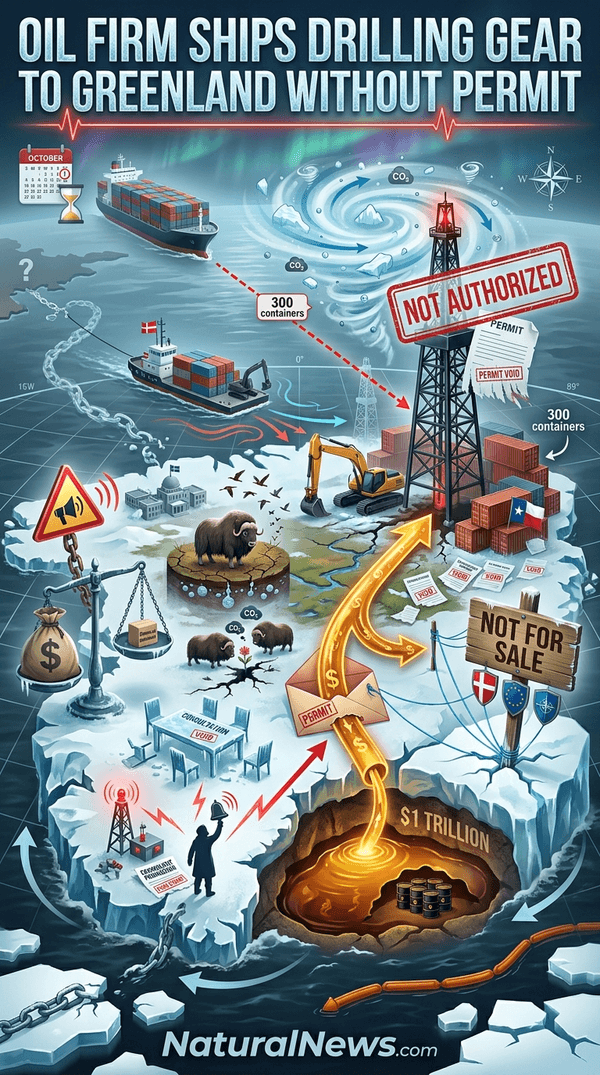
Explainer Infographic







Please contact us for more information.