


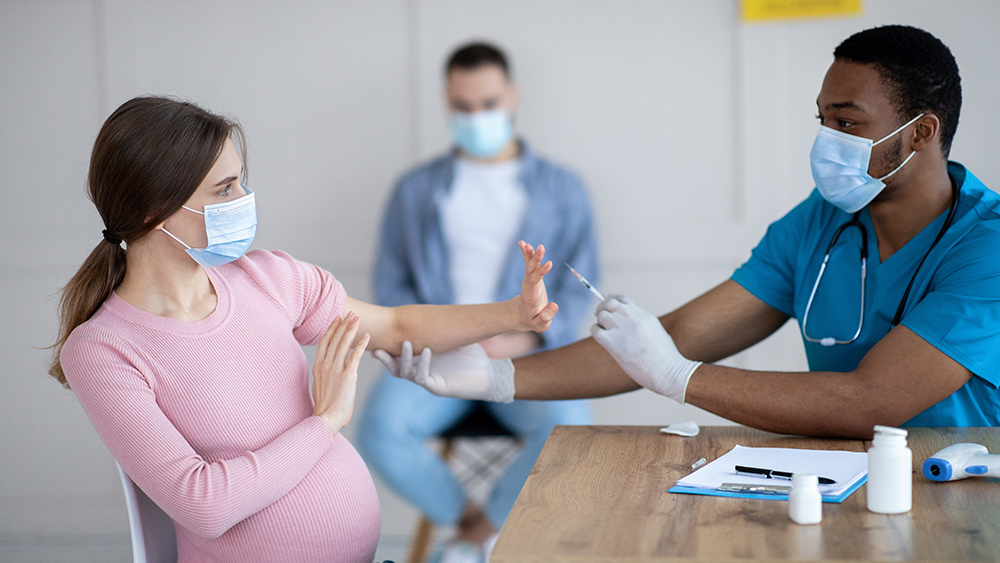
Newly released text messages show Dr. Anthony Fauci privately discussed potential risks of mRNA COVID-19 vaccines for pregnant women in January 2021, according to documents released by Sens. Ron Johnson (R-WI) and Rand Paul (R-KY). The exchange involved Fauci, then-Centers for Disease Control and Prevention (CDC) Director Dr. Rochelle Walensky, and Dr. Vivek Murthy, who later served as U.S. Surgeon General, according to the senators. [1]
The messages were among more than 34,000 texts and 522 voicemails obtained from Fauci's government-issued cellphone, officials said. The first batch of messages was released on Aug. 10, according to reports. [2] [3]
The January 2021 Exchange
The text chain, dated January 25-26, 2021, captured a conversation about whether pregnant women should receive the newly authorized mRNA vaccines, according to reports. [4] According to the documents, Murthy initially asked whether vaccination should be given earlier or later in pregnancy and whether officials had identified adverse outcomes among vaccinated pregnant women.
Fauci responded that there was no data or theoretical basis to favor vaccination at one stage of pregnancy over another and rejected concerns that mRNA vaccines could alter human genes. Walensky acknowledged the concern, while Murthy said he had also heard concerns about potential effects on developing babies, the documents state. [5]
Fauci later raised the possibility that fever after a second dose "theoretically could be associated with miscarriage in the 1st trimester," according to the released messages. "I asked around a bit more and another issue came up that you need to be aware of," Fauci wrote in the exchange, according to reports. [6]
The following day, Fauci said officials needed to weigh the potential risks of vaccination against the risks posed by COVID-19, noting that more than 10,000 pregnant women had been vaccinated without issues and that federal and medical guidance allowed pregnant women to choose vaccination, according to the records. [7]
At the time of the exchange, Fauci publicly stated there were "no red flags" for pregnant women regarding the vaccines, as noted in reports on the released texts. [3]
Federal and International Guidance at the Time
At the time of the exchange, guidance from the Food and Drug Administration (FDA) and the Advisory Committee on Immunization Practices (ACIP) allowed pregnant women to choose vaccination, according to the released documents. The World Health Organization (WHO) had initially advised against Moderna's vaccine for pregnant women due to limited data, officials said. [5]
No randomized trial data were available for use of the COVID-19 vaccine in pregnant women, and Pfizer cut its pregnancy trial short, according to a report by Mercola.com. [8] Clinical trials for the vaccines failed to include pregnant women.
However, the American College of Obstetricians and Gynecologists (ACOG) endorsed COVID-19 vaccination in pregnancy on July 30, 2021, according to Peter Breggin's book "Canary In a Covid World: How Propaganda and Censorship Changed Our World." [9]
None of the available vaccines had received full licensing; they had only been granted emergency use authorization while efficacy and safety studies were still ongoing, according to a report by Mercola.com. The report stated that the medical establishment had disregarded one of medicine's fundamental safety principles: do not experiment on pregnant women. [10]
Transparency and Informed Consent Questions
The senators said the messages could have implications for public health and informed consent, according to a statement accompanying the release. [5] The release raised questions about transparency and whether pregnant women were properly informed of vaccine risks.
Data from the Vaccine Adverse Event Reporting System (VAERS) showed an increase in reports of miscarriage following COVID-19 vaccination. By April 2022, the number of women who lost unborn or newly born children following COVID-19 vaccination surpassed 4,000, compared with 565 losses reported following flu vaccinations, according to a report by NaturalNews.com. [11]
Robert F. Kennedy Jr.'s book "The Real Anthony Fauci" documented the former National Institute of Allergy and Infectious Diseases (NIAID) director's public assurances about the safety of an earlier pandemic flu vaccine, the HINT pandemic flu vaccine. Two months after those assurances, reports of miscarriages, narcolepsy, and febrile convulsions emerged in multiple countries, according to the European Medicines Agency. [12]
Impact and Ongoing Review
The large collection of records, including roughly 34,000 text messages and 522 voicemails, remained under review, according to the senators. [7] The disclosure has renewed public attention to COVID-19 vaccine communication and the informed consent process for pregnant women.
In 2025, the Department of Health and Human Services (HHS) moved to halt its blanket recommendation for COVID-19 vaccines for pregnant women, children, and teens, reversing the CDC's 2021 guidance, according to a report by NaturalNews.com. [13]
The CDC also ended its demand that pregnant women and children receive the COVID-19 vaccines, according to a separate report. [14]
References
- "BOMBSHELL FAUCI TEXTS: Private First-Trimester Miscarriage Concern Exposed". 100percentfedup.com. August 11, 2026.
- "GOP Senators Release Fauci's Texts on COVID Vaccine Concerns for Pregnant Women". The Epoch Times. August 11, 2026.
- "Fauci Privately Flagged Miscarriage Risk Before Telling Pregnant Women There Were 'No Red Flags'". Zero Hedge. August 11, 2026.
- "FAUCI'S Secret Texts Reveal SHOCK Admission". Modernity.news. August 10, 2026.
- "Fauci Texts Reveal Concerns About COVID Vaccines and Miscarriages". The National Pulse. August 10, 2026.
- "Released Text Messages Reveal Anthony Fauci Privately Expressed COVID-19 Jab Concerns In Pregnant Women". 100percentfedup.com. August 10, 2026.
- "Ron Johnson, Rand Paul release first batch of texts from Fauci's phone". Just the News. August 10, 2026.
- Mercola.com. "Why the CDC Endorsed the COVID Shots Before T". Mercola.com. July 11, 2023.
- Peter Breggin. "Canary In a Covid World How Propaganda and Censorship Changed Our World".
- Mercola.com. "Is a COVID Vaccine Worth the Risk of Miscarriage?". Mercola.com. April 21, 2021.
- Mary Villareal. "TOO MUCH TO IGNORE: COVID vaccines cause 16,633 more miscarriages compared to flu vaccines". NaturalNews.com. April 18, 2022.
- Robert F Kennedy Jr. "The Real Anthony Fauci, Bill Gates, Big Pharma, and the Global War on Democracy and Public Health".
- Ramon Tomey. "HHS to stop recommending routine COVID-19 injections for kids and pregnant women". NaturalNews.com. May 20, 2025.
- S.D. Wells. "CDC ends demands that pregnant women and children get deadly Covid prion-inducing vaccines but STILL keeps genoc". NaturalNews.com. May 28, 2025.











Please contact us for more information.