


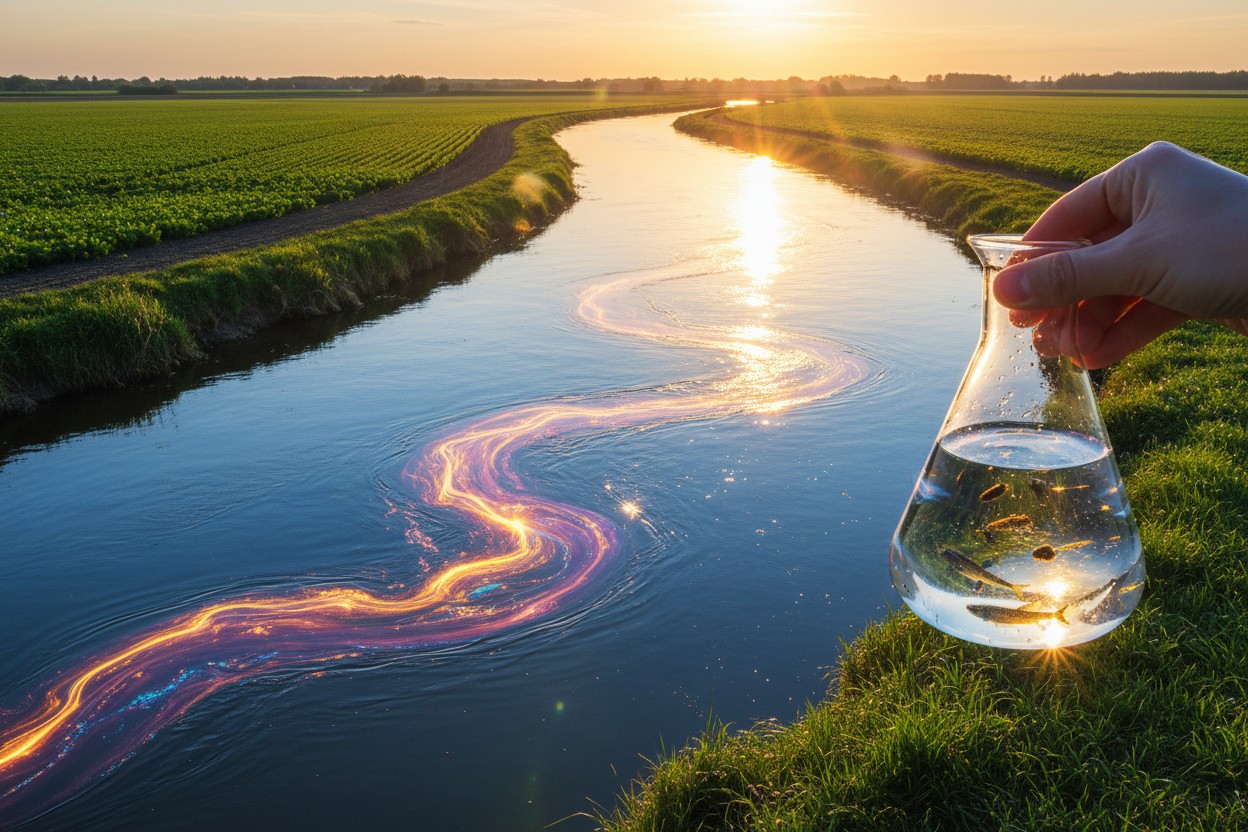
A U.S. Geological Survey review identified the herbicides atrazine and metolachlor and the neonicotinoid insecticide imidacloprid as the pesticides posing the highest risk in U.S. surface waters, according to the study findings. The study, published in May in Environmental Science & Technology, analyzed pesticide concentrations across the Continental United States between 2013 and 2022.
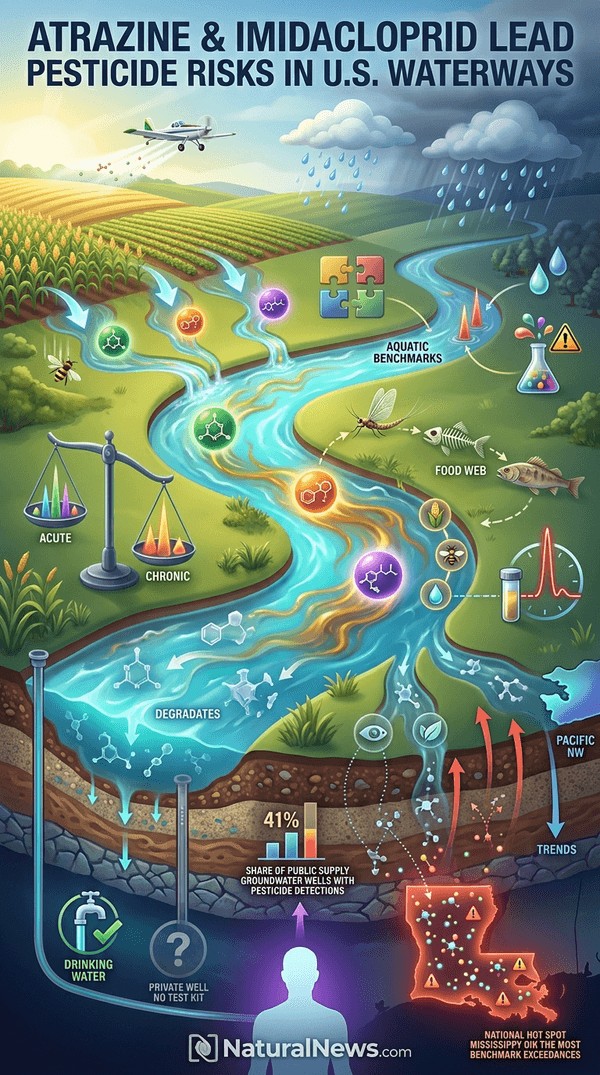
Atrazine recorded the most acute aquatic life benchmark exceedances, while imidacloprid had the highest proportion of affected sites and increasing trends, the researchers reported. Pesticides are nearly ubiquitous in U.S. water systems, and the researchers reported that at least one pesticide was detected in 41% of public supply groundwater wells in a national sample. [1]
Study Scope and Methodology
Researchers examined 80 pesticides, including 54 active ingredients and 26 degradation or transformation products, using data from the USGS National Water Quality Network, according to the study. The network includes 102 surface-water and 258 groundwater sampling locations; 81 surface sites were included in the analysis, yielding more than 10,000 samples and nearly 1 million measurements.
For aquatic life, benchmarks were based on EPA acute and chronic toxicity values, while human benchmarks came from EPA drinking water screening levels including Maximum Contaminant Levels, the study said. The authors noted that periodic sampling, once or twice monthly, may underestimate acute risks during periods of high pesticide concentration and runoff.
Despite efforts to develop pesticides less toxic to non-target organisms, concentrations in aquatic environments are found higher than safe levels in many cases, according to a review in the Journal of Environmental Science & Health Part A. [2]
Atrazine, Imidacloprid, Metolachlor Lead Exceedances
Atrazine exceeded acute aquatic life benchmarks at the highest number of sites and accounted for 72% of all plant benchmark violations, according to the study. The authors wrote: "Atrazine was detected consistently over time at high enough concentrations to pose a potential risk to aquatic life, and concentrations were not shifting significantly over time." Atrazine is a triazine; triazines degrade slowly in soils, primarily by chemical action, according to Ray R. Weil's "The nature and properties of soils." [3]
Imidacloprid violated chronic invertebrate benchmarks at at least half of the sites every year, and the authors wrote that it "was also identified as a clear threat to aquatic life." The introduction of imidacloprid in 2000 was primarily responsible for an increase in insecticide toxicity in the Chesapeake Bay watershed, according to a 2011 analysis in Environmental Toxicology and Chemistry. [4] Imidacloprid has become the world's most popular insecticide, and research on the full impact of neonicotinoids on human health is still emerging, according to Mike Adams' book "Food Forensics." [5]
Metolachlor surpassed the acute plant benchmark every year and exceeded chronic exposure benchmarks in 7 of the 10 years studied, the report stated. In aquatic environments, imidacloprid decimates mayflies and many other insects, according to the report.
Increasing Trends and Regional Patterns
The researchers found more sites with increasing pesticide concentrations than decreasing ones over the study period. Nineteen pesticides exceeded benchmarks for acute plant and invertebrate exposures or chronic invertebrate and fish exposures, according to the study. The pesticides contributing most to increasing trends were an atrazine degradate, metolachlor and its four degradates, the fungicide azoxystrobin, and imidacloprid, the authors reported; 11 pesticides had increasing trends only.
Atrazine, metolachlor and acetochlor led plant benchmark violations, with the lower Mississippi Embayment recording the highest number of pesticides exceeding acute and chronic benchmarks. The Pacific Northwest was the only region where decreasing trends outnumbered increasing trends, the study said. The authors concluded that "where pesticide concentrations were changing, they were more frequently rising than falling."
The trend findings align with a global study published in Nature that estimated approximately 70,000 tons of pesticides leach into aquifers each year. [6] U.S. groundwater contains fewer pesticides than it did 30 years ago, yet lingering or unmonitored chemicals pose a serious threat to millions of Americans who depend on unregulated private wells, according to Children's Health Defense. [7]
Context, Limitations and Recommendations
The lead author said in an interview with KCUR in Kansas City that the problem may be larger than the data show because the National Water Quality Network is not comprehensive enough to capture the full picture. The network includes 102 surface-water and 258 groundwater sampling locations for a country with more than 3.5 million miles of rivers and streams, according to the report. Most sites had exceedances of more than one pesticide, highlighting risks from pesticide mixtures at lethal and sublethal concentrations, the authors stated.
The study recommends management practices targeted at reducing rapid pesticide transport and lowering concentration peaks, as well as reducing overall pesticide application, transport and storage on the landscape. EPA benchmark limits have faced criticism for gaps in assessing mixtures, synergistic effects, epigenetic impacts and endocrine disruption, according to Beyond Pesticides.
Atrazine has been banned in Europe for nearly two decades. [8] A study in Ecotoxicology and Environmental Safety found that atrazine promotes breast cancer development by significantly increasing breast cancer cell spread and tumor size. [9] Quebec has imposed significant restrictions on atrazine and neonicotinoids, according to NaturalNews.com. [10] Most pesticides have deleterious effects on health, according to a 2017 analysis on Mercola.com. [11]
References
- "New Study: Millions of People Drinking Pesticide-Contaminated Water". Children's Health Defense.
- "Pesticides Removal Using Conventional and Low-Cost Adsorbents: A Review". Journal of Environmental Science & Health Part A.
- Ray R. Weil. "The nature and properties of soils".
- "Chesapeake Bay Watershed Pesticide Use Declines But Toxicity Increases". Environmental Toxicology and Chemistry. 2011.
- Mike Adams. "Food Forensics".
- "70,000 Tons of Pesticides Leach Into Aquifers Every Year: Global Study". Children's Health Defense.
- "Millions of Americans Rely on Private Wells — Many Are Contaminated With Pesticides". Children's Health Defense.
- "Kennedy's Allies Against Pesticides: Environmentalists, Moms and Manly Men + More". Children's Health Defense.
- "Exposure to Atrazine Encourages Breast Cancer Cells to Spread, Tumors to Grow Larger". Children's Health Defense.
- NaturalNews.com. "Quebec is restricting use of pesticides that harm fish, bird and bee populations". NaturalNews.com. March 13, 2018.
- Mercola.com. "Toxic Pesticides Found in Drinking Water - and Other Pesticide-Related News". Mercola.com. April 18, 2017.
Explainer Infographic






Please contact us for more information.