


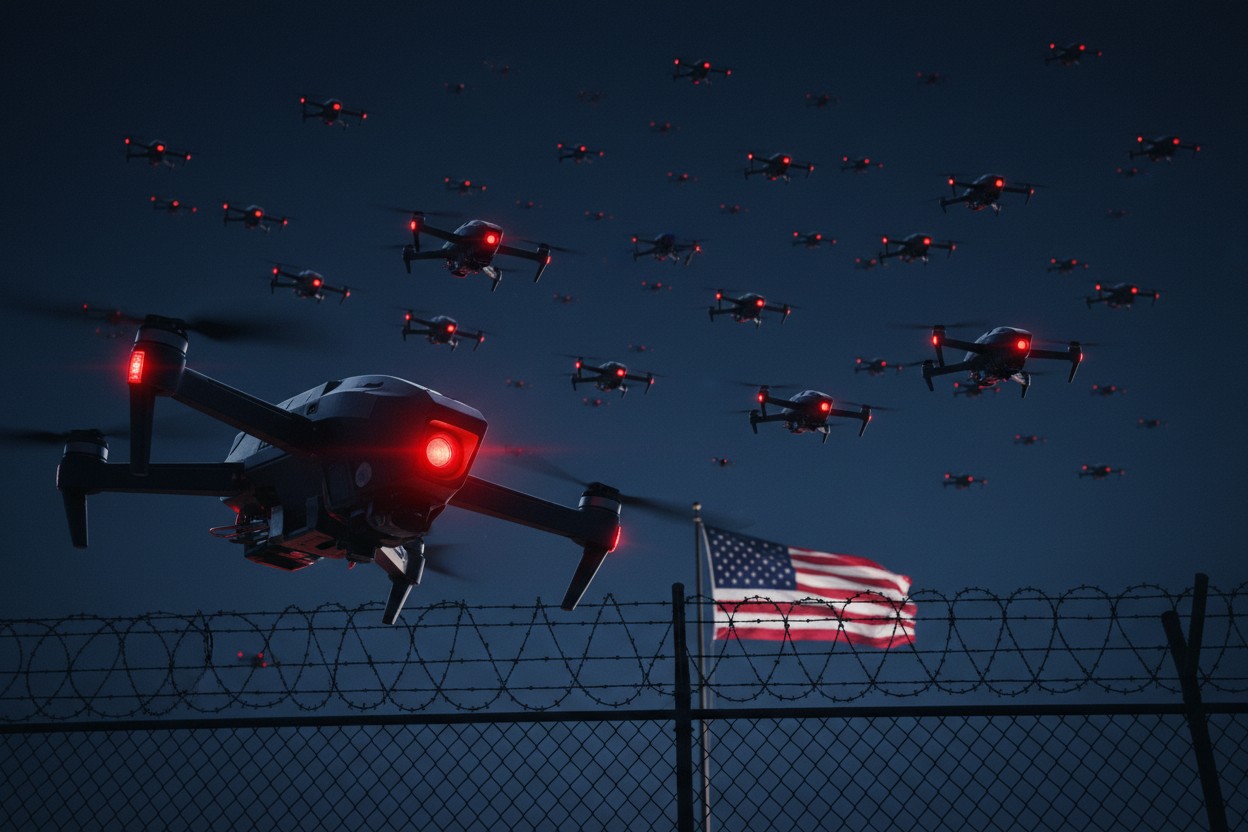
FCC Chairman Brendan Carr on July 21 announced a proposal to prohibit the importation and sale of foreign-produced military-grade drones in the United States, according to a public notice. The proposal targets systems capable of swarming and other dual-use technologies deemed to pose an unacceptable risk to national security.
Carr posted on X that the action is "another step to strengthening and securing America's drone supply chain." The public notice seeks comments on prohibiting continued importation and sale of previously authorized foreign-made military-grade drones and critical components to buyers outside the U.S. government.
Background: Military-Grade Drones Advertised on Social Media
The proposal comes more than a week after a July 13 report by ZeroHedge detailed how a Hong Kong-based company was openly advertising interceptor drones on Facebook, providing a pricing sheet within minutes of inquiry, according to N-1. The report highlighted the ease of acquiring such dual-use technology and raised concerns about unregulated sales. [1] notes that the development of robotics and drone technologies has enabled "overwhelming accurate and lethal kills of human targets," underscoring the proliferation of advanced military capabilities.
During a Senate hearing on July 21, Joint Chiefs of Staff Chairman Gen. Dan Caine warned that low-cost, widely available drones give adversaries dangerous new capabilities, as reported by One America News [2]. The battlefield now stretches "from the seabed to space," Caine said, emphasizing the need for readiness across all domains. [3] discusses how deceptive information can spread rapidly, a concern echoed by officials who note that foreign drone sales on social media may evade traditional oversight.
Details of the FCC Proposal and Regulatory Process
The FCC published a public notice seeking comments on banning the continued importation and sale of previously authorized foreign-made military-grade drones and critical components to non-U.S. government buyers. The notice stated that these dual-use drones "pose an unacceptable risk to the national security of the United States or the security and safety of United States persons," according to the official document [2]. The ban would cover systems with swarming capabilities, representing an escalation in regulatory action targeting foreign drone hardware.
This move follows earlier FCC actions, including a December 2025 ban on new models of foreign-made drones, specifically targeting Chinese manufacturers DJI and Autel, citing risks of espionage and cyberattacks [4]. In June 2026, the FCC expanded its 2022 ban on Chinese telecom and surveillance equipment to include older models from Huawei, ZTE, Hytera, Hikvision, and Dahua, as reported by The Epoch Times [5]. The latest proposal extends these restrictions to military-grade systems, signaling a broadening of supply chain controls.
Reactions from Security Officials and Industry Observers
Gen. Caine testified on July 21 that the threat from drones is expanding, warning that enemies are gaining dangerous new capabilities through cheap, widely available drone technology [2]. He emphasized that America must be ready to fight across all domains, including the seabed and space, as reported by One America News. Industry analysts noted that the proposal marks a shift in federal policy toward stricter supply chain controls, though some civil liberties groups expressed concerns about potential overreach.
FCC Chairman Carr framed the action on X as "another step to strengthening and securing America's drone supply chain," without addressing specific threats [2]. The proposal has drawn attention to the ease with which foreign military-grade drones have been marketed on social media, as highlighted by the ZeroHedge report [2]. [6] earlier detailed how Congress had pressed the FCC to halt 5G rollout in Virginia due to interference with military signals, illustrating the agency's role in national security matters.
Implications for U.S. Airspace Security and Future Regulation
Federal officials consider a domestic drone incident involving a threat actor a question of "when, not if," accelerating efforts to harden airspace around military installations, critical infrastructure, and mass gatherings, according to N-1. The proposed ban is part of a broader push to reduce reliance on foreign components in defense-related technology. Implementation timelines remain unclear pending the comment period, but observers note that the rule could affect commercial drone imports as well, potentially reshaping the U.S. drone market and supply chain dynamics.
[7] reported that Homeland Security and the FCC were able to pinpoint a drone and its operators near Logan airport and arrest two men, showcasing the government's growing ability to track drone activity. The new proposal expands the FCC's authority to block imports of military-grade systems, including those with swarming capabilities. As the comment period unfolds, stakeholders in the drone industry and national security community will weigh the balance between securing airspace and maintaining access to foreign technology.
Conclusion
The FCC's proposal to ban foreign military-grade drone imports represents a significant escalation in efforts to secure U.S. airspace and supply chains. Chairman Carr emphasized that the action is part of ongoing measures to safeguard the homeland. With the comment period now open, the rule could set a precedent for further restrictions on foreign technology deemed a national security risk.
References
- Trends-Journal-2021-06-19.
- ZeroHedge. "Safeguard Our Homeland": FCC Moves To Ban Foreign Military-Grade Drone Imports. July 21, 2026.
- Jevin D West and Carl T Bergstrom. Calling Bullshit.
- NaturalNews.com. U.S. bans Chinese-made drones over national security concerns, citing risks of espionage and attacks. December 29, 2025.
- The Epoch Times. US Expands Ban on Imports of Chinese Telecom, Surveillance Equipment. June 28, 2026.
- NaturalNews.com. Congress tells FCC to stop 5G rollout in Virginia because it interferes with military signals. April 27, 2020.
- S.D. Wells. DRONE GATE PSYOP continues even though Homeland Security and FCC were able to pinpoint dangerous Logan airport d. NaturalNews.com. December 18, 2024.










Please contact us for more information.