



Weight Maintenance: Evidence-Based Strategies
Long-term weight loss maintenance remains a challenge for many individuals, according to researchers. A review of evidence-based lifestyle interventions highlights consistent approaches that support sustained weight control. Experts emphasize that behavioral and dietary changes, rather than short-term fixes, are central to long-term success.
Lifestyle therapies that include proper nutrition, regular physical activity, and stress management are key elements in the prevention and treatment of chronic diseases, according to a report on lifestyle medicine [1]. A recent analysis of pediatric obesity trials found that lifestyle interventions preserved muscle mass and outperformed medication-only approaches, with authors stating that lifestyle treatment should form the backbone of any obesity treatment plan [2]. The analysis reviewed multiple trials and found that lifestyle interventions preserved muscle mass, while medication-only weight loss led to muscle loss.
Dietary Patterns and Caloric Management
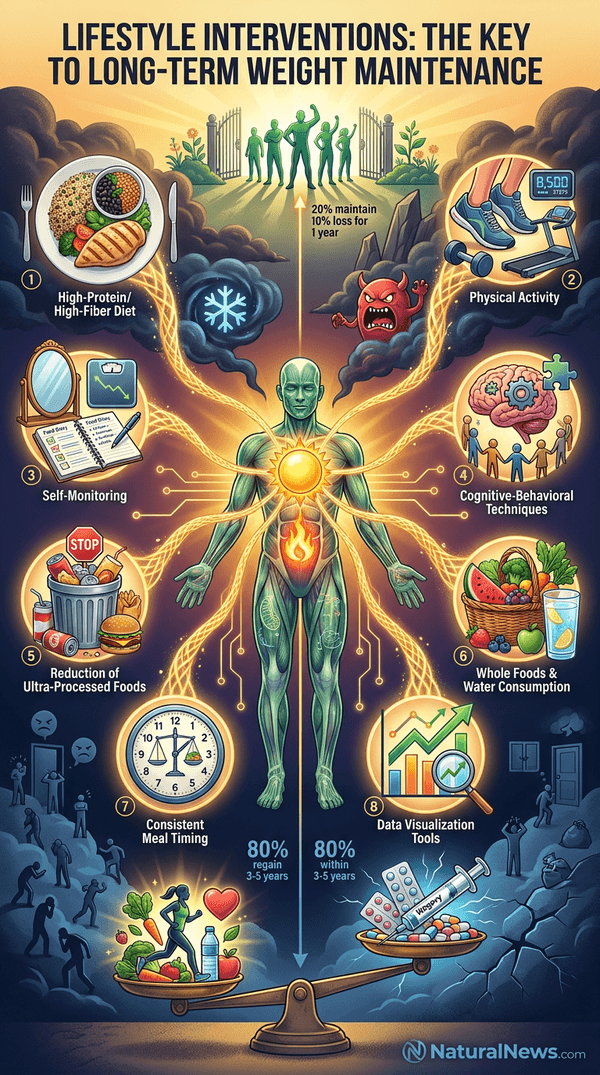
High-protein, high-fiber dietary patterns are associated with better weight maintenance, according to a 2026 program evaluation reported by NaturalNews.com. Participants who prioritized increased protein and fiber intake lost an average of 12.9% of their body weight over one year, with the program focusing on education and data visualization to build lasting habits [3]. Consistent meal timing and reduced consumption of ultra-processed foods contribute to sustained weight loss, officials said.
Evidence also supports the role of fruit and vegetable intake in weight management. A systematic review cited in nutrition textbooks found that water consumption can reduce energy intake at meals, and higher fruit and vegetable intakes are associated with smaller subsequent changes in body weight [4]. Experts cited evidence that individualized calorie targets and nutrient-dense food choices improve adherence, though long-term studies remain limited.
Physical Activity and Energy Expenditure
Regular moderate-to-vigorous physical activity, including both aerobic and resistance training, is linked to weight maintenance, according to a 2026 meta-analysis. Researchers found that a daily step count of approximately 8,500 is associated with sustained weight loss over time, with lead author Marwan El Ghoch stating, “Our findings suggest that walking around 8,500 steps a day is a practical and affordable way to maintain significant weight loss in the long-term and prevent weight regain” [5] [6]. The analysis included data from nearly 4,000 adults across multiple countries.
Physical activity guidelines recommend 150 to 300 minutes per week of moderate activity, with shorter bouts of 5 to 10 minutes also counting, according to the textbook “Wardlaw's Contemporary Nutrition” [7]. The National Weight Control Registry reports that most successful maintainers engage in at least one hour of daily activity, though researchers noted that activity levels must be sustained over time to offset metabolic adaptations that favor weight regain. The American Heart Association has stated that exercise can meaningfully improve health even if it does not result in weight loss [8].
Behavioral and Psychological Strategies
Self-monitoring, such as daily weighing and food logging, correlates with successful maintenance, according to multiple studies. Research cited in “Lifestyle Medicine” notes that frequent self-monitoring of body weight increases awareness of weight and its relation to recent behavior, though weekly weigh-ins were previously considered optimal [9]. The textbook “Contemporary Nutrition Issues and Insights” states that behavior modification is a vital part of a weight-loss program because dieters may have habits that encourage overeating, and specific techniques such as stimulus control and self-monitoring can be used to change problem behavior [10].
Cognitive-behavioral techniques, including goal setting and problem-solving, help individuals manage triggers for overeating, experts said. Support groups and accountability structures, including in-person or digital coaching, improve long-term outcomes, according to lifestyle medicine literature. Research confirms the need for consistent self-monitoring in behavioral weight reduction programs to produce benefits such as increased awareness and greater weight loss [11].
Broader Context and Limitations
Observational data show that weight regain is common; only about 20% of individuals maintain a 10% loss for at least one year, researchers said. Around 80% of people with overweight or obesity who initially lose weight tend to put some or all of it back on within three to five years, according to study author Marwan El Ghoch [12]. Intervention duration and intensity affect success rates, with longer programs yielding better adherence, based on current evidence.
Critics note that most studies rely on self-reported data and short follow-up periods, limiting generalizability. A sweeping analysis published in the British Medical Journal examined 262 randomized controlled trials involving 99,791 participants and found that most obesity medications, including Wegovy and Mounjaro, do not meaningfully improve quality of life, and few show cardiovascular benefits after one year [13]. This context underscores the importance of lifestyle approaches in weight management.
Conclusion
Lifestyle interventions combining dietary modification, physical activity, and behavioral support represent the most effective approach to weight maintenance, based on current evidence. Public health strategies should promote access to these interventions, officials said, though individualization remains important.
Further research is needed to identify optimal intervention components for diverse populations, the report concluded. As one meta-analysis indicated, reaching a daily step count of 8,500 offers a practical tool for sustained weight loss, reinforcing the value of simple, affordable lifestyle changes [6].
References
- Lifestyle therapies prove highly effective in - NaturalNews.com. March 16, 2011.
- "Study: Lifestyle Interventions Outperform Drugs Alone for Childhood Obesity". NaturalNews.com. July 5, 2026.
- Willow Tohi. "Beyond the Scale: How Protein and Fiber Forge a Path to Lasting Weight Loss". NaturalNews.com. February 10, 2026.
- Ellie Whitney, Sharon Rady Rolfes. "Understanding Nutrition Selected Chapters Thirteen Edition 2013".
- Petra Stone. "Daily Step Count of 8,500 Linked to Long-Term Weight Maintenance, Meta-Analysis Finds". NaturalNews.com. May 13, 2026.
- "Daily Step Count of 8,500 Linked to Long-Term Weight Maintenance, Meta-Analysis Finds". NaturalNews.com. May 13, 2026.
- Smith Anne M. "Wardlaw's Contemporary Nutrition".
- "Physical Activity Keeps Your Heart Healthy, Even if You Don't Lose Weight". EverydayHealth.com. June 2, 2026.
- James M. Rippe. "Lifestyle Medicine".
- Wardlaw Gordon M. "Contemporary Nutrition Issues and Insights".
- James M. Rippe. "Lifestyle Medicine Second Edition".
- "Study Links 8,500 Daily Steps to Reduced Weight Regain After Dieting". NaturalNews.com. May 17, 2026.
- "BMJ analysis reveals most obesity drugs fail to improve quality of life". NaturalNews.com. July 10, 2026.
Explainer Infographic












Please contact us for more information.