


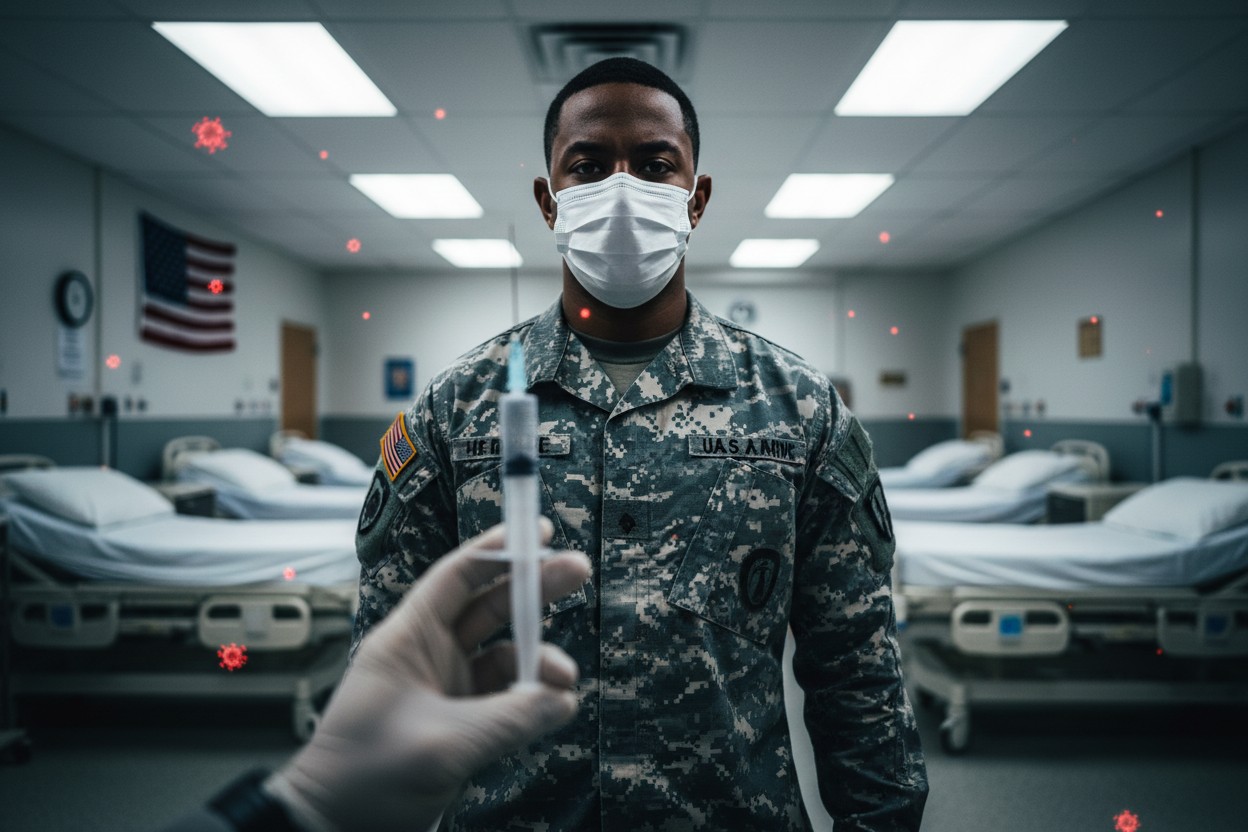
Pentagon officials said new recruits for the Army, Navy, and Air Force will again be required to receive flu vaccinations, reversing a policy change that had made the shots optional, according to reports. The reinstatement comes as a growing flu outbreak at Joint Base San Antonio-Lackland in Texas has sickened at least 222 recruits, with two hospitalizations and one death under investigation, according to a report by ABC News cited by multiple outlets [1][2][3].
Secretary of Defense Pete Hegseth had ended the longstanding influenza vaccine mandate for all service members in April, stating that vaccination should be a personal decision, according to statements from the Department of War (DOW). [4][5][6].
The reversal was announced on June 24, less than two months after the mandate was lifted, according to a Pentagon official who spoke to the Associated Press [1].
Background: Hegseth Ends Flu Shot Mandate
On April 21, Secretary of War Pete Hegseth announced the elimination of the mandatory influenza vaccine requirement for all U.S. military service members, a policy that had been in place since 1945, according to a DOW directive reported by NaturalNews.com [4].
In a video statement on X, Hegseth said, "We’re seizing this moment to discard any absurd, overreaching mandates that only weaken our warfighting capabilities. In this case, this includes the universal flu vaccine and the mandate behind it." [6]
Hegseth further stated that the DOW was "restoring freedom to our Joint Force" and that the previous administration had denied service members "simple medical autonomy," according to a report from 100PercentFedUp.com [5].
The policy change applied across all branches, removing a long-standing requirement that had been routinely enforced during basic training and annual health screenings [7].
Outbreak at Lackland Air Force Base
The Air Force confirmed a "localized influenza outbreak among trainees at Basic Military Training" at Joint Base San Antonio-Lackland, stating that medical personnel had implemented mitigation measures to isolate and treat symptomatic trainees, according to a service statement cited by multiple sources [2][8].
As of June 23, at least 222 recruits had been diagnosed with the flu, up from 159 the previous week, according to ABC News [1]. Two recruits were hospitalized, and the death of recruit Keon McDaniel on June 12 remains under investigation, with no determination yet on whether it is linked to the outbreak, sources said [2].
Approximately 40% of new recruits in San Antonio had received flu vaccinations earlier in June, according to ABC News [2]. Some physicians and researchers interviewed by The Defender noted that there is no clear evidence linking McDaniel’s death to the flu or showing that the policy change caused the outbreak, pointing out that flu vaccine effectiveness varies and that outbreaks can occur even in highly vaccinated populations [2].
Records show that vaccine failures in closed settings are not uncommon; in one documented outbreak at a nursing home, 95% of residents and 72% of staff had been vaccinated four to eight weeks prior yet still fell ill [9].
Reinstatement and Expanded Requirements
Pentagon officials announced on June 24 that new recruits for the Army, Navy, and Air Force will now be required to get flu vaccinations, according to a Pentagon official who spoke to the Associated Press [1][3]. The current cohort of recruits will be vaccinated, and all recruits going forward, officials said [1][13].
The decision was made "amid a growing, weekslong, flu outbreak at the U.S. Air Force’s boot camp at Lackland Air Force Base that has sickened nearly 300 people," according to the Associated Press [1].
Additional exceptions to Hegseth’s optional rule are expected to be implemented soon, leading to mandates for deployed troops, healthcare personnel, and others, the report stated [1]. The military is also racing to vaccinate new recruits with flu shots set to expire June 30, raising questions about vaccine logistics and the rationale for reinstituting a mandate based on a single localized outbreak [10].
Critics of mandatory vaccination have argued that such policies override personal medical autonomy and are applied disproportionately to service members who face limited options to refuse [11][12].
Conclusion: Policy Reversal and Ongoing Monitoring
The reversal marks a significant policy shift months after Hegseth scrapped the mandate, and public health officials continue to monitor the outbreak at Lackland and expand vaccination requirements, according to Air Force statements [2][3].
The death of recruit Keon McDaniel remains under investigation, with no official cause determined [2] [13].
The episode has reignited debate over the balance between military readiness and individual medical choice. Legal scholars note that in past cases, courts have held that mandatory vaccination requires exigent circumstances such as an epidemic, yet states have made immunization a routine requirement without community input [11].
As the military reinstates the flu shot for new recruits, the underlying questions about vaccine efficacy, informed consent, and the limits of government authority over personal health decisions remain unresolved [12][11].
References
- "Pentagon Reinstates Mandatory Influenza Vaccine For Military Recruits". 100PercentFedUp.com. June 25, 2026.
- "Military Reinstates Flu Vaccines Amid Texas Outbreak — but Won't Say if Sick Recruits Were Vaccinated". ChildrensHealthDefense.org. June 25, 2026.
- "US Military Reinstates Some Flu Vaccine Requirements After Texas Training Outbreak". The Epoch Times. June 25, 2026.
- Morgan S. Verity. "Department of War Rescinds Flu Vaccine Mandate for All Service Members". NaturalNews.com. April 22, 2026.
- "Department Of War Ends 'Mandatory Flu Vaccine Requirement,' Pete Hegseth Announces". 100PercentFedUp.com. April 22, 2026.
- "US Military Ends Influenza Vaccine Mandate". The Epoch Times. April 21, 2026.
- "Department of War Rescinds Flu Vaccine Mandate for All Service Members". NaturalNews.com. April 22, 2026.
- "Flu hits US military base after vaccine mandate ends". RT.com. June 20, 2026.
- Neil Z Miller. "Vaccine Safety Manual for Concerned Families and Health".
- "Military rushes flu shots to recruits as vaccine expiration looms". NaturalNews.com. June 30, 2026.
- Louise Kuo Habakus. "Vaccine Epidemic".
- "Military's Flu Vaccine Mandate Is Cash Cow for Big Pharma, But Wrong for Service Members". ChildrensHealthDefense.org.
- Mediaite.com. "Military Reinstates Flu Shot Requirement Amid Air Force Flu Outbreak Just Months After Hegseth Scrapped Mandate". June 24, 2026.











Please contact us for more information.