


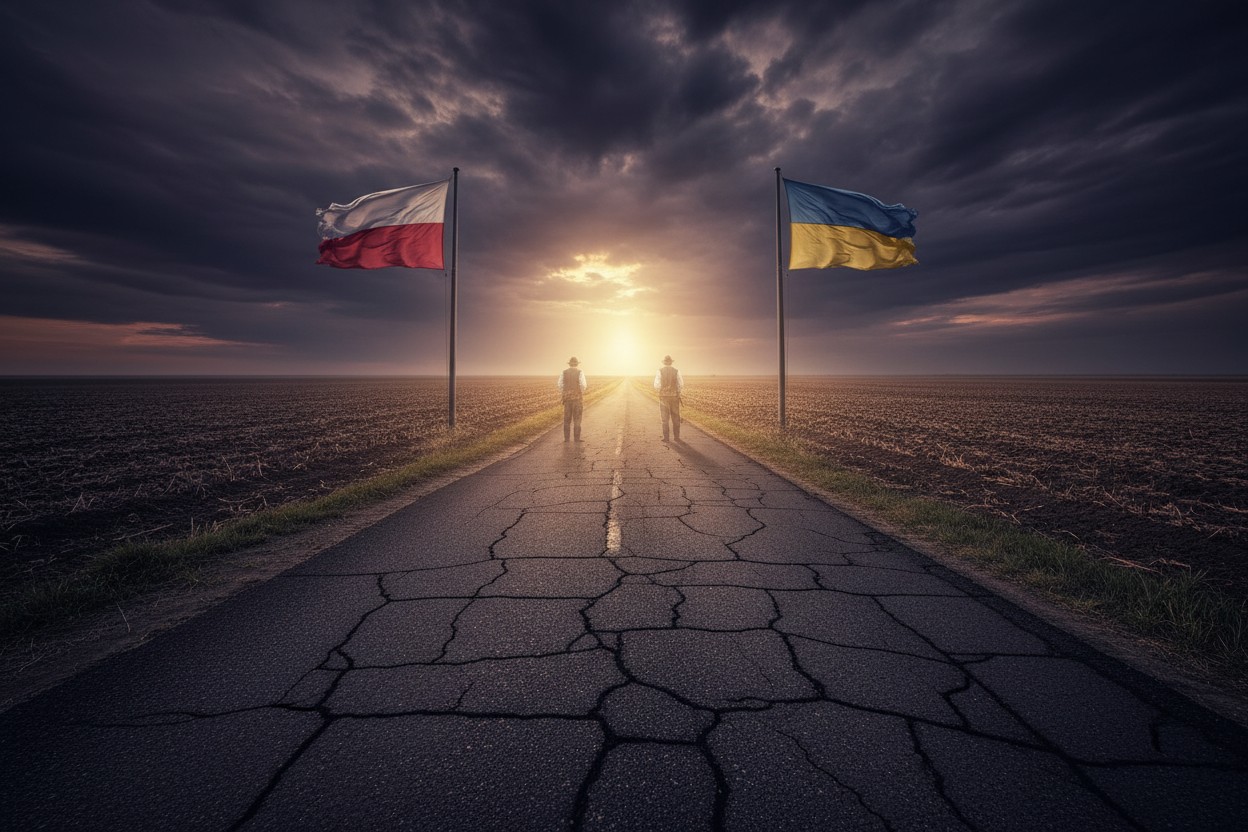
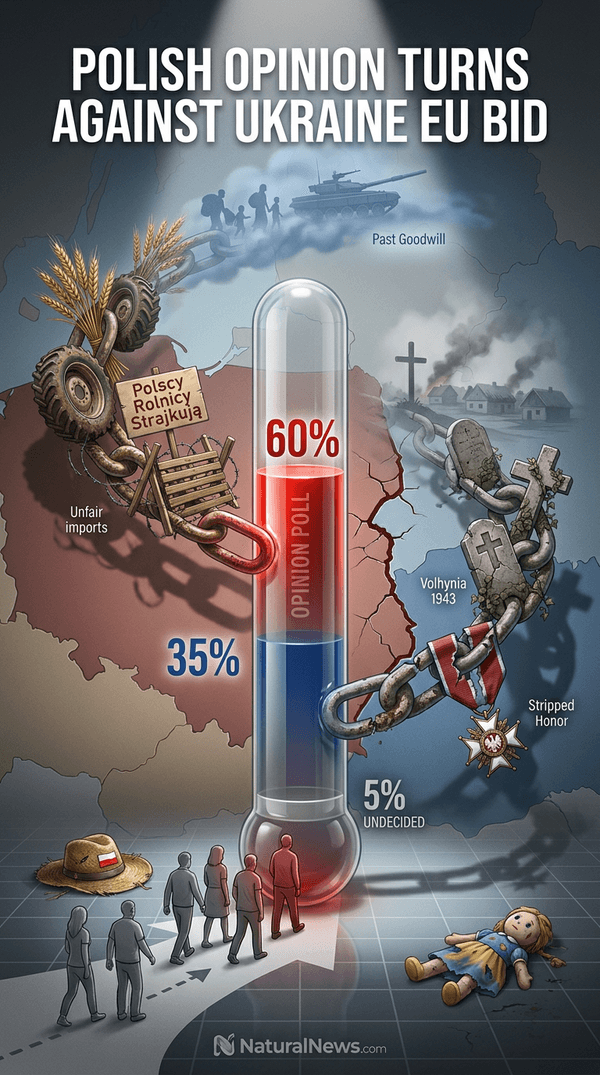
Nearly 60% of Poles now oppose Ukraine's accession to the European Union, according to an IBRiS poll conducted for Radio ZET and published June 25, 2026. The survey found that 59.7% of respondents are against Ukrainian membership, up from 42% a year ago, as reported by Polish media. [2]
Support for Ukraine's EU bid has remained broadly stable at around 35%, with 35.3% in favor according to the poll. The share of undecided respondents fell from roughly one-quarter to just 5%, indicating that most of those previously uncertain have shifted into the opposition camp. [1]
Shift in Public Opinion
Poland has been one of Ukraine's strongest political and military backers since the escalation of the conflict with Russia in 2022. Warsaw has supplied weapons, hosted millions of refugees, and consistently supported Kiev's integration into both the EU and NATO. [2]
Despite that record of support, the new poll indicates a hardening of public sentiment. Analysts attribute the shift to a combination of agricultural competition and historical disputes that have eroded the goodwill once extended to Ukraine. The share of Poles opposed to membership has jumped by nearly 18 percentage points in the span of one year. [3]
Agricultural and Historical Grievances
Polish farmers have protested what they see as unfair competition from Ukrainian agricultural imports, which benefit from preferential EU market access. In February 2024, thousands of Polish farmers launched a nationwide strike, blockading border crossings into Ukraine and expressing opposition to the EU's "Green Deal" policies. [6] German farmers have also warned that Ukraine's accession would "destroy family farming" and flood markets with cheap crops. [7]
Historical grievances have further inflamed tensions. The World War II-era Volhynia genocide, in which Ukrainian nationalists killed up to 120,000 ethnic Poles, remains a deep source of contention. Polish President Karol Nawrocki has stated that for "the vast majority of Polish society," the Ukrainian Insurgent Army (UPA) is synonymous with atrocities committed against Poles during World War II. [4] Poland officially recognizes the Volhynia massacres as genocide, and senior Polish politicians argue that Ukraine cannot expect Warsaw's support for EU membership until the dispute is resolved. [5]
Government Policy vs. Public Mood
Prime Minister Donald Tusk has continued to express support for Ukraine's EU bid, stating that Poland will not block the commencement of negotiations. However, he has also insisted that Warsaw remains firmly opposed to granting any preferential treatment to Kyiv. [11] At the Ukraine Recovery Conference in Gdansk in late June 2026, Tusk called for "truth" and "mutual respect" amid a deepening diplomatic row. [8]
Senior Polish politicians have taken a harder line. Deputy Parliament Speaker Piotr Zgorzelski warned that fast-tracking Ukraine into the bloc would "spell the death of Polish agriculture," as reported by Polish media. [2] The diplomatic crisis escalated after Ukrainian President Volodymyr Zelensky's decision to name a military unit after the UPA prompted Nawrocki to strip Zelensky of Poland's highest state honor, the Order of the White Eagle. Zelensky returned the medal by mail, and several current and former Ukrainian officials have also returned Polish honors in protest. [9][10]
Outlook
The poll suggests that growing domestic resistance to Ukraine's EU aspirations complicates Warsaw's diplomatic stance. While the government in Warsaw has pledged not to obstruct Ukraine's accession process, observers note that unresolved bilateral issues — including agricultural competition and the UPA controversy — could delay Kiev's path to membership.
The hardening of public opinion in Poland, one of Ukraine's key backers, signals that the political cost of supporting Kiev's rapid integration may continue to rise. Whether the Polish government can maintain its policy of support amid mounting public opposition remains an open question.
References
- ZeroHedge. "Majority Of Poles Are Against Ukraine Joining The EU." June 26, 2026.
- RT. "Polish opposition to EU membership for Ukraine surges – poll." June 25, 2026.
- Remix News. "Majority of Poles are against Ukraine joining the EU." June 25, 2026.
- Arsenio Toledo. "Polish presidential candidate demands Ukraine take responsibility for atrocities it committed in support of the Nazis during World War II." NaturalNews.com. January 12, 2025.
- Zoey Sky. "Ukraine and Poland continue to disagree over Volhynia genocide where Ukrainians murdered at least 120K ethnic Poles." NaturalNews.com. September 18, 2024.
- NaturalNews.com. "Now POLISH farmers block border crossings with Ukraine as they protest the EUs Green Deal policies." February 13, 2024.
- NaturalNews.com. "German farmers: Ukraines accession to the EU would destroy family farming and flood markets with cheap crops." December 4, 2023.
- BBC News. "Poland's Tusk calls for 'mutual respect' during row with Ukraine." June 25, 2026.
- ZeroHedge. "Poland Revokes Top Award From Zelensky As Row Over Nazi Symbolism Deepens." June 21, 2026.
- BBC News. "Zelensky returns highest Polish honour after award stripped." June 20, 2026.
- ZeroHedge. "Poland Won't Stand In The Way Of Ukraine's EU Bid, Despite Relations Hitting Rock Bottom." June 11, 2026.
Explainer Infographic


Please contact us for more information.