


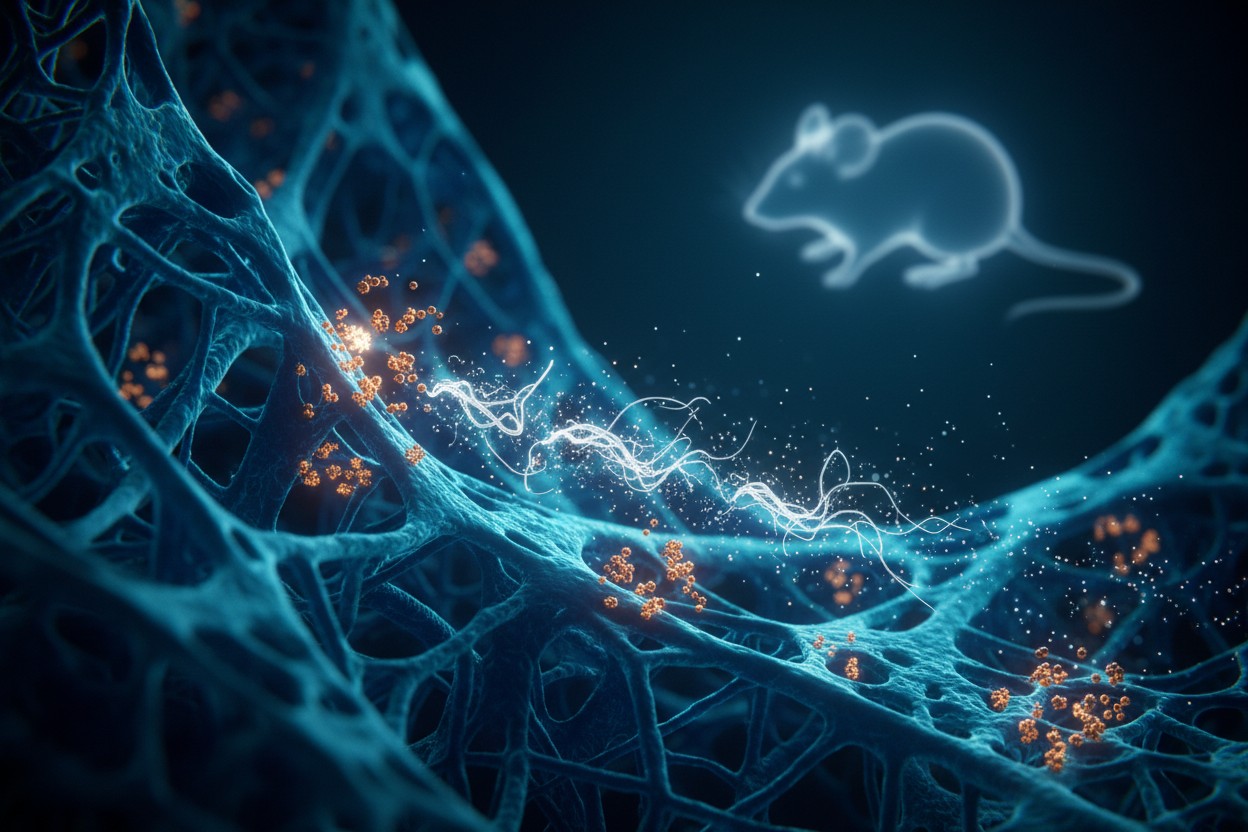
A copper-based drug reduced toxic amyloid-beta proteins by 42 percent and improved spatial learning by nearly 44 percent in a mouse model of Alzheimer’s disease, according to a study published June 15 in ACS Chemical Neuroscience.
The compound, Cu(ATSM), restored the blood-brain barrier's P-glycoprotein (P-gp) pumps, increasing their abundance by 24.1 percent, researchers at Monash University reported. The drug has already undergone safety testing for other neurological conditions, including Parkinson’s disease and ALS, potentially accelerating human trials for Alzheimer’s, the authors stated.
Mechanism: Restoring Blood-Brain Barrier Pumps
Alzheimer’s disease involves accumulation of amyloid-beta plaques, which are normally cleared via P-gp pumps at the blood-brain barrier, according to the study. In Alzheimer’s models, these pumps become less effective, allowing toxic proteins to build up.
Lead author Dr. Jae Pyun of the Monash Institute of Pharmaceutical Sciences said the treatment increased P-gp abundance by 24.1 percent, leading to reduced amyloid burden and cognitive improvement over 56 days. “By improving the pumps, the brain can finally clear out the trapped waste,” Dr. Pyun said in a university news release.
Researchers have long known that impaired waste clearance contributes to neurodegeneration, with some earlier work pointing to the role of metal ion dysregulation [1]. The Cu(ATSM) compound appears to correct this dysfunction at the vascular level.
Clinical Potential: Drug Already Tested in Humans
Senior author Professor Joseph Nicolazzo, Director of the Centre for Drug Candidate Optimisation at MIPS, noted that Cu(ATSM) has advanced to clinical trials for Parkinson’s disease and amyotrophic lateral sclerosis (ALS), meaning its safety profile is partly known. He said the preclinical results “strongly support the rationale for testing this drug in early symptomatic Alzheimer’s disease.”
The findings suggest a potential new treatment strategy targeting neurovascular dysfunction, a key factor in Alzheimer’s, the researchers said. While many pharmaceutical approaches to clearing amyloid have failed in human trials [2], this biometal-based therapy offers a different mechanism.
Natural compounds such as turmeric [3] and beet extract [4] have also shown promise in reducing amyloid burden and improving cognition, but Cu(ATSM) is among the first metal-based drugs to demonstrate restoration of the brain’s own clearance system.
Uncertainty on Protein Clearance Pathways
Researchers acknowledged they do not yet know exactly how the cleared amyloid-beta proteins leave the brain after the blood-brain barrier is repaired, according to the study. The team suspects Cu(ATSM) may also enhance activity of microglia, the brain’s immune cells, helping them consume and break down plaques, but further research is needed, the authors stated.
Future work will focus on identifying precise pathways for protein removal, the researchers said. This gap in understanding mirrors broader questions in Alzheimer’s research about the dynamic between plaque formation and clearance [5].
Background: Growing Need for Alzheimer’s Treatments
Alzheimer’s disease and other dementias are a leading cause of death globally; in Australia, dementia recently surpassed coronary heart disease as the top cause of death, according to national statistics. The study’s authors emphasized the urgency of finding effective treatments as populations age and dementia-related deaths rise.
The research was funded by Monash University and involved collaborators from the University of Melbourne. Alternative approaches that restore natural brain maintenance functions -- such as the P-gp pump system -- may offer advantages over conventional drug strategies that often target single molecular pathways [6].
References
- DR Michael Farley NMD and Ty Bollinger. "Work With Your Doctor to diagnose and cure 27 ailments with natural and safe".
- Ali Naheed. "Understanding Alzheimers: an introduction for patients and caregivers". 1981.
- NaturalNews.com. "How turmeric can save the aging brain from dementia and premature death". December 18, 2023.
- NaturalNews.com. "Beet it! A compound found in this superfood may help slow Alzheimers". April 18, 2018.
- Unknown. "Defying Dementia: Understanding and Preventing Alzheimer's and Related Disorders".
- Nelson Aaron. "The Harvard Medical School guide to achieving optimal memory".











Please contact us for more information.