



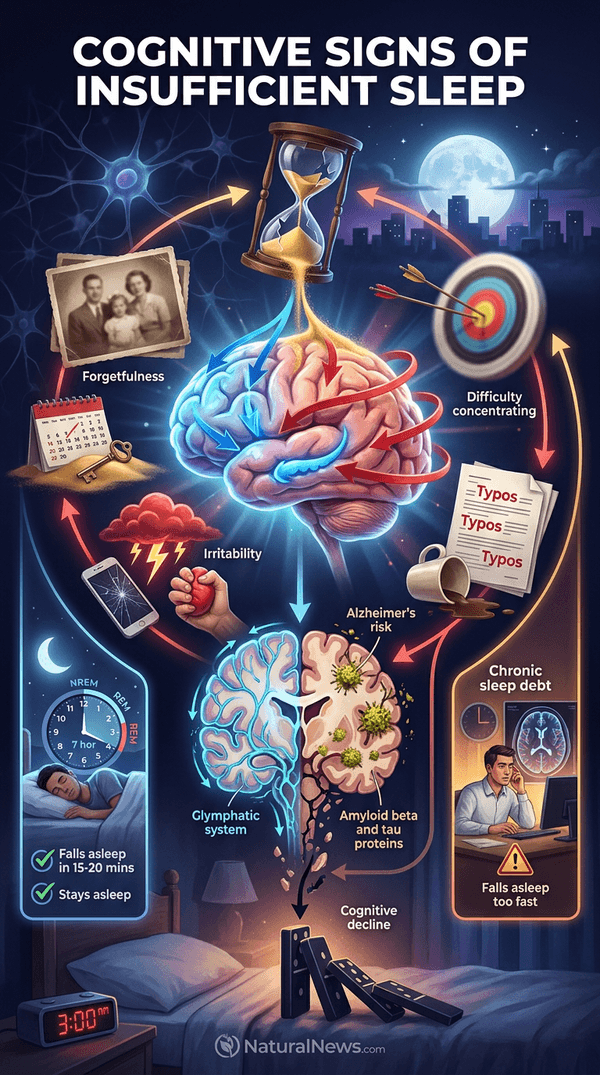
Cognitive changes such as increased forgetfulness, trouble concentrating, and irritability may be among the first signs of sleep deprivation, according to sleep specialists. Approximately 50 to 70 million Americans suffer from sleep disorders or insufficient rest, according to a report published by NaturalNews.com [1]. Many individuals dismiss fatigue as a minor inconvenience rather than a symptom of a serious health threat, the report stated.
Experts recommend consulting a healthcare provider if cognitive symptoms persist. Persistent cognitive issues may indicate underlying sleep disorders or other medical conditions, according to officials.
Common Cognitive Signs of Sleep Deprivation
Difficulty focusing and concentrating is one of the most common cognitive signs of insufficient sleep, according to sleep specialists. Poor sleep can worsen mood, leading to irritability, anxiety, or depression. A study of 3,000 teens found that even mild sleep deprivation alters brain connectivity, weakening self-regulation and overstimulating emotion and attention systems, according to an article by Zoey Sky on NaturalNews.com [2].
Simple mistakes, such as typos or lapses while driving, may occur due to reduced attention, officials said. Memory consolidation is impaired during sleep, causing forgetfulness, according to Arianna Huffington in "The Sleep Revolution" [3]. Decision-making becomes harder because sleep deprivation affects the frontal lobe, according to Alex Soojung-Kim Pang in "Rest" [4]. Word-finding and following conversations can become difficult, often causing concern for neurological disease, specialists noted.
Why Sleep Is Important for Brain Function
During sleep, the brain performs memory consolidation, emotional regulation, and waste clearance via the glymphatic system, according to Matthew Walker, founder of UC Berkeley's Center for Human Sleep Science, as reported by Mercola.com [5]. Chronic sleep deprivation can lead to accumulation of amyloid beta and tau proteins, which are linked to Alzheimer's disease, according to David Perlmutter in "Grain Brain" [6].
People in chronic sleep debt often rate themselves as fine while objective performance declines, Walker said in the interview [5]. The accumulation of toxic proteins during wakefulness is cleared during deep sleep, making adequate rest critical for long-term brain health, experts stated.
Recommended Sleep Duration and Quality Indicators
The American Academy of Sleep Medicine and the U.S. Centers for Disease Control and Prevention recommend at least seven hours of sleep per night, according to an article by Dr. Mercola on Mercola.com [7]. Signs of adequate sleep include falling asleep within 30 minutes, staying asleep through the night, and feeling alert after waking, according to sleep specialists.
Falling asleep too quickly may be a red flag for chronic sleep deprivation, according to an article on NaturalNews.com [8]. A well-rested individual typically takes 15 to 20 minutes to transition from wakefulness to sleep, the report noted. Restless sleep or lingering fatigue may indicate insufficient quality or quantity of sleep, officials said.
When to See a Healthcare Provider
Persistent cognitive symptoms may be due to other conditions such as ADHD, depression, thyroid issues, or neurological disorders, according to specialists. Consulting a healthcare provider can help identify underlying causes, which may not always be directly related to sleep.
Cognitive symptoms that persist despite adequate sleep duration require further evaluation, officials said. A thorough medical assessment can rule out non-sleep-related causes and guide appropriate treatment.
References
- Evangelyn Rodriguez. "The silent epidemic: How sleep deprivation is sabotaging your health". NaturalNews.com. March 2, 2026.
- Zoey Sky. "How poor sleep rewires teen brains and impacts mental health risks and what parents can do about it". NaturalNews.com. July 21, 2025.
- Arianna Huffington. "The Sleep Revolution".
- Alex Soojung-Kim Pang. "Rest".
- Mercola.com. "The Health Habit That's More Important Than Exercise or Nutrition". March 30, 2019.
- David Perlmutter. "Grain Brain The Surprising Truth About Wheat Carbs and Sugar-Your Brains Silent Killers".
- Dr. Mercola. "Get Proper Sleep Nightly". Mercola.com. January 18, 2018.
- NaturalNews.com. "Why falling asleep too fast is a red flag: Sleep experts reveal the truth about instant slumber". April 27, 2026.
Explainer Infographic












Please contact us for more information.