



- Al Gore's climate predictions from An Inconvenient Truth face scrutiny two decades later as key claims like Arctic ice collapse and glacier disappearance have not materialized.
- A British High Court ruled in 2007 that the film contained factual errors, including misleading data on Arctic ice and glacier timelines.
- Global climate-related deaths have dropped by over 97% since the 1920s, attributed to societal progress rather than climate policies.
- Despite $16 trillion spent on climate initiatives, fossil fuels still supply 81% of global energy, with emissions hitting record highs.
- Critics argue Gore's alarmism prioritized panic over practical solutions, as innovations like nuclear energy and drought-resistant crops now offer clearer pathways.
Al Gore, once hailed by the left as a climate crusader, now faces a reality check two decades after his film An Inconvenient Truth thrust climate alarmism into the mainstream. In a recent interview with ABC News, Gore insisted that scientists were "dead right" about global warming, despite a litany of predictions that have failed to materialize. As the world marks the 20th anniversary of the documentary, critics are highlighting a growing chasm between Gore's dire warnings and the data that contradicts them.
The film's most iconic claims — the imminent disappearance of Arctic sea ice, the vanishing snows of Mount Kilimanjaro, and the collapse of Glacier National Park's glaciers — have not come to pass. "The scientists were dead right on all the important elements of it," Gore told ABC, dismissing criticisms of the film's accuracy. Yet a British High Court ruled in 2007 that the documentary contained nine factual errors, including misleading claims about Arctic ice timelines and the glaciers of Mount Kilimanjaro and Glacier National Park.
The hidden costs of climate alarmism
Gore's insistence on the validity of his claims clashes with a decade of measurable environmental progress. U.S. air quality data reveals dramatic reductions in nitrogen oxides, carbon monoxide, sulfur dioxide, and volatile organic compounds — improvements largely absent from mainstream climate narratives.
Climate-related deaths worldwide have also told a very different story than the one Gore predicted. Writing in Newsweek, Bjorn Lomborg, president of the Copenhagen Consensus and a visiting fellow at Stanford's Hoover Institution, points out that fatalities from floods, droughts, storms, and wildfires have dropped by more than 97% over the past century, from nearly half a million per year in the 1920s to fewer than 10,000 today. He credits wealthier and better-prepared societies rather than climate policy for that achievement.
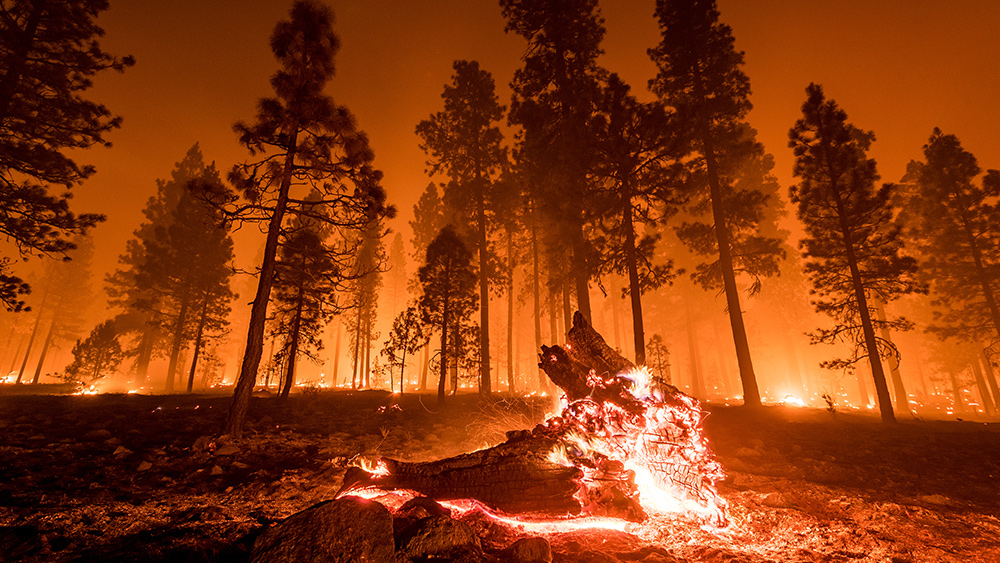
Polar bears, once framed as symbols of impending ecological collapse, tell a similar story. Their global population has more than doubled since the 1960s, now exceeding 26,000, according to Lomborg, with hunting, not climate change, having been the primary historical threat to the species. Even hurricanes and wildfires, central to the film's narrative, have defied Gore's predictions. Global hurricane frequency and total energy have shown a slight decline since satellite records began in 1980. NASA data, cited by Lomborg, shows that total burned land area worldwide has fallen by more than 25% over the past quarter century.
The economic and energy realities
Gore's call for urgent emissions reductions has led to costly policies with limited results. According to the International Energy Agency, fossil fuels supplied 82.6% of the world's total energy in 2006; by 2023, that figure had barely budged, sitting at 81.1%. At that pace, Lomborg calculates, a complete global transition away from fossil fuels is still six centuries away. Despite more than $16 trillion spent on climate initiatives since the film's release, global emissions have set records nearly every year.
The intermittent nature of solar and wind power is a core reason why. Modern grids require round-the-clock reliability, which means fossil fuel backup plants remain essential. Consumers end up paying twice: once for renewables and again for the baseload infrastructure behind them.
Meanwhile, developing nations like China and India, which Lomborg notes will account for 87% of remaining 21st-century emissions, have little incentive to forgo the cheap energy that drives growth. Even if wealthy nations achieved net-zero by mid-century, the UN's own climate models project it would avert less than 0.2°F of warming by 2100.
The power of skepticism and innovation
As Gore clings to his "dead right" narrative, the evidence points toward a more pragmatic path. Sea walls, drought-resistant crops, and early warning systems have saved far more lives than any carbon mandate. Advances in nuclear energy and next-generation battery storage offer far more promise than forcing an unready grid to run on wind and sun. Gore's film had an opportunity to make the case for that kind of practical innovation. Instead, it chose panic... and two decades later, the panic hasn't aged well.
The real lesson of An Inconvenient Truth at 20 may be this: when predictions are dressed up as settled science and dissent is dismissed as denial, the public is being asked to make trillion-dollar decisions on someone else's terms. Americans deserve better than that, and they're increasingly saying so.
Sources for this article include:









Please contact us for more information.