
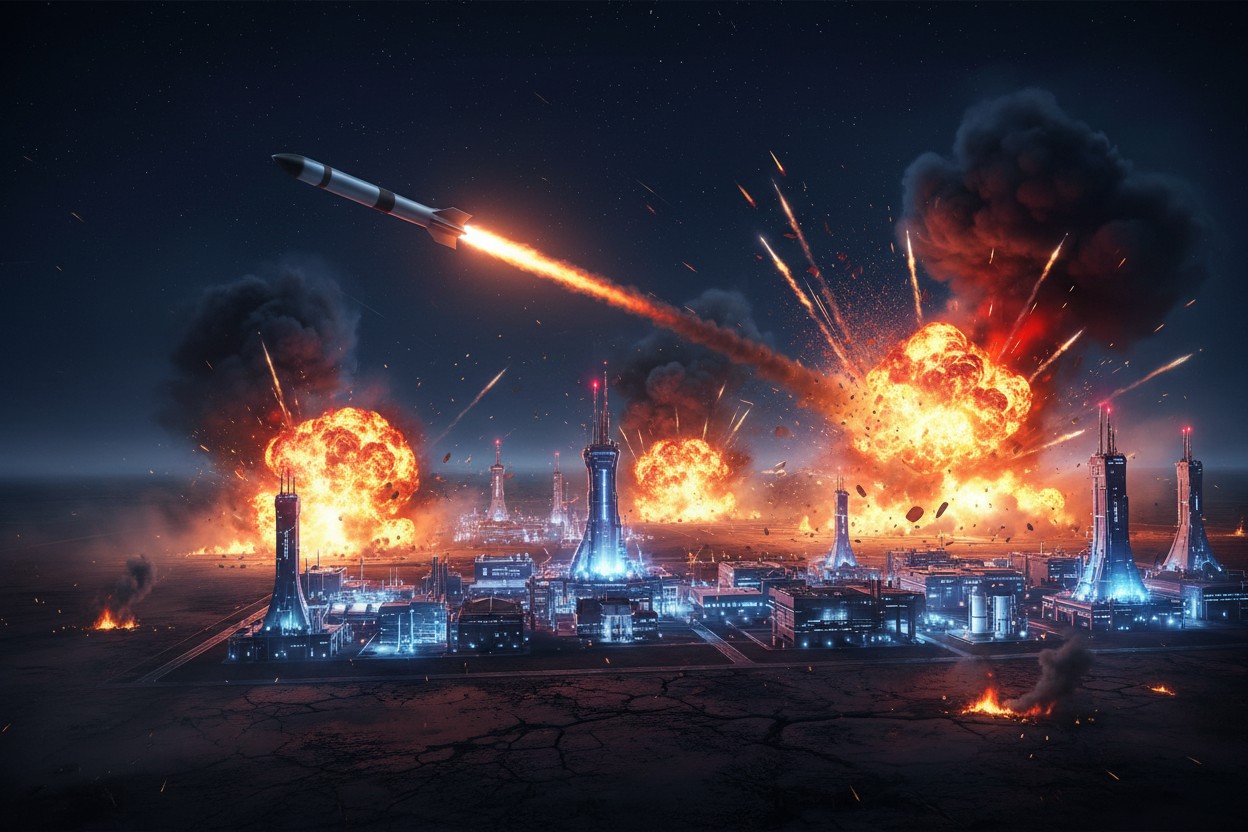
- Russia downed 172 Ukrainian drones overnight, with 60 targeting Moscow, in one of the largest attacks on the capital this year
- Ukrainian drones damaged the Moscow Oil Refinery, which supplies 40% of the capital's gasoline needs
- The attack marked the ninth consecutive day of Ukrainian drone strikes on Moscow
- Russia retaliated with 132 drones and two missiles into Ukraine, with 114 intercepted
- Ukrainian President Zelensky attended the G7 summit in France to press Western leaders for more pressure on Russia
A night of reciprocal attacks
Russia and Ukraine escalated their long-range drone warfare overnight Monday into Tuesday, with each side launching massive aerial assaults against the other's territory in a cycle of retaliation that shows no sign of abating. Russian air defenses shot down 172 Ukrainian drones across multiple regions, including 60 targeting Moscow, while Ukraine intercepted 114 of 132 Russian drones launched in a separate barrage. The attacks come as Ukrainian President Volodymyr Zelensky attended the G7 summit in Evian-les-Bains, France, to appeal for continued Western support.
Moscow under siege: Ninth consecutive day of drone attacks
Tuesday marked the ninth consecutive day of Ukrainian drone attacks on Moscow, according to Mayor Sergey Sobyanin. The strike on the capital was the largest since May 17, when Russian authorities reported intercepting 81 drones. Sobyanin confirmed that one drone damaged a facility at the Moscow Oil Refinery, a Gazprom-owned plant in the Kapotnya District that supplies approximately 40% of Moscow's gasoline needs.
Regional Governor Andrei Vorobyov reported that 86 Ukrainian drones were intercepted over the wider Moscow region, with six people injured. The attack forced flight restrictions at all four of Moscow's international airports—Domodedovo, Vnukovo, Zhukovsky and Sheremetyevo—as well as more than a dozen airports across southern and western Russia, stretching from Sochi on the Black Sea coast to Nizhnekamsk in the Tatarstan Republic, some 750 miles from Ukraine.
Ukraine's growing long-range strike campaign
The attack on Moscow represents an intensification of what Ukrainian officials call "long-range sanctions"—a campaign to strike deep into Russian territory with domestically produced drones. Andriy Kovalenko, head of Ukraine's Counter-Disinformation Center, stated that the Moscow refinery accounts for some 40% of the capital's gasoline needs, and noted that even Russia's deployment of "almost all key air defense and missile defense systems to Moscow" has not prevented Ukrainian strikes.
Already in 2026, Sobyanin has reported the downing of more Ukrainian drones—1,134 craft—than in all of 2025, when Russian forces intercepted 734 Ukrainian drones en route to the capital. The expanding range and frequency of these attacks demonstrate Ukraine's growing capability to strike strategic targets deep inside Russia, including oil infrastructure that fuels the Kremlin's war machine.
Russian retaliation: 132 drones and missiles strike Ukraine
Russia responded with its own sustained aerial campaign, launching 132 drones and two missiles into Ukraine overnight. Ukraine's air force reported that 114 drones were intercepted or suppressed, but both missiles and 16 drones impacted across nine locations. The Russian Defense Ministry framed the assault as payback for Ukraine's strikes on its strategic air bases, declaring it had hit "all designated facilities."
In Russia's southern Krasnodar region, authorities reported a fire at an oil storage facility in the village of Poltavskaya after debris from a downed drone fell onto the site. Russia's Emergency Situations Ministry also said a residential building in the city of Elektrostal, east of Moscow, was damaged during the attack. There were no immediate reports of fatalities on the Russian side.
Historical context: Why this matters
The drone war represents a fundamental shift in modern warfare. For the first time, Ukraine is conducting sustained, large-scale strikes against a nuclear-armed superpower's capital and critical infrastructure. This mirrors the strategic bombing campaigns of World War II, where both sides targeted each other's industrial and refining capacity to degrade warfighting capability. However, unlike traditional air power, drones are cheap, expendable and increasingly difficult to defend against—as demonstrated by Russia's deployment of 1,134 intercepts over Moscow in 2026 alone, yet still failing to prevent successful strikes.
The nine-day sustained assault on Moscow also carries profound psychological implications. For Russian citizens, the war has moved from television screens to their neighborhoods. The damaged refinery in Kapotnya and disrupted flights at Moscow's airports bring the conflict home in a way that precision strikes on military targets do not.
G7 summit: Zelensky presses for continued support
The latest exchanges came as Zelensky sat down with Western leaders—including President Donald Trump—at the G7 summit in Evian-les-Bains, France. On Monday, the Ukrainian leader said he would use his visit to appeal for Kyiv's Western partners to put more pressure on Russian President Vladimir Putin to end the invasion. Zelensky shared a purported video of the burning Moscow refinery on Telegram, attributing the damage to "Ukrainian long-range strikes."
"Russia must be compelled to end the war against our people," Zelensky wrote. "And Ukrainian long-range weapons are one of the important components of such coercion."
A war of attrition with no end in sight
The reciprocal drone strikes between Russia and Ukraine underscore a conflict that has become a grinding war of attrition, with neither side willing to back down and no diplomatic resolution in sight. Russia's ability to sustain massive drone and missile production, coupled with Ukraine's growing domestic drone industry, suggests this aerial campaign will continue to escalate. The nine-day assault on Moscow demonstrates that Ukraine has developed the capability to strike Russia's capital at will, while Russia's retaliatory barrages against Ukrainian infrastructure show Moscow's determination to punish Kyiv for every attack.
As Western leaders gather at the G7 summit, the question remains whether diplomatic pressure or military escalation will ultimately determine the outcome of a war that has entered its fourth year with no clear victor and an ever-mounting human cost.
Sources for this article include:







Please contact us for more information.