


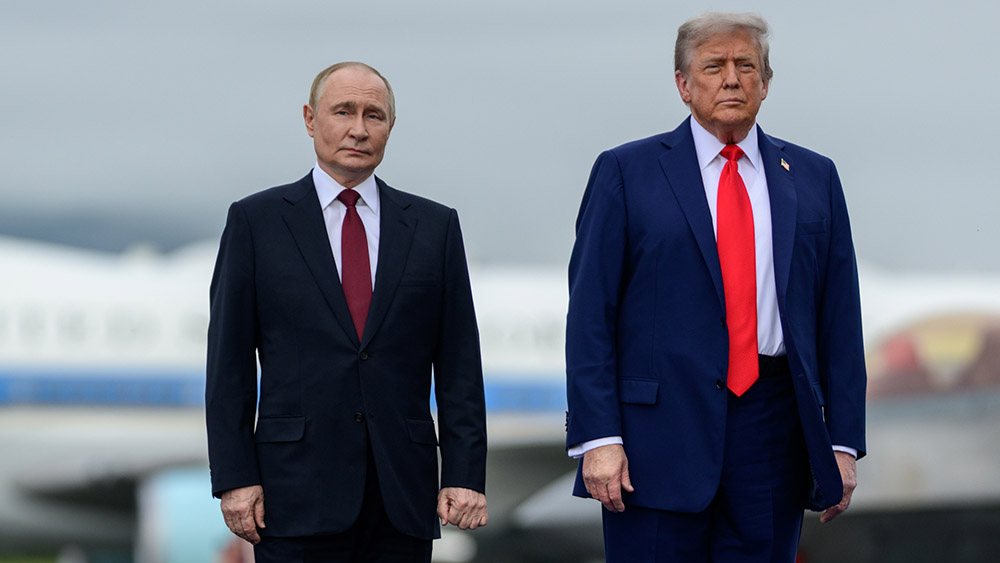
While the corporate media machine paints U.S.-Russia relations as a frozen conflict zone, a quieter diplomatic reality is unfolding inside the Russian Embassy in Washington. There, on Russia Day, Ambassador Alexander Darchiev acknowledged what official narratives often bury: sustained personal chemistry between President Vladimir Putin and President Donald Trump is driving diplomats to restore normal intergovernmental ties, even as geopolitical tensions force “backtracks.” The admission cuts through the noise of impeachment spectacles, Ukraine war briefings, and task force dissolutions, suggesting a bilateral reset remains alive, because of the ongoing rapport between Putin and Trump. This is a critical element right now: instead of confrontation of two nuclear powers, a persistent human factor is steering the two nations away from perpetual hostility.
Key points:
- Russian Ambassador Darchiev confirms Putin and Trump possess “personal chemistry” directing diplomatic work.
- Process of restoring ties is “not straightforward, hampered by backtracks” due to geopolitical tensions.
- Trump administration dismantled Biden-era Task Force KleptoCapture targeting Russian oligarchs.
- Foreign Influence Task Force also ended, shifting enforcement away from Russian propaganda investigations.
- Putin previously thanked Trump for efforts to resolve Ukraine crisis at St. Petersburg forum.
- Trump claims progress on ending Ukraine war, saying “we made a lot of progress on Russia, Ukraine”.
The chemistry that won’t die
The notion of Putin-Trump chemistry is not new, though it has been consistently downplayed or ridiculed by intelligence-linked press outlets. Back in July 2017, following their first face-to-face meeting at the G20 Summit in Hamburg, then-Secretary of State Rex Tillerson confirmed the two leaders displayed “positive chemistry” during a conversation that stretched more than two hours, far exceeding scheduled time. That meeting, which focused on alleged Russian meddling in the 2016 election, ended with both presidents agreeing to prioritize better ties over litigating the past. Trump called it an “honour” to meet Putin, a sentiment that drew immediate fire from Democrats who accused him of dismissing U.S. intelligence assessments.
Fast forward to June 12, 2025, and Darchiev’s remarks at the Russia Day gala reception mirror that same dynamic. “Yes, it might be true that the process is not straightforward, hampered by backtracks, given geopolitical tensions, but of real importance is sustained personal chemistry between Presidents Putin and Trump who directed us, diplomats, to tirelessly work for restoring normal intergovernmental ties,” Darchiev said. He added that such restoration is “topical for ordinary people on both sides of the Bering strait,” a subtle jab at elites who profit from perpetual confrontation.
The ambassador’s phrasing matters. He did not claim ties are repaired, only that the directive from both presidents remains active. That directive survives despite the Biden administration’s hostile-to-Russia legacy, which Trump has systematically unraveled since returning to office.
Task forces dismantled, priorities shifted
In a series of moves largely ignored by mainstream outlets, the Trump administration’s Justice Department, under Attorney General Pam Bondi, disbanded Task Force KleptoCapture, a Biden-era program designed to seize assets of Russian oligarchs as punishment for the Ukraine invasion. The department also terminated the Foreign Influence Task Force, originally established during Trump’s first term to police Russian disinformation campaigns. A memo from Bondi’s office ordered attorneys assigned to those initiatives to “return to their prior posts,” reallocating resources toward combating cartels and transnational criminal organizations, specifically targeting fentanyl trafficking blamed for roughly 70,000 U.S. overdose deaths annually.
The Justice Department simultaneously shifted enforcement of the Foreign Agents Registration Act, a World War II-era law, directing prosecutors to focus on traditional espionage rather than registration violations. That move effectively downgrades the significance of unregistered foreign lobbying, a tool previously used to target Russian-linked operatives.
Trump has not hidden his intentions. “We made a lot of progress on Russia, Ukraine,” Trump said earlier this week. “We’ll see what happens. We’re going to stop that ridiculous war.” At the St. Petersburg International Economic Forum, Putin publicly thanked Trump for his efforts to resolve the Ukraine crisis, a moment Darchiev’s comments implicitly reaffirm.
While cable news hypes confrontation, the men in charge are quietly talking. And that conversation, driven by personal chemistry Washington’s permanent bureaucracy cannot manufacture, may be the only thing preventing a deeper abyss.
Sources include:


Please contact us for more information.