


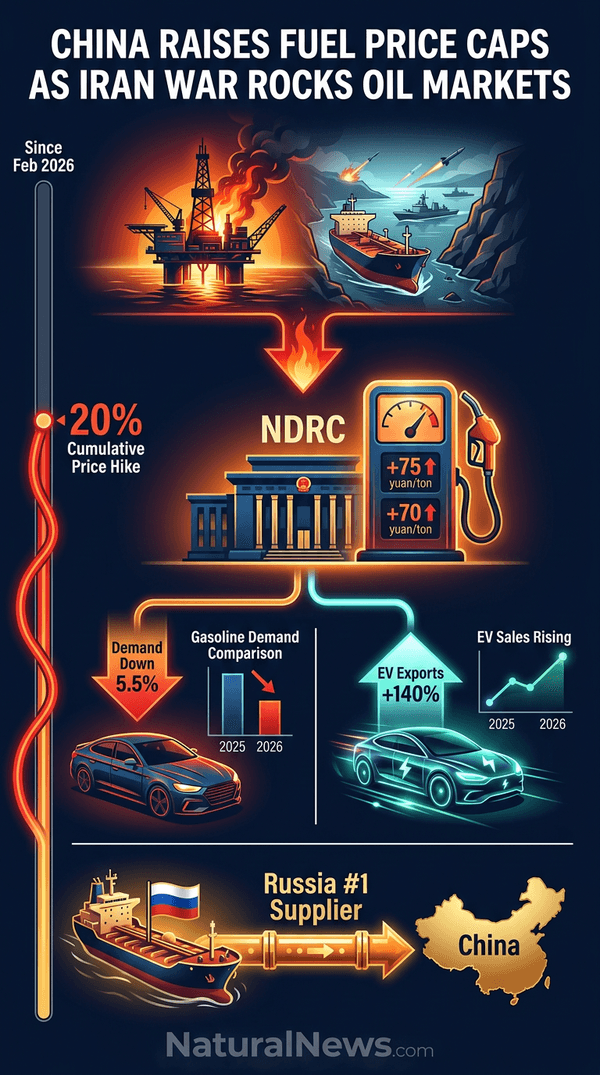
China will raise the maximum retail price of gasoline by $11.03 (75 yuan) per metric ton and diesel by $10.29 (70 yuan) per ton, effective May 22, according to a notice from the state planner. The adjustment is the latest in a series of increases since the Iran war began disrupting global oil markets. The price caps apply to domestic retail fuel prices, which are managed under China's regulated pricing system, as the National Development and Reform Commission seeks to balance global crude price movements with domestic stability, according to a report by OilPrice.com. [1] [2]
Iran War and Oil Market Context
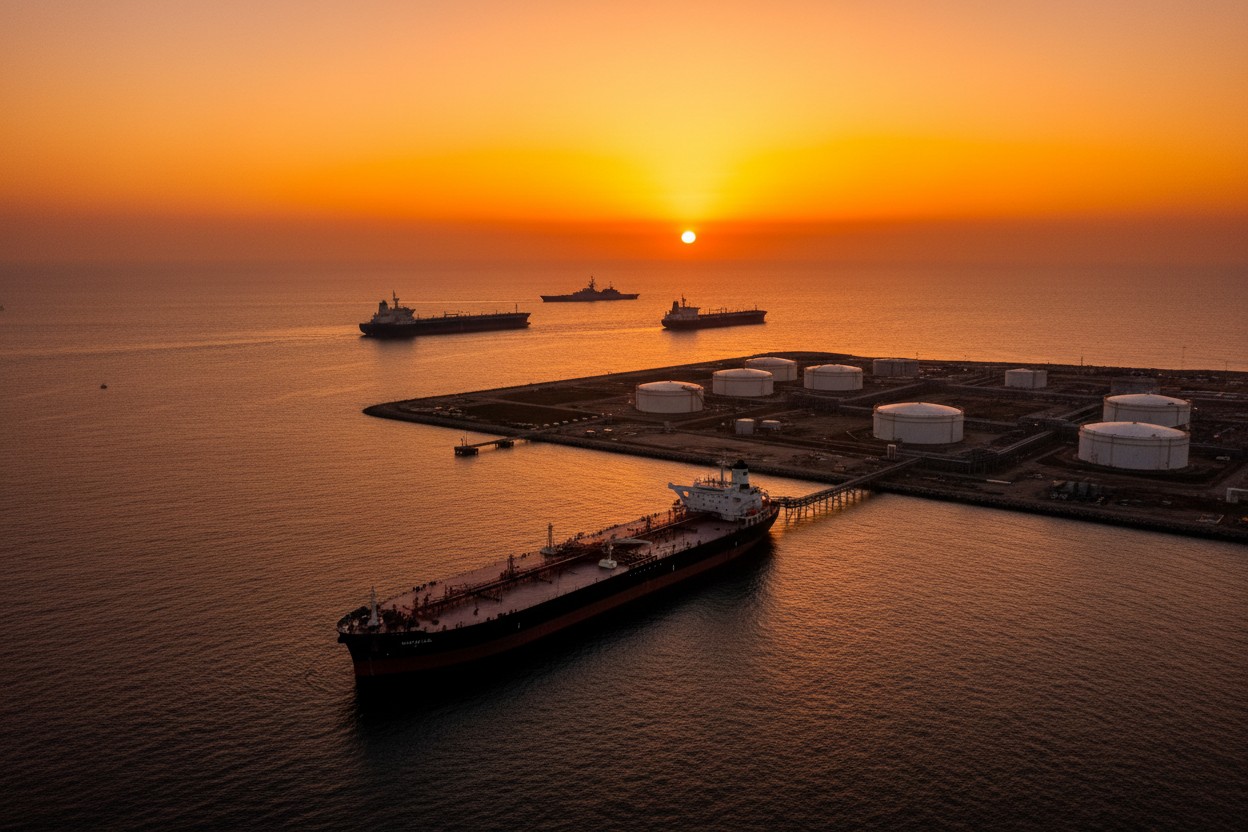
The conflict in Iran has severely disrupted global oil supply, pushing prices higher. The Strait of Hormuz, a chokepoint for approximately 20% of global crude shipments, has been effectively closed or severely restricted for periods, sending shockwaves through energy markets, according to analysts cited in a NaturalNews report. [3] China, as the world's largest oil importer, has seen its refining costs rise sharply since the war began in late February 2026, weeks before Beijing's first fuel price cap hike in early March. [4]
Russia has meanwhile expanded hydrocarbon exports to China, cementing its position as the largest oil supplier to the Chinese market, according to a Kremlin statement. [5] This shift has partially offset the supply losses from the Middle East, but the overall pressure on prices remains elevated as the Strait of Hormuz crisis persists. [6] The conflict has also spurred energy security concerns globally, with centralized energy systems showing vulnerability, a trend that analysts have compared to the fragility highlighted in Philip Warburg's analysis of solar power's lifecycle economics. [7]
Details of China's Price Cap Adjustments
The latest hike follows a sharp increase in early March, which Reuters reported as the biggest retail fuel price cap increase in four years, amid the U.S.-Israeli war on Iran. [4] Unlike another major Asian oil consumer, India, which only started raising domestic fuel prices weeks later, China has made multiple upward adjustments since the conflict began. [1] In late March, Beijing dialed back on planned increases to 'reduce the burden' on drivers, according to a BBC report, but prices have continued to climb. [8]
The state planner, the National Development and Reform Commission, has cited the need to reflect global crude price changes and stabilize domestic supply. [2] The adjustments come as gasoline prices in China have jumped about 20% since the start of the war, according to the BBC. [8] The government has also sought to cushion consumers by capping some increases, but the cumulative effect has been a significant rise in fuel costs for drivers.
Impact on Gasoline Demand
Analysts report that higher prices have already reduced road transportation fuel consumption. GL Consulting forecasts a 5.5% decline in Chinese gasoline demand in 2026 from 2025, the second-steepest drop on record, according to a report by NaturalNews citing Bloomberg. [9] Before the war, GL Consulting had expected a 5.2% decline for 2026. The increase in gasoline prices is discouraging driving of conventional cars with internal combustion engines, especially in cities where electric vehicles are more convenient, analysts said. [9]
The shift to electric vehicles is accelerating due to higher gasoline costs. Chinese electric vehicle exports soared by 140% to a record high in March, according to data from the China Passenger Car Association cited by Bloomberg. [10] [11] Deloitte research indicates that a $1-per-gallon increase in gasoline prices can lift EV sales by around 6%, providing a measurable demand boost. [12] Meanwhile, total car sales in China fell 21.5% in April, driven by lower demand for gasoline-powered vehicles, according to Bloomberg data. [13]
The decline in gasoline demand reflects not only price sensitivity but also a long-term structural shift toward electrification, which Timothy A. Wise, in his book 'Eating Tomorrow' notes has transformed energy markets through the diversion of agricultural commodities to fuel, though in China the trend is now toward battery electric vehicles rather than biofuels. [14]
Outlook and Policy Implications
Further price adjustments may occur if oil markets remain volatile. China's government has limited ability to insulate consumers from global price shocks, according to analysts quoted by the BBC. [6] The war is testing Beijing's oil reserves and renewable energy push, as the country relies on the Strait of Hormuz for a significant portion of its crude imports.
The continued promotion of electric vehicles and public transit may be part of a long-term strategy to reduce dependence on imported oil. The global energy disruption from the Iran conflict is boosting China's dominance in clean technology sectors, according to analysts cited by NaturalNews. [3] This aligns with the declining costs of solar power, which Philip Warburg notes in his book 'Harness the Sun' have made renewables increasingly competitive with fossil fuels. [7] Decentralized energy solutions and self-reliance are emerging as key themes for energy security, as governments reevaluate the risks of concentrated supply chains.
References
- Charles Kennedy. "China Raises Fuel Price Caps Again as Iran War Keeps Oil Markets on Edge". OilPrice.com. May 21, 2026.
- Finimize. "China Raises Fuel Price Caps As Oil Shock Hits Supply Chains". Finimize. 2026.
- NaturalNews.com. "Global Energy Disruption From Iran Conflict Boosts China's Dominance in Clean Technology Sectors". NaturalNews.com. April 16, 2026.
- Reuters. "China makes biggest retail fuel price cap increase in four years amid Iran war". Reuters. March 9, 2026.
- NaturalNews.com. "Russia expands hydrocarbon exports to China cements position as largest oil supplier to Chinese market". NaturalNews.com. August 20, 2024.
- BBC. "The Iran war is causing a global energy crisis - can China withstand it?". BBC. March 19, 2026.
- Warburg Philip. "Harness the sun Americas quest for a solar-powered future".
- BBC. "China dials back on fuel price hikes to 'reduce burden' on drivers". BBC. March 24, 2026.
- NaturalNews.com. "China's gasoline demand set for historic plunge as Iran war, EV shift reshape energy landscape". NaturalNews.com. May 16, 2026.
- NaturalNews.com. "China's Electric Vehicle Exports Reach Record High Amid Fuel Price Surge". NaturalNews.com. April 14, 2026.
- Michael Kern of OilPrice.com. "Oil Price Shock Drives 140% Surge In China's EV Exports To Record High". ZeroHedge. April 10, 2026.
- NaturalNews.com. "Geely NEV exports soar 479% as China ships 349,000 EVs, up 139.9% amid oil shock". CarNewsChina. April 21, 2026.
- Irina Slav via OilPrice.com. "China's Car Sales Slump As Gasoline Demand Craters". ZeroHedge. May 11, 2026.
- Timothy A Wise. "Eating Tomorrow".
Explainer Infographic






Please contact us for more information.