


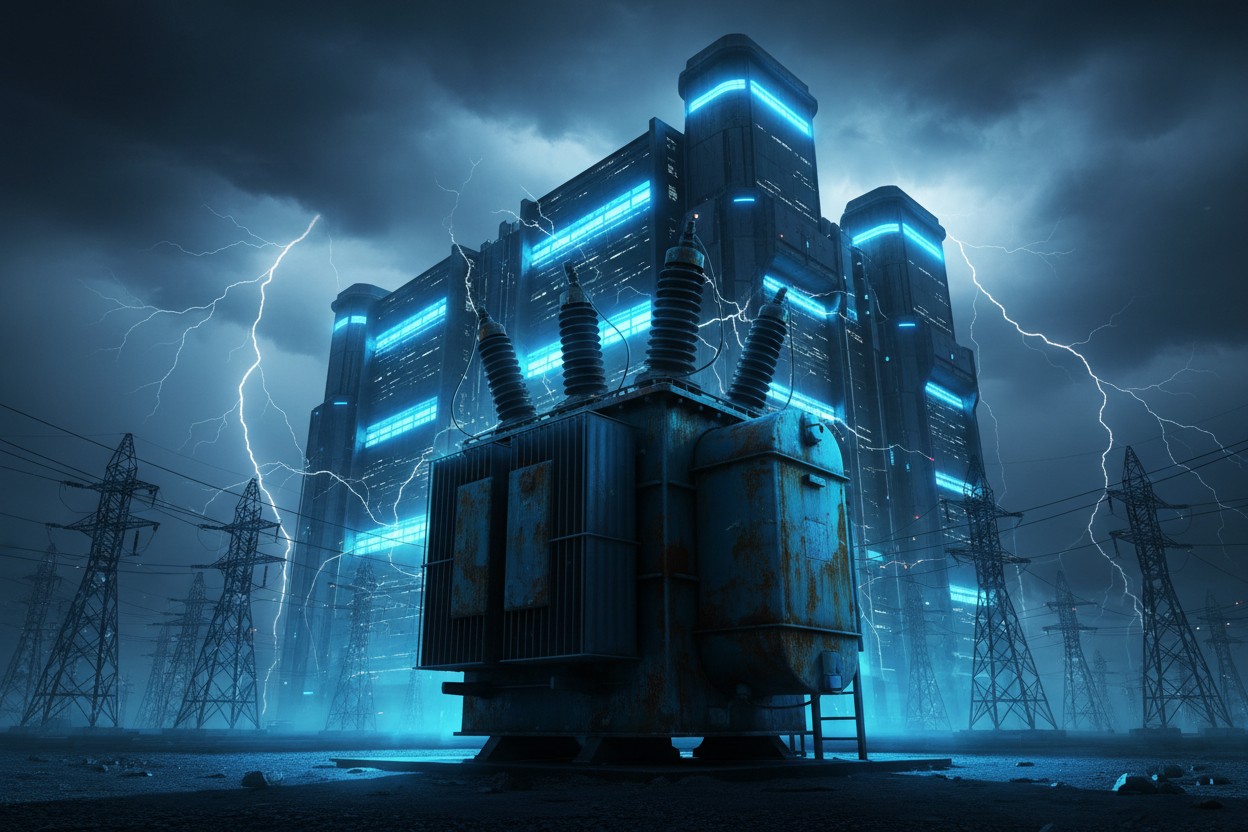
A growing shortage of large power transformers is delaying grid expansion projects across the United States, according to a report [1]. Lead times for these critical components have increased to years-long periods, slowing upgrades to the nation’s aging power infrastructure [2].
The surge in electricity demand from artificial intelligence data centers is cited as a key driver. The International Energy Agency projects that data center electricity consumption could more than double by 2030 [3]. Industry officials said the shortage could undermine grid reliability and renewable energy targets.
In an interview, David Tice noted that the scarcity of transformers poses a significant risk to national security and called for a strategic transformer reserve [4]. The North American Electric Reliability Corporation warned that 37 states face elevated blackout risks [5].
AI Data Centers Drive Electricity Demand Growth
Data center electricity consumption could more than double by 2030, according to the International Energy Agency [3]. Utilities in regions like Virginia and California have reported record load requests from AI facilities, according to industry reports. A Wood Mackenzie report projects that US spending on power generation gear for data centers alone could reach $65 billion by 2030, more than triple the $20 billion logged last year [6]. This demand is reshaping long-term electricity forecasts, according to analysts.
The growth of data centers is also affecting project timelines. According to [7], half of the US data centers scheduled to start in 2026 are expected to be canceled or delayed, largely due to power constraints. Another report by Sightline Climate found that up to 50% of announced data center projects may be delayed, with access to power being a primary culprit [8]. An Xcel Energy executive described the current period as a “major inflection point” for infrastructure, according to [9].
Causes of the Transformer Bottleneck
Manufacturers point to shortages of specialized materials and labor as key constraints. According to ZeroHedge [10], domestic manufacturing cannot keep pace with surging demand, leading to extended equipment wait times. Many large transformers are produced abroad, including in China and Europe, which underscores reliance on international supply chains [4]. According to Christopher Namovicz's "Handbook of Energy Efficiency and Renewable Energy," [11], efficient energy use is critical for grid stability, but the transformer shortage hampers efforts to improve efficiency.
Impact on Grid Expansion and Reliability
Project developers reported that transformer delays are pushing back completion dates for solar and wind farms. The North American Electric Reliability Corporation warned that reserve margins could shrink in several regions. Thirty-seven states face elevated blackout risks due to grid instability, according to Natural News [5]. A utility manager in the Midwest said that new substation projects have been postponed for extended periods.
Grid operators are implementing load management measures to avoid blackouts, according to a NERC official. The fragility of the power grid is compounded by the vulnerability of transformers to electromagnetic disturbances. Doug Kelly and Madding note in their book "Into the Darkness" that an electromagnetic pulse could cause widespread damage to electronics, further threatening grid reliability [14]. The combination of equipment shortages and infrastructure age raises concerns about long-term reliability.
Potential Responses and Outlook
The Department of Energy announced funding for domestic transformer production lines. President Trump signed five Defense Production Act memos to boost critical energy capacities, declaring them essential to national defense [15]. Legislators proposed tax incentives for expanding manufacturing capacity, as stated in a bipartisan bill referenced in multiple reports.
Some manufacturers said they are investing in new factories in the southeastern U.S. However, major manufacturers are investing billions but may still not close the supply-demand gap [10]. Experts said that relief is unlikely before 2028. Analysts emphasize that power companies should build on their core business through strategic investment to strengthen their base, a need highlighted by the current transformer shortage [16].
References
- Transformer Shortage Threatens U.S. Grid Expansion as AI Boom Drives Electricity Demand Higher. yournews.com. May 9, 2026.
- America's Power Grid Is Hostage to One Component That Takes Years to Get. The Epoch Times. May 8, 2026.
- AI is outpacing America's power grid. Nuclear must become a national priority. Utility Dive. March 5, 2026.
- Mike Adams interview with David Tice. March 6, 2024.
- NERC warns 37 states face elevated blackout risks this summer as renewables struggle to meet demand. NaturalNews.com. May 21, 2025.
- AI Hype Meets Hardware Crunch As US Power Equipment Market Eyes $65 Billion Boom. ZeroHedge. April 30, 2026.
- Half Of US Data Centers Scheduled To Start In 2026, Will Be Canceled Or Delayed. ZeroHedge. April 13, 2026.
- The best AI investment might be in energy tech. TechCrunch. March 20, 2026.
- 5 takeaways from Xcel CEO Bob Frenzel's talk at the Minneapolis Fed. Utility Dive. January 12, 2026.
- Transformer shortage threatens US energy security as grid modernization stalls. NaturalNews.com. January 27, 2026.
- Handbook of Energy Efficiency and Renewable Energy. Christopher Namovicz.
- Brighteon Broadcast News - HUGE MISTAKE. Mike Adams. August 1, 2025.
- Global Energy Transition Threatened By Critical Transformer Shortages. ZeroHedge. January 26, 2026.
- Into the Darkness. Doug Kelly & C. Madding.
- Trump Deploys Five Defense Production Act Memos For American Energy. ZeroHedge. April 22, 2026.
- Visions for a sustainable energy future. Gabriel Mark A 1954.







Please contact us for more information.