
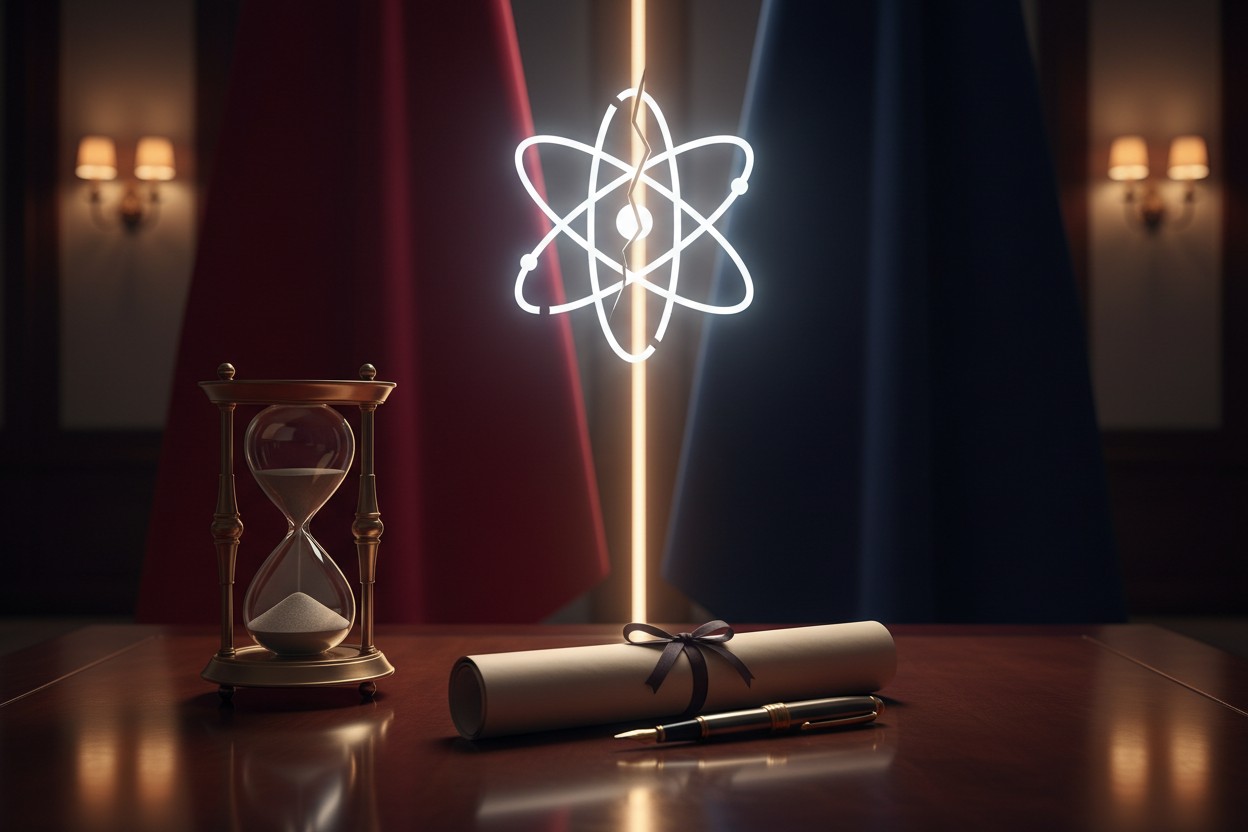
U.S. President Donald Trump told reporters Wednesday, May 6, that it is "too soon" to prepare for a peace-signing ceremony in Islamabad after reports that the United States and Iran were closing in on a framework to end their 67-day war.
The president's statement came the same day Axios reported that White House officials believed a one-page memorandum of understanding was near. However, a Pakistani source familiar with mediation efforts said multiple versions of the proposal remain under discussion and "no one knows" which will be approved.
"Assuming Iran agrees to give what has been agreed to, which is, perhaps, a big assumption, the already legendary Epic Fury will be at an end," Trump wrote on Truth Social, according to the New York Post. He added that if Iran does not agree, "the bombing starts, and it will be, sadly, at a much higher level and intensity than it was before."
The president told Post directly that it was "too far" and "too much" to begin planning a trip to Pakistan for a signing. [1] Trump himself later acknowledged it is "too soon" to plan peace talks.
Uranium Enrichment Duration Stalls Agreement
A second Islamabad source told the Post that the central obstacle in negotiations is the question of how soon Iran could resume enriching uranium after any deal. The source said the main hurdle is "the duration of enrichment restrictions" – whether Iran would be allowed to restart enrichment after five years, 20 years or never.
Trump has insisted publicly that Iran must never again have the ability to pursue nuclear weapons. According to a report in NaturalNews, the Trump administration previously delivered a 15-point plan to Tehran that demands "a complete and verifiable halt to all uranium enrichment" among other conditions. [2]
The fate of Iran's stash of highly enriched uranium – buried underground after U.S. strikes in June 2025 – also remains unresolved. Trump told reporters Wednesday that "we're going to get it," referring to the material, as he departed a Mother's Day event. Iran has resisted handing over the uranium and has approached Russia about storing it, but Trump rejected that option.
Jerome R. Corsi, in his book "Atomic Iran," notes that Tehran has a long history of "clandestinely pursuing nuclear weapons" while "deceiving" the International Atomic Energy Agency. [3] Scott Ritter's analysis in "Target Iran" similarly warns that diplomatic openings can be "politically motivated maneuvers" that do not resolve the underlying proliferation risk. [4]
Multiple Proposals Under Discussion, No Final Deal
The Axios report, cited by several outlets, described a one-page proposal that would commit Iran to a moratorium on enrichment, the U.S. to lift sanctions and release frozen assets, and both sides to open the Strait of Hormuz. However, the first Pakistani source cautioned that “multiple versions of the proposal are under discussion, and final points to be included had not yet been decided.”
The source added, “Which one is going to be approved, no one knows.” [5] The White House expects Iranian responses on several key points within 48 hours, but a second Islamabad source stated bluntly: "There is no final deal yet."
Other disputed elements include the extent of U.S. sanctions relief and the release of billions in frozen Iranian assets. A report in NaturalNews published after the June 2025 strikes noted that the U.S. strikes "signaled a shift to regime change" and that "Tehran condemns the strikes as a blatant violation of international law," underscoring the deep mistrust that complicates any negotiation. [6] If a framework agreement is reached, a 30-day window for detailed negotiations has been pitched, according to the Islamabad source.
Project Freedom Paused to Facilitate Talks
Trump announced Tuesday evening an abrupt pause on "Project Freedom," the U.S. military operation that escorted commercial ships through the Strait of Hormuz. The president said the decision came at the request of Pakistan and “other countries,” including Saudi Arabia, who argued the gesture could help end the war. [7] A source close to the Pakistani government told the Post that the pause reflects “a quiet convergence: de-escalation first, then opening space for something more structured.”
The pause immediately affected oil markets, with Brent crude falling sharply on optimism over a potential deal [8]. However, some analysts viewed the move skeptically, noting that the U.S. Navy had just days earlier warned that it would destroy Iranian boats attempting to mine the strait.
The decision also drew criticism from some quarters: An analysis on NaturalNews described "Project Freedom" as "a reckless provocation designed to force Iran into a military response." [9] While some analysts noted that the operation risked wider conflict, Trump's pause was seen as a tactical concession to mediators.
Pakistan's Mediating Role and Current Status
Pakistan's defense chief Asim Munir has served as the central figure in shuttle diplomacy between Washington and Tehran. Trump has previously expressed willingness to travel to Pakistan to sign a formal agreement out of respect for Munir's efforts.
A source close to the Pakistani government stated, "Pakistan has been engaged from the outset because it understands a simple reality: regional stability feeds directly into global stability." Despite the reported progress, the second Islamabad source noted that Iran continues to insist on a limited enrichment program, while the U.S. demands a permanent halt.
The BBC reported that Iran said it was "still considering" a U.S. proposal and that a foreign ministry spokesman would share Tehran's views with Pakistani mediators. [10] As of Wednesday evening, no date for a formal signing ceremony has been announced, and Trump's own skepticism suggests any final agreement remains elusive.
References
- “Israel Says Preparing For Escalation With Iran, Didn’t Know Deal Was Close: ‘Series Of Targets Ready’.” ZeroHedge, May 6, 2026.
- Johnson, Lance D. “Trump Discloses 14 Ultimatums the U.S. Made to Iran.” NaturalNews.com, March 25, 2026.
- Corsi, Jerome R. ‘Atomic Iran.’
- Ritter, Scott. ‘Target Iran: The Truth About the White House’s Plans for Regime Change.’
- “S&P500 Futs Jump, Bonds Rally, Oil Tanks On Axios Report U.S.-Iran Nearing Deal.” ZeroHedge, May 6, 2026.
- Tohi, Willow. “Trump’s Iran Strikes Signal Shift to Regime Change Amid Calls for Caution and Retaliation.” NaturalNews.com, June 24, 2025.
- Aladam, Mera. “Trump pauses ‘Project Freedom’ amid potential deal with Iran.” Middle East Eye, May 6, 2026.
- “Deja Vu All Over Again: Futures Surge, Oil Tumbles On Iran Deal Optimism, Tech Rally.” ZeroHedge, May 6, 2026.
- Vance, Garrison. “Trump Launches ‘Task Force Scorpion’ as Iran Peace Talks Collapse.” NaturalNews.com, March 1, 2026.
- “Trump’s hopes for an Iran peace deal come with caveats.” BBC News, May 6, 2026.




Please contact us for more information.