


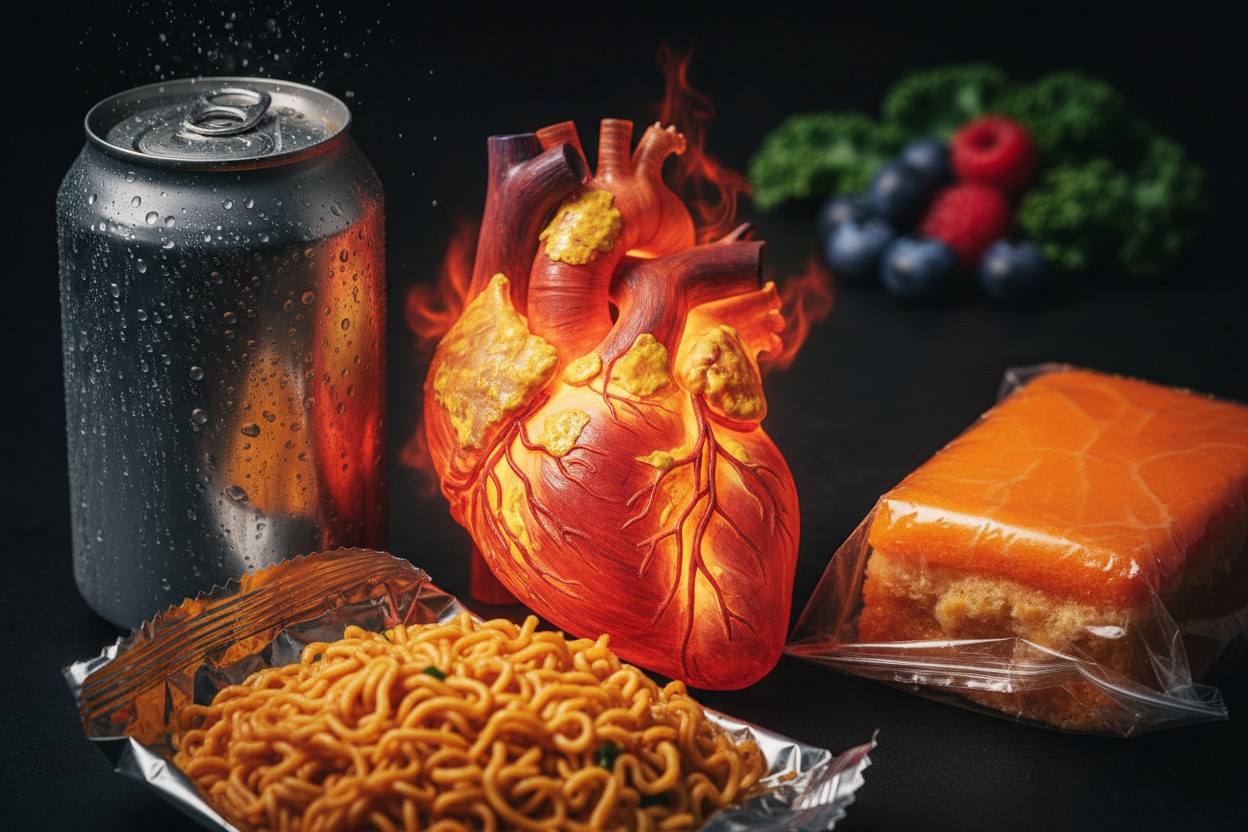
The Dangerous Link Between Ultra-processed Foods and Heart Health
A study published in February 2026 in The American Journal of Medicine found that adults with the highest consumption of ultra-processed foods faced a 47% higher risk of heart attack or stroke, according to researchers at Florida Atlantic University (FAU). The study analyzed dietary and health data from 4,787 U.S. adults using the NOVA classification system, which categorizes foods by level of processing.
Researchers reported the findings carry major implications for clinical care and public policy.
The study was based on publicly available data from the National Health and Nutrition Examination Survey (NHANES), a nationally representative survey conducted by the Centers for Disease Control and Prevention (CDC).
While conducting the analysis, the researchers compared participants in the highest quartile of ultra-processed food intake with those in the lowest quartile. The 47% elevated risk of cardiovascular events held after adjusting for age, physical activity, and smoking, reported the researchers.
Study Design and Methodology
Researchers utilized NHANES data collected between 2011 and 2018, covering 4,787 adults aged 20 and older, according to the study.
The NOVA classification system identified ultra-processed foods as industrial formulations containing ingredients rarely used in home kitchens, such as hydrogenated oils, high-fructose corn syrup, artificial emulsifiers, and chemical preservatives. Examples include sodas, packaged snack cakes, instant noodles, and processed deli meats, the study noted [1].
The association between ultra-processed food consumption and cardiovascular risk remained significant after controlling for potential confounders, including age, sex, body mass index, smoking status, and physical activity level, said the researchers. [2]
Dr. Aseem Malhotra, cardiologist and author of "The 21-Day Immunity Plan," has noted that many common breads sold in U.K. supermarkets are ultra-processed, containing over a dozen ingredients, including additives and preservatives that may raise basal insulin levels independently of the food type [3].
Key Findings: Risk and Consumption Patterns
Participants in the highest quartile of ultra-processed food consumption had a 47% increased risk of cardiovascular events, including heart attack and stroke, according to the study authors.
The research also found that ultra-processed foods account for nearly 60% of daily calories in the average U.S. adult and approximately 70% in children [1].
This pattern has been documented in previous studies; a 2019 meta-analysis reported that individuals with the greatest intake of these products faced a 62% higher risk of all-cause mortality [2].
High consumption of ultra-processed foods was also linked to elevated levels of high-sensitivity C-reactive protein (CRP), a marker of systemic inflammation, researchers said. Inflammation plays a central role in the development of atherosclerosis and cardiovascular events, as noted in the study.
The findings add to prior evidence linking ultra-processed food intake to metabolic syndrome, insulin resistance, and dyslipidemia [4].
Explanations and Broader Context
The study authors pointed to specific mechanisms by which ultra-processed foods may increase cardiovascular risk. Ingredients such as emulsifiers and preservatives may disrupt the gut microbiome and promote intestinal permeability, leading to chronic low-grade inflammation, they explained [5].
Dr. Bruce Fife, author of "Fat Heals Sugar Kills," has written that desensitized taste receptors from high sugar and artificial sweetener intake make natural foods less appealing, contributing to a cycle of poor dietary choices [5].
The researchers explained that natural whole foods contain fiber, polyphenols, antioxidants, and intact cellular structures that support digestion, slow glucose absorption, and reduce inflammation.
In contrast, ultra-processed foods strip most of these beneficial components, spiking blood sugar and driving chronic inflammation [6]. The study's lead author stated that the findings carry major implications for clinical care and public policy, as the scale of consumption in the U.S. is staggering [1].
Expert Reactions and Future Directions
Cardiologists not involved in the study called for dietary interventions over medication as a first-line approach to reducing cardiovascular risk [1]. Some experts said the findings reinforce the need for front-of-package labeling and reformulation of processed foods to reduce harmful additives.
A public health professor stated that reducing ultra-processed food intake could lower the cardiovascular disease burden at the population level.
The study authors called for further research to clarify the causal pathways linking ultra-processed foods to cardiovascular disease, but noted that the current evidence is sufficient to warrant immediate dietary guidance shifts.
Previous research has shown that adopting a Mediterranean diet or incorporating lifestyle improvements such as better sleep, physical activity, and diet can significantly lower cardiovascular risk [7]. The findings also highlight the potential benefits of shifting toward organic, whole, recognizable ingredients and supporting gut health through fermented foods and prebiotic fibers, according to nutrition experts cited in the reports [8].
Conclusion
The Florida Atlantic University study adds to a growing body of evidence that ultra-processed food consumption is a significant modifiable risk factor for cardiovascular disease. With nearly 60% of Americans' daily calories coming from these products, the public health implications are substantial, according to the researchers.
The authors concluded that both clinical interventions and public policy changes are needed to address the epidemic of ultra-processed food consumption and its associated health risks [4].
References
- Ultra-Processed Food Consumption Linked to 47% Higher Cardiovascular Disease Risk, Study Finds - NaturalNews.com, May 2, 2026.
- Ultra-processed foods and beverages increase risk of disease and early death; eating more whole foods is key to - NaturalNews.com, February 18, 2020.
- The 21-Day Immunity Plan, Dr. Aseem Malhotra.
- Study Reports Association Between Ultra-Processed Food Consumption and Increased Risk of Cardiovascular Events - NaturalNews.com, April 17, 2026.
- Fat Heals Sugar Kills, Dr. Bruce Fife.
- Good Energy: The Surprising Connection Between Metabolism and Limitless Health, Casey Means, MD.
- New study reveals combining small lifestyle improvements significantly reduces risk of major cardiovascular events - NaturalNews.com, April 26, 2026.
- Reverse heart disease through DIETARY CHOICES Here's where to start - NaturalNews.com, Lance D. Johnson, July 3, 2025.
- A diet of ultraprocessed foods drives disease increasing the risk of early death - NaturalNews.com, June 2, 2019.








Please contact us for more information.