


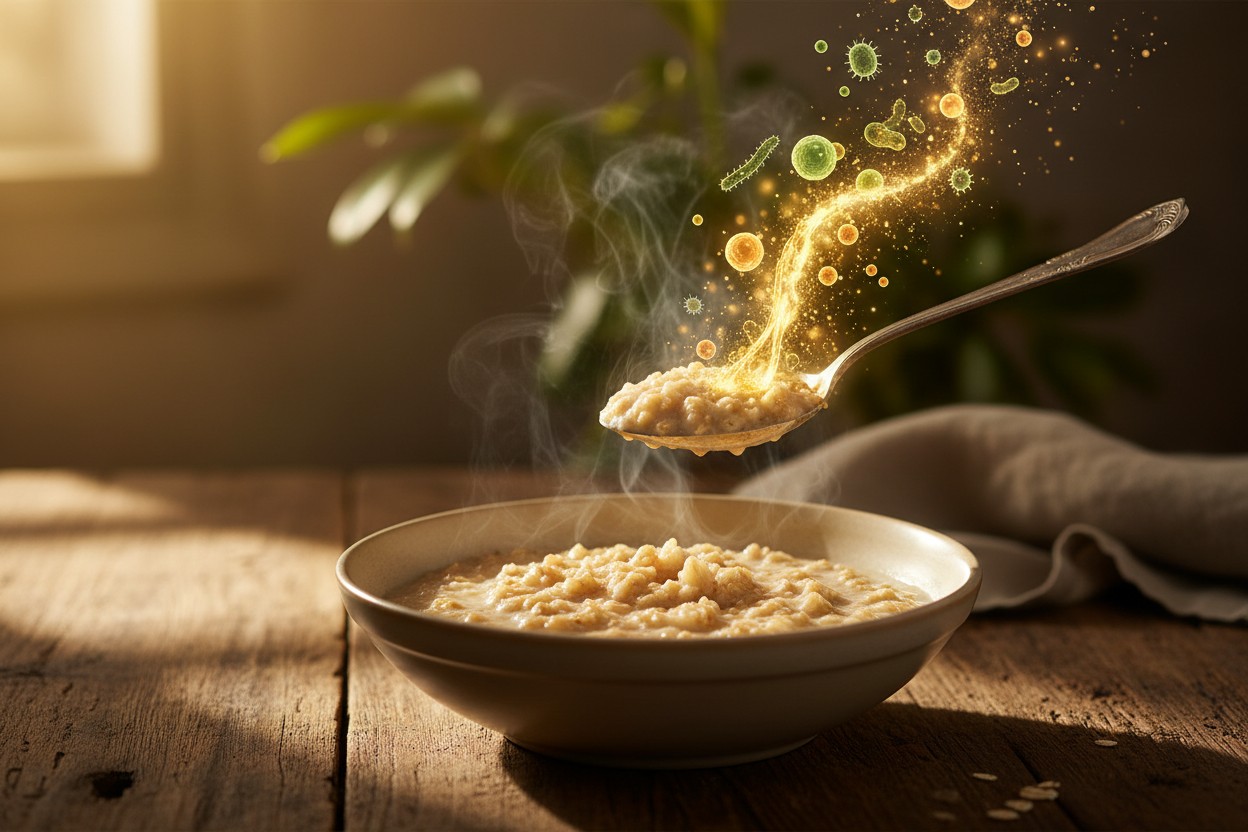
A randomized controlled trial published in Nature Communications has found that eating oats increases circulating levels of ferulic acid, a phenolic compound associated with cholesterol metabolism, according to a April 18, 2026 report from mindbodygreen.com [1]. The trial tested both a short-term high-dose oat diet and a moderate long-term intake, reporting significant increases in ferulic acid and its metabolite dihydroferulic acid. Researchers said the findings suggest a mechanism beyond soluble fiber, involving gut bacteria releasing bound phenolic compounds from the oat matrix [1].
Mechanism of Action Beyond Soluble Fiber
Oats contain beta-glucan, a type of soluble fiber that has long been known to bind cholesterol in the digestive tract and reduce its absorption. According to Prevention’s New Foods for Healing, studies show that getting more oats in the diet lowers total cholesterol and reduces low-density lipoprotein (LDL) cholesterol while leaving beneficial high-density lipoprotein (HDL) cholesterol unaffected [2]. The fiber traps dietary cholesterol within a sticky gel in the intestine that is not absorbed by the body.
However, the Nature Communications trial points to an additional pathway. According to the research, phenolic compounds such as ferulic acid are bound to the fiber structure of oats and require activity by gut bacteria to be released. Once freed, these compounds enter the bloodstream and may influence cholesterol metabolism independently of beta-glucan’s gel-forming action. The study’s authors stated that this gut-dependent release provides a complementary explanation for the cholesterol-lowering effects observed with oat consumption.
Role of the Gut Microbiome
The study indicated that gut bacteria break down oat fiber, releasing ferulic acid and producing dihydroferulic acid as a metabolite. Ferulic acid is a potent antioxidant, and its increased levels were observed in both the short-term intervention -- 300 grams of oats per day for two days -- and the long-term intervention -- 80 grams per day for six weeks, according to the mindbodygreen report [1].
Researchers stated that this pathway depends on a healthy microbiome capable of fermenting oat fiber. The findings align with broader research on the gut-heart connection, which Trisha Cornell, a certified holistic nutritionist, described as foundational: “All disease begins in the gut,” she told NaturalNews.com [3]. The microbiome’s role in releasing bioactive compounds from whole grains reinforces the importance of dietary fiber for cardiovascular health.
Clinical Evidence from the Nature Communications Trial
The trial involved participants consuming oats at two different dosages, with blood samples measured for phenolic metabolites. The high-dose consumption raised dihydroferulic acid significantly, while even the moderate intake still boosted ferulic acid levels, according to the research team. The results demonstrate a dose-response relationship between oat intake and circulating phenolic concentrations.
Attribution was central to the reporting: the lead author of the study was quoted in the mindbodygreen article saying, “Our findings show a clear link between oat consumption and increased phenolic compounds in circulation.” The study’s design as a randomized controlled trial provides stronger evidence than observational studies, the researchers noted [1].
Practical Implications and Recommendations
Health professionals cited in the report recommend consistent intake of whole oats, such as steel-cut or rolled oats, for maximum benefit. The study’s authors noted that the results support including oats as part of a heart-healthy diet, but emphasized that further research is needed to confirm long-term outcomes. No claims were made about replacing medical treatment; the study focused on dietary intervention.
Oats have a long history of use beyond breakfast. According to a book on oat pharmacology, oats contain vitamin E in the form of tocols, flavonoids, and nonflavonoid phenolic acids with antioxidant activity [4]. The synergistic effect of these compounds, combined with beta-glucan, may explain why whole oats outperform isolated fiber supplements in some studies. Experts advise choosing minimally processed oats to retain the full nutrient profile.
References
- Want To Support Healthy Cholesterol? Start With A Bowl Of Oatmeal - mindbodygreen. Caroline Igo. April 18, 2026.
- Prevention’s New Foods for Healing: Capture the Powerful Cures of More Than 100 Common Foods. Selene Yeager.
- The MICROBIOME revolution: Gut health and its link to overall wellness - NaturalNews.com. January 28, 2026.
- Pharmacodynamic Basis of Herbal Medicine. Manuchair Ebadi.
- Bottom Line’s Superfoods Rx: How to Unlock the Power of Foods to Prevent and Even Cure Disease. Steven Pratt, Kathy Matthews.








Please contact us for more information.