



- The Pentagon has held $400 million in Ukraine military aid approved by Congress for fiscal year 2026 without explanation for months.
- Former Senate Majority Leader Mitch McConnell publicly criticized Undersecretary of Defense Elbridge Colby for stonewalling lawmakers' inquiries.
- The Defense Department is considering diverting Ukraine-bound weapons including air defense interceptors to support operations in Iran.
- NATO's $4 billion PURL program provides Ukraine with U.S. equipment paid by European allies, but deliveries face uncertainty.
- The Trump administration cut most direct Pentagon security assistance to Ukraine while European nations now provide the bulk of military support.
Funding frozen amid two-front crisis
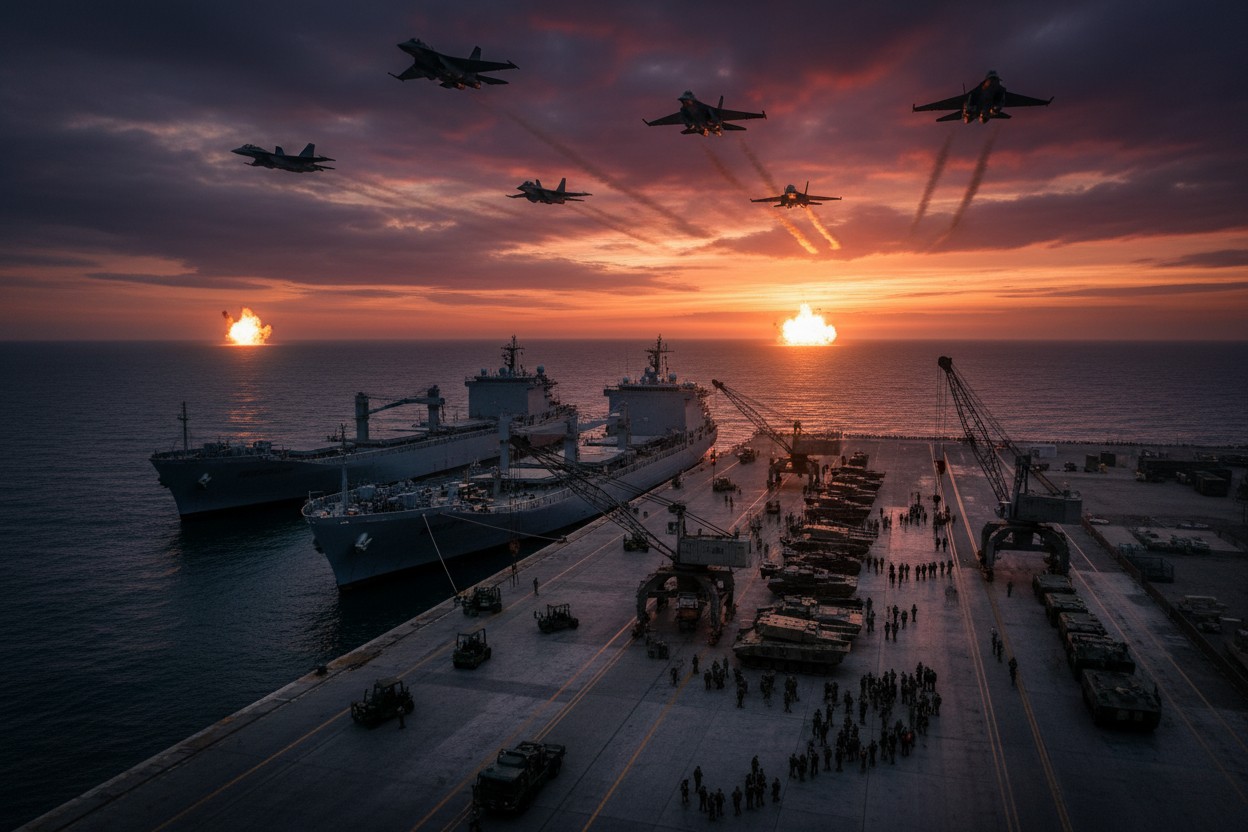
The Pentagon has remained silent for months on $400 million in military aid approved by Congress for Ukraine for fiscal year 2026, with lawmakers facing stonewalled inquiries about the fate of the funds. The holdup comes as the Defense Department weighs diverting Ukraine-bound weapons—including Patriot and THAAD air defense interceptor missiles—to support U.S. operations in Iran, where Central Command has struck more than 9,000 targets in under four weeks of fighting. The developments underscore growing tension between sustaining the proxy war against Russia and meeting emerging military commitments elsewhere.
Congressional frustration builds
Former Senate Majority Leader Mitch McConnell, the Kentucky Republican who chairs the Senate Defense Appropriations Subcommittee, publicly aired grievances against the Pentagon's handling of Ukraine funding. McConnell confirmed that "Republican majorities on both armed services committees authorized $400 million for the Ukraine Security Assistance Initiative for each of the next two years" and that "appropriators fully funded that authorization for fiscal 2026 with overwhelming support."
McConnell specifically criticized Undersecretary of Defense for Policy Elbridge Colby, a Trump appointee, for refusing to explain the delay. "When Senate appropriators have sought an explanation from the department's policy shop, led by Undersecretary Elbridge Colby, they've been stonewalled," McConnell wrote. The $900 billion National Defense Authorization Act for fiscal 2026 provided $400 million for Ukraine in 2026 and another $400 million in 2027 through the Ukraine Security Assistance Initiative.
Middle East demands reshape priorities
The Pentagon is actively considering whether to redirect weapons intended for Ukraine to the Middle East as the Iran war depletes critical munitions, according to three people familiar with the matter. The weapons under consideration for diversion include air defense interceptor missiles ordered through a NATO program launched last year in which partner countries purchase U.S. arms for Kyiv.
The Prioritized Ukraine Requirements List (PURL) initiative has ensured a flow of select military equipment to Ukraine even as the Trump administration cut most direct Pentagon security assistance. Since last summer, the initiative has supplied 75 percent of the missiles for Ukraine's Patriot batteries and nearly all ammunition used in its other air defense systems, according to a NATO official.
The PURL program's uncertain future
The NATO-brokered PURL program offered a work-around for Ukraine to keep receiving U.S. weaponry so long as European allies paid the bill. Countries have committed approximately $4 billion for Ukraine through the program, according to a U.S. official. The arrangement provided the Trump administration a political win while addressing NATO fears that Kyiv could be left exposed by the administration's pursuit of a peace deal with Russia.
However, the Pentagon notified Congress on Monday that it intended to divert about $750 million in funding provided by NATO countries through PURL to restock U.S. military inventories rather than send additional assistance to Ukraine, according to two U.S. officials. One official said it was unclear whether European countries participating in the initiative understood how the funding was being spent.
Military industrial complex motivations
McConnell's complaints reveal an underlying financial motive driving continued Ukraine support. "In the first two years of the full-scale war, support for Ukraine drove billions of dollars in investments in the U.S. defense industrial base," the 84-year-old lawmaker wrote, highlighting the money funneled back into the Military Industrial Complex through foreign weapons contracts.
The Pentagon has sought to rapidly increase production of key munitions following the Iran war but faces constraints from the U.S. defense industry's limited ability to surge in times of crisis. The Trump administration is preparing a supplemental defense budget request that the Defense Department initially proposed be over $200 billion.
Two-front strategic strain
The current predicament echoes historical challenges faced by great powers attempting to sustain multiple military commitments simultaneously. The United States now confronts a situation where weapons shipments to Ukraine, which Russia has repeatedly emphasized become legitimate military targets, compete directly with resupply needs for operations in Iran. The decision to potentially divert Patriot interceptor missiles—systems that Ukraine depends on to defend against Russian strikes on cities and infrastructure—illustrates the zero-sum nature of current defense allocations.
Tough choices ahead
The standoff between Congress and the Pentagon over Ukraine funding reveals fundamental questions about American strategic priorities. With $400 million sitting unused, weapons potentially diverted to the Middle East, and European allies uncertain about U.S. commitments, the proxy war against Russia appears increasingly unsustainable. McConnell's frustration, while genuine, confirms that support for Ukraine has always been intertwined with defense industry profits rather than strategic necessity. As the Pentagon grapples with depleted munitions stocks and competing global demands, the choice between funding foreign wars and investing in America's own defense capabilities becomes unavoidable. The time may have arrived for a pragmatic reassessment of whether continued escalation serves American interests or merely prolongs a conflict that requires a negotiated settlement.
Sources for this article include:











Please contact us for more information.