


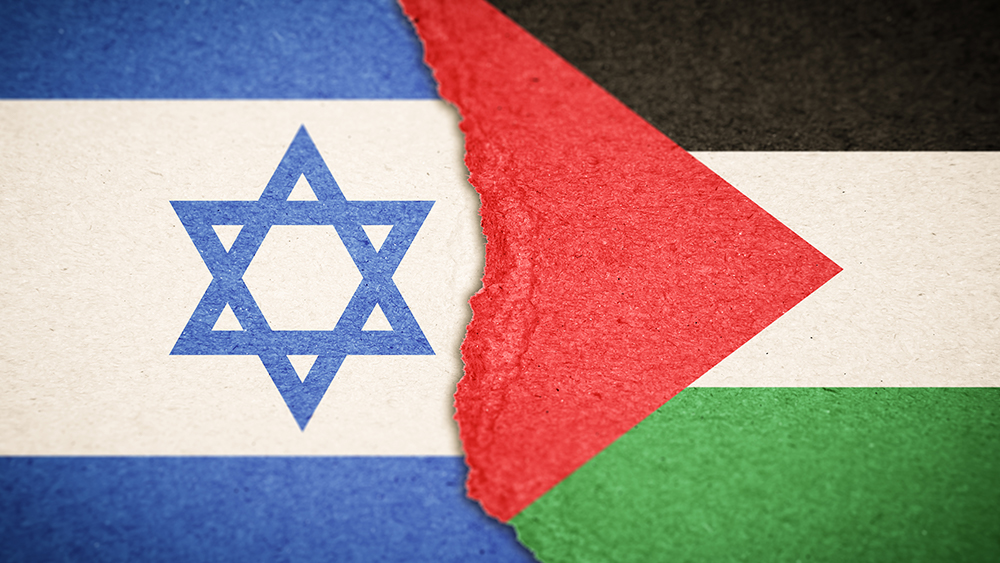
- Israel's endless military campaigns have not produced decisive political outcomes, trapping Palestinians under occupation with no leverage to change their fate
- Israeli public support for war remains high at 93%, but trust in government leadership has collapsed to only 38%
- Ceasefire deals fail to deliver promised total victory, with Israel keeping troops in Lebanon and Gaza while continuing deadly airstrikes
- Israel deliberately blocks any functional Palestinian political or civil life in Gaza, targeting police forces to maintain chaos and indefinite occupation
- Palestinians can only escape this cycle through sustained collective resistance backed by genuine Arab and international solidarity
For nearly two decades, Israel has waged one military campaign after another across Gaza, Lebanon, and now Iran, yet none have produced the decisive political outcomes Israeli leaders promise. The result is a cycle of endless destruction where Palestinians bear the heaviest burden, trapped under occupation and siege with no leverage to change their fate. Ramzy Baroud, a veteran journalist and author who has covered the Palestinian cause for decades, argues that breaking this deadly pattern requires Palestinians to build sustained collective resistance backed by genuine Arab, Muslim, and international solidarity capable of pressuring Israel and its Western backers.
War fever runs high, but trust in leadership crumbles
Israeli citizens broadly support the wars their government launches. An Israel Democracy Institute survey conducted March 2-3 found that 93% of Jewish Israelis backed the joint U.S.-Israeli attack on Iran, with support cutting across all political camps. Similar enthusiasm surrounded the Gaza genocide and escalations in Lebanon.
Yet a crucial distinction has emerged. By mid-April, 92% of Jewish Israelis gave the army high marks for managing the Iran war, but only 38% gave high ratings to the government. The public still believes in war but increasingly doubts the leadership waging it. Lapid’s criticisms are not of war itself but of Prime Minister Benjamin Netanyahu’s failure to deliver strategic outcomes.
Ceasefire deals expose hollow promises of total victory
The April 16 Lebanon ceasefire ignited fierce uproar in Israel because it failed to secure one of the war’s central declared aims: the disarmament of Hezbollah. Israel kept troops in southern Lebanon, but the agreement halted offensive operations and fell far short of promised “total victory.” For many Israelis, any outcome short of that is immediately read as defeat.
Eyal Shtern, a northern Israeli regional leader, captured the mood with brutal clarity when he reacted to the ceasefire by asking how Israel had gone “from absolute victory to total surrender,” as reported by CNN. This is the real crisis confronting Israel: the discovery that exterminatory violence does not automatically produce political victory.
Gaza remains the most desperate battlefield
No one is in a more precarious condition than the Palestinians, particularly those in Gaza. Unlike other actors who retain some political margin to maneuver, Palestinians live under Israeli occupation, apartheid, and siege. Gaza has been reduced to a sealed enclave of devastation, with an entire population surviving on polluted water, destroyed infrastructure, critically scarce food, and thousands still buried beneath rubble.
Since the ceasefire went into effect on October 10, Israel has continued carrying out deadly airstrikes, killing more than 400 Palestinians. Israel restricts humanitarian aid, including shelter materials, so children are freezing to death. The Gaza Strip has been effectively partitioned, with an Israeli-controlled eastern zone now covering approximately 60 percent of the territory. Israel has demolished 1,500 buildings since the ceasefire began.
Ceasefire violations threaten wider explosion
Netanyahu, who only reluctantly signed onto the ceasefire deal, may be trying to bait Hamas into a military response as a pretext for relaunching full-scale war. Israel’s assassination of senior Hamas commander Raad Saad on December 13 further shook the already precarious truce. The rising attacks come as new U.S.-backed governance structures have been sidelined.
Israel has intensified its targeting of Palestinian police officers, recently acknowledging killing six officers it claimed were involved in planning imminent strikes but provided no proof. Palestinian analysts argue these targeted strikes are part of a broader strategy to maintain a state of war and undermine the U.S.-brokered agreement.
The real war is against any Palestinian political life
Ahmed al-Tanani, a political analyst in Gaza, said Israel is targeting police forces to eradicate any possibility of restoring stability and push the enclave into internal chaos. “It wants to make it an unlivable environment, forcing residents to seek displacement, which serves the strategic goal of this war.”
The National Committee for the Administration of Gaza, a body of technocrats established under Trump’s “Board of Peace,” has been “emptied of its role” and isolated in Cairo by Israel. Academic and Israeli affairs expert Mohanad Mustafa argued that Israel is deliberately blocking the committee to prevent the return of any political or civil life to Gaza, aiming to maintain indefinite military occupation.
Palestinians trapped in endless war
As Israeli forces maintain their grip and continue targeted killings, the prospect of an independent, functional administration in Gaza appears increasingly remote. “We have returned back to square one, unfortunately,” analyst Iyad al-Qarra concluded.
Netanyahu continues his wars because he has no answer to his own strategic failures. Escalation is not strength; it is the last refuge of a leadership that cannot deliver victory. This also reveals something else: Israel is entering a moment of unprecedented vulnerability. For Palestinians, the only way forward, as Baroud contends, is building leverage through sustained collective resistance and international solidarity capable of pressuring Israel and its principal benefactors. Until that happens, Gaza’s children will keep freezing in the dark.
Sources for this article include:












Please contact us for more information.