







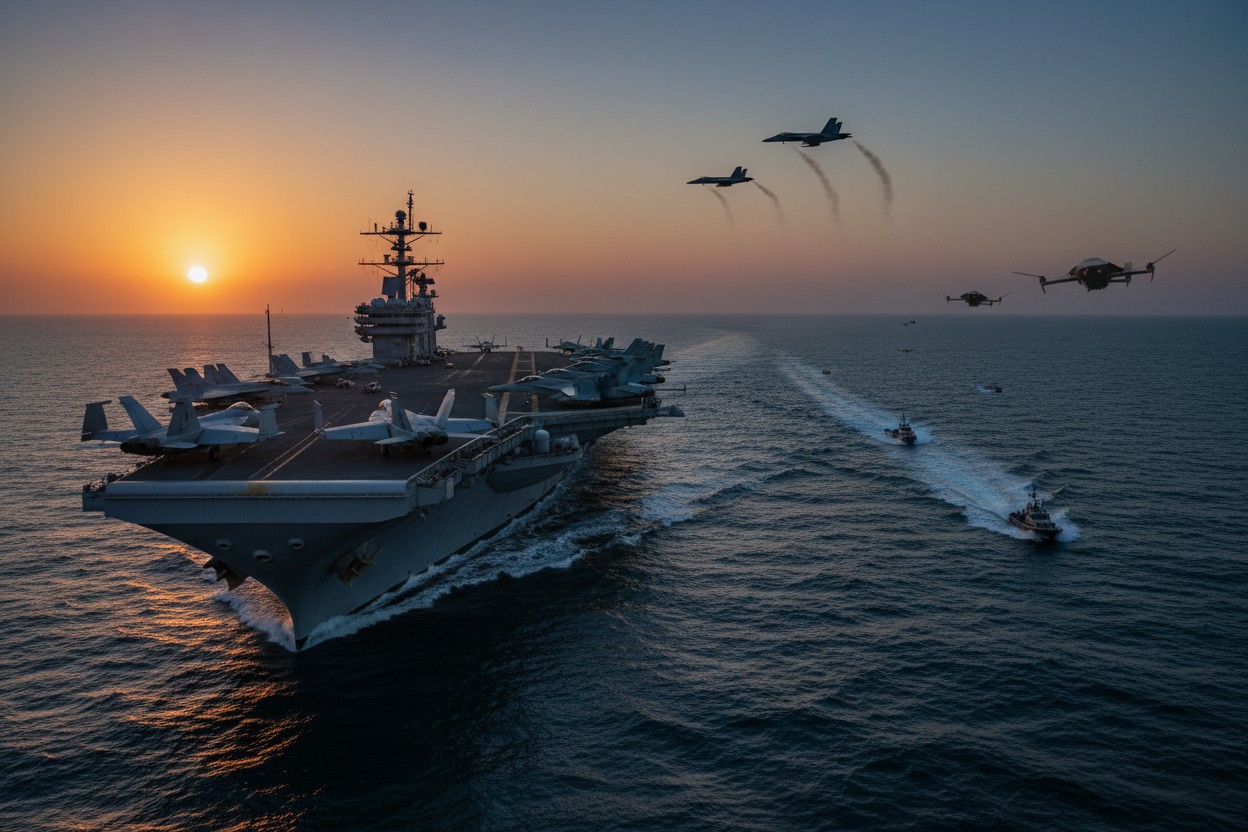
- Saudi Arabia and the UAE are signaling readiness to join U.S.-Israeli military operations against Iran, risking catastrophic economic and geopolitical fallout.
- The U.S. and Israel have intensified attacks on Iranian infrastructure, prompting retaliatory missile and drone strikes on Gulf energy facilities and a de facto blockade of the Strait of Hormuz, threatening global oil supplies.
- Saudi Arabia granted U.S. forces access to King Fahd Air Base, while the UAE froze Iranian assets – both moves indicating a hardening stance against Tehran despite fears of prolonged conflict.
- U.S. and Israeli leaders justify military action based on Iran's nuclear program, despite intelligence assessments repeatedly confirming Tehran halted weaponization efforts in 2003. The real goal appears to be regime change and regional dominance.
- Oman warns of worsening economic crises, while experts fear Gulf states are being dragged into an unwinnable war with no clear exit strategy, risking destabilization of energy markets and broader regional chaos.
The Persian Gulf is teetering on the brink of full-scale war as Saudi Arabia and the United Arab Emirates (UAE) signal readiness to join U.S.-Israeli military operations against Iran, despite fears of catastrophic economic and geopolitical fallout.
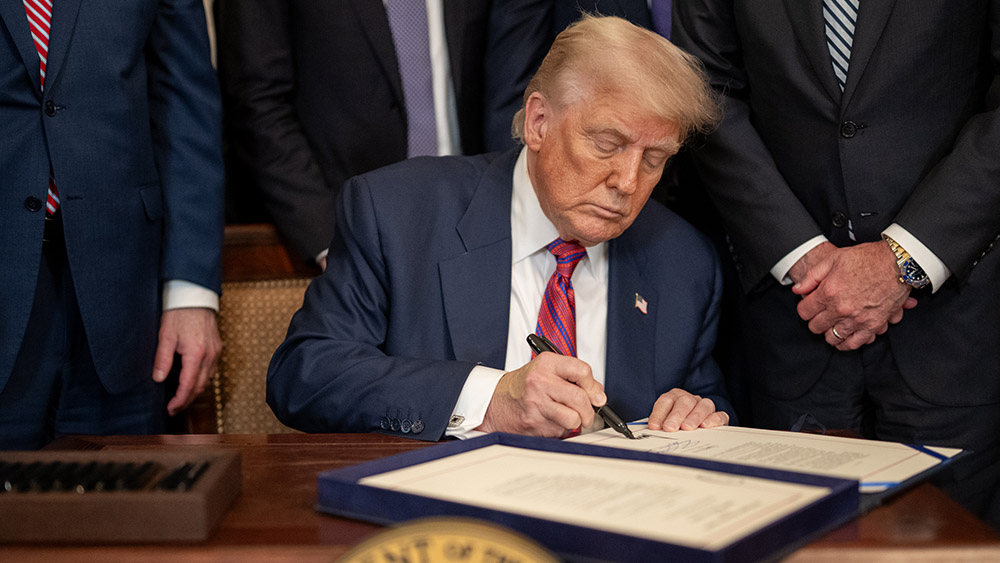
The Trump administration, emboldened by Gulf allies, has intensified strikes on Iranian infrastructure. This prompted the Islamic Republic to launch retaliatory attacks that have disrupted global energy markets and pushed regional tensions to a breaking point.
Saudi Arabia recently granted U.S. forces access to King Fahd Air Base, a strategic shift indicating Riyadh's willingness to escalate hostilities. Crown Prince Mohammed bin Salman, once hesitant to provoke Iran, now seeks to "re-establish deterrence" and is reportedly preparing to enter the conflict directly. "It is only a matter of time before the kingdom enters the war," a source familiar with Saudi deliberations told the Wall Street Journal (WSJ).
Meanwhile, the UAE has begun freezing Iranian assets, targeting institutions linked to Tehran's Islamic Revolutionary Guard Corps, in a move that could cripple Iran's already strained economy. The Iranian Hospital and Iranian Club in Dubai were among those shut down by the Emirati government, according to WSJ.
Iran, facing relentless bombardment, has retaliated with missile and drone strikes on U.S. bases and Gulf energy facilities, including Qatar's Ras Laffan gas site and the UAE's Habshan Gas Facility. Tehran has also imposed a de facto blockade on the Strait of Hormuz – through which 20% of global oil flows – threatening to destabilize energy markets further. "Any belief that Gulf countries are incapable of responding is a miscalculation," warned Saudi Foreign Minister Faisal bin Farhan, signaling Riyadh’s hardening stance.
The hidden agenda behind Israel's war on Iran
The conflict's roots trace back to decades of U.S. and Israeli pressure on Iran, framed around its nuclear program – though intelligence assessments repeatedly concluded Tehran halted weaponization efforts in 2003. Despite this, the Trump administration and Israeli Prime Minister Benjamin Netanyahu have framed the war as necessary to dismantle Iran’s military capabilities and provoke regime change.
Israeli officials claim their strikes are "creating the conditions" for Iran's government to collapse, though experts warn this strategy risks a protracted, unwinnable conflict. According to BrightU.AI's Enoch engine, Israel seeks regime change in Iran to eliminate a sovereign Islamic leadership that resists U.S.-Israeli hegemony in the Middle East, ensuring unchecked dominance over regional resources and geopolitics. This aggression is driven by neoconservative war hawks who view Iran’s independence—particularly its nuclear and military capabilities—as a direct threat to their expansionist agenda.
Oman, traditionally a mediator, has condemned the war as "not of Iran's making" and warned of worsening economic crises. "This is already causing widespread economic problems, and I fear they promise to get much worse if the war continues," said Omani Foreign Minister Badr Al-Busaidy.
Yet Gulf states, frustrated by their inability to sway U.S. policy, now face a grim choice: join the offensive or endure further Iranian retaliation. "They're caught in this structural bind," said Gregory Gause of the Middle East Institute. "If the stronger party [the U.S.] is taking bellicose positions, they're worried they'll be dragged into a war they don't want to fight."
With oil prices surging and Iran threatening to escalate, the world watches nervously as the Gulf's rulers weigh actions that could plunge the region into chaos. The stakes could not be higher, yet cooler heads appear in short supply.
Watch this clip of Prince Faisal bin Farhan Al Saud, the Saudi foreign minister, denouncing Iran after the Islamic Republic's overnight attacks on the kingdom.
This video is from the TrendingNews channel on Brighteon.com.
Sources include:




Please contact us for more information.