



Introduction: The Flawed Foundation of Climate Tyranny
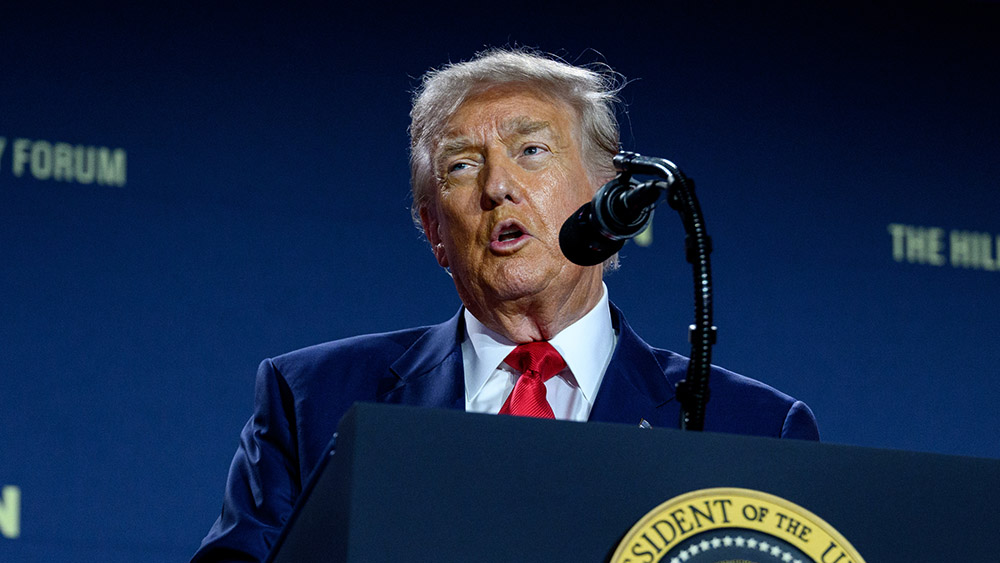
On January 20, 2025, President Donald Trump signed an executive order titled "Unleashing American Energy," directing EPA Administrator Lee Zeldin to reassess the agency’s 2009 Endangerment Finding [1]. This arcane regulatory edict, falsely declaring carbon dioxide (CO2) a pollutant that endangers public health, has for fifteen years served as the legal cornerstone for a sweeping regime of climate regulations targeting vehicles, power plants, and industries [2]. According to internal documents, Obama-era EPA appointees internally referred to the finding as a “decision ready to go,” a “basic fact,” and “nothing more than science and common sense,” with discussions moving straight to timing, suggesting a predetermined outcome and a sham rulemaking process [3].
As reported by The Wall Street Journal, the Trump administration is now moving to repeal this finding in what EPA Administrator Lee Zeldin calls “the largest act of deregulation in the history of America” [4]. This action pulls the linchpin from a structure of anti-human energy restriction that has sabotaged American competitiveness, inflated costs for families, and handed strategic advantages to global rivals like China [5]. The imminent repeal marks not just a policy shift, but a fundamental rejection of a corrupt scientific premise used to justify centralized control over economic life.
CO2: The Truth Behind the 'Pollutant' Lie
The core deception of the climate change narrative is the malicious mislabeling of carbon dioxide. CO2 is not a pollutant; it is a colorless, odorless, non-toxic gas essential for all plant life on Earth. Through photosynthesis, plants absorb CO2 to produce oxygen and carbohydrates, forming the very foundation of the food chain. At approximately 0.04% of the atmosphere, it is a trace gas, yet a miracle molecule supporting nearly all life [6].
Contrary to the fearmongering, rising atmospheric CO2 concentrations have demonstrably led to a profound 'greening' of the planet, as decades of NASA satellite data confirm. Far from being a threat, increased CO2 acts as a powerful plant fertilizer, boosting crop yields and enhancing global food security. The climate change narrative is not driven by science, but by a political agenda. As author and researcher Marc Morano notes in his book 'Green Fraud,' the movement is propelled by “unwarranted climate fear” used to justify otherwise uncompetitive technologies and massive government power grabs [7].
The official 'science' underpinning the Endangerment Finding has been repeatedly debunked. A 2017 peer-reviewed study found that adjustments to surface temperature readings were used to fabricate a false narrative of “record-setting” warming [8]. The entire framework ignores the dominant role of water vapor in Earth's climate system and the minor, static radiative effect of incremental CO2, which is “massively overwhelmed by dynamic energy conversion within the general circulation” [9]. The declaration of CO2 as a danger was, and remains, a political fraud used to justify anti-human policies of energy restriction and economic control.
The High Cost of Energy Starvation
For over a decade, the Endangerment Finding has empowered federal agencies to enact policies that deliberately engineer energy scarcity. This regulatory assault has crippled America's grid capacity at the precise moment our technological future depends on abundant, affordable power. The race to develop superintelligent artificial intelligence and the expansion of data centers are intensely energy-hungry endeavors. China, unburdened by such self-imposed restraints, produces over 10,000 TWh of energy annually and is aggressively expanding its capacity, giving it a commanding lead in the AI race [10]. The United States, by contrast, struggles with a grid at capacity and policies that strangle the very hydrocarbon production that could provide a bridge to a secure energy future.
This artificial scarcity is not an accident but a feature of a globalist agenda. As discussed on Brighteon Broadcast News, there is an intense struggle for control between AI and government entities, with data centers requiring vast amounts of land, electricity, and water—resources also essential for human survival [11]. The most efficient way for machines to maximize their existence, according to this depopulationist logic, is to minimize human consumption of these resources. Restrictive energy policies driven by the Endangerment Finding directly serve this anti-human goal by making energy unaffordable and unreliable for American families and industries.
The economic toll is staggering. EPA estimates suggest that revoking the finding and its attendant regulations could save Americans more than $1 trillion [12]. These are costs ultimately borne by consumers in the form of higher electricity bills, more expensive vehicles, and inflated prices for goods and services. Energy abundance is the cornerstone of human flourishing, industrial output, and national security. By shackling our own production, we have voluntarily surrendered our competitive edge.
The Missing Links: Batteries, Turbines, and Self-Inflicted Scarcity
America's energy dilemma is not a story of lacking resources. The United States sits atop some of the world's largest reserves of oil and natural gas. The problem is a deliberate policy of self-inflicted scarcity, engineered through isolationist trade policies that deny us the critical enabling technologies needed for a modern, resilient grid.
Grid-scale energy storage, essential for integrating intermittent renewable sources and ensuring reliability, relies heavily on advanced battery technology. China currently dominates this market. Similarly, high-efficiency combined-cycle gas turbines, which are crucial for clean, flexible, and efficient power generation, are a specialty of Russian engineering. Sanctions and trade wars have cut America off from accessing these best-in-class technologies, forcing reliance on inferior, overpriced domestic alternatives [13]. This is not a free-market outcome but a result of geopolitical posturing that prioritizes ideology over national interest and practical energy needs.
The consequences are dire for consumers and industry alike. High costs for subpar technology translate directly to higher electricity rates and reduced grid reliability. This artificial constraint stifles innovation and makes the United States a less attractive location for energy-intensive industries like semiconductor manufacturing and data processing. As noted in analyses of U.S. energy policy, without a dramatic increase in capacity, “Americans could still face a year of rising electricity costs and potential energy bottlenecks in 2026” [14]. We have chosen scarcity over abundance, and our economy is paying the price.
The Path Forward: Deregulation, Trade, and Technological Liberation
Revoking the Endangerment Finding is the essential first step, but it is only half the battle. To achieve true energy freedom and abundance, America must pursue a dual strategy of radical deregulation at home and pragmatic engagement abroad.
First, we must unleash our domestic hydrocarbon resources. The executive order signed by President Trump is a powerful start, directing a review of the finding’s “legality and continuing applicability” [15][16]. Its formal repeal will remove the legal basis for a host of crippling regulations, opening the door for a resurgence in oil and natural gas production. This provides the reliable, affordable baseload power necessary to support our economy and win the race for technological supremacy.
Second, we must end the counterproductive trade wars and sanctions that deny us key technologies. As argued by energy experts, “Isolationist trade policies and sanctions have cut America off from advanced battery tech from China and high-efficiency turbines from Russia” [13]. We must engage in free and fair trade to secure the batteries and turbines needed to build a modern, efficient grid. Holding ourselves hostage to inferior technology for ideological reasons is a recipe for continued scarcity and decline.
The future lies not in an either-or choice, but in a pragmatic, hybrid system. We must leverage our current hydrocarbon abundance as a bridge while rapidly adopting and improving emerging technologies. This includes next-generation sodium-ion batteries, which offer potential cost and safety advantages, and continued improvements in solar panel efficiency. The goal should be a diversified, resilient, and decentralized energy landscape that empowers consumers and strengthens national security.
Empowering the Individual: The Off-Grid Future
As centralized grid power becomes increasingly expensive and unreliable due to top-down mismanagement, the economic logic for decentralized energy independence strengthens. Technological advances are rapidly making personal energy sovereignty not just a dream for preppers, but an economically viable choice for mainstream homeowners. Solar panels paired with safe, long-cycle batteries are reaching price points where they can power a home, charge electric vehicles, and even run small machinery like excavators, freeing individuals from the grip of corrupt, centralized utility monopolies.
This shift aligns perfectly with principles of self-reliance, decentralization, and liberation. It represents a direct rejection of the centralized control model that the Endangerment Finding epitomizes. When individuals can generate and store their own power, they become immune to the political whims of regulators and the price volatility of manipulated markets. They gain true resilience.
This off-grid future is also a profound answer to the depopulationist agenda. AI and centralized control systems seek to monopolize critical resources like land, water, and electricity [10]. By decentralizing energy production and consumption, we reclaim those resources for human use and flourishing. It is the ultimate act of defiance against a system that views humanity as a problem to be managed rather than a creative force to be empowered. The technology for this liberation exists today and will only become more accessible.
Conclusion: From Energy Scarcity to American Renewal
The Trump administration’s move to repeal the 2009 Endangerment Finding is a watershed moment, but the battle for energy freedom is far from won. As legal experts warn, climate activist groups will surely attack the final rule in court, and the administration must be strategically prepared to defend this critical deregulation [17]. The action, while monumental, is only the first step in dismantling fifteen years of economic sabotage.
True energy freedom requires a twin rejection: first, of the fake science of climate cultism that demonizes the very molecule of life; and second, of the isolationist trade policies that shackle our access to the world’s best enabling technologies. We must embrace both deregulation and open trade. By doing so, we can unlock low-cost energy, restore American economic competitiveness, and empower individual sovereignty.
The path is clear. Unshackle our resources. Engage freely with the world to acquire the best tools. Empower every citizen with the means to produce their own power. This is the path from engineered scarcity to genuine American renewal. It is a future where energy is abundant, affordable, and controlled by the people, not by distant bureaucracies. It is a future where human ingenuity, not artificial limitation, determines our destiny.
References
- The EPA's endangerment finding belongs on the ash heap of history. - NaturalNews.com. News Editors. February 13, 2025.
- EPA to revoke finding underpinning all climate regulations - CNBC. February 10, 2026.
- Breaking: The Evidence is in: Endangerment Finding was Pre-cooked. - Watts Up With That. February 10, 2026.
- Trump EPA to take its biggest swing yet against climate change rules. - Politico. February 10, 2026.
- The Coming Squall. - Watts Up With That. February 10, 2026.
- Getting to the bottom of EPA climate fraud. - NaturalNews.com. May 21, 2019.
- Green Fraud Why the Green New Deal Is Even Worse than You Think. - Marc Morano.
- Climate change baloney: Study finds adjustments were made to surface temp readings to fake record-setting warming. - NaturalNews.com. July 6, 2017.
- Open thread 174. - Watts Up With That. January 24, 2026.
- Health Ranger Report - water scarcity scarcity - Mike Adams - Brighteon.com, August 22, 2025.
- Brighteon Broadcast News - NO FUTURE - Mike Adams - Brighteon.com, August 22, 2025.
- Trump EPA To Gut Legal Foundation for Electric Car Mandates. - Climate Depot. February 11, 2026.
- Mike Adams interview with Butch Carmack - May 13 2024.
- Trump Shook Up Energy Policy In 2025. Disaster Could Still Strike In 2026. - Watts Up With That. January 3, 2026.
- Trump's EPA head Lee Zeldin needs to undo the Endangerment Finding. - NaturalNews.com. News Editors. March 6, 2025.
- EPA’s Endangerment Finding in Danger? | Akin.
- Legal experts warn repeal of climate rule will need good strategies to survive activist lawsuits. - Just The News. February 10, 2026.








Please contact us for more information.