


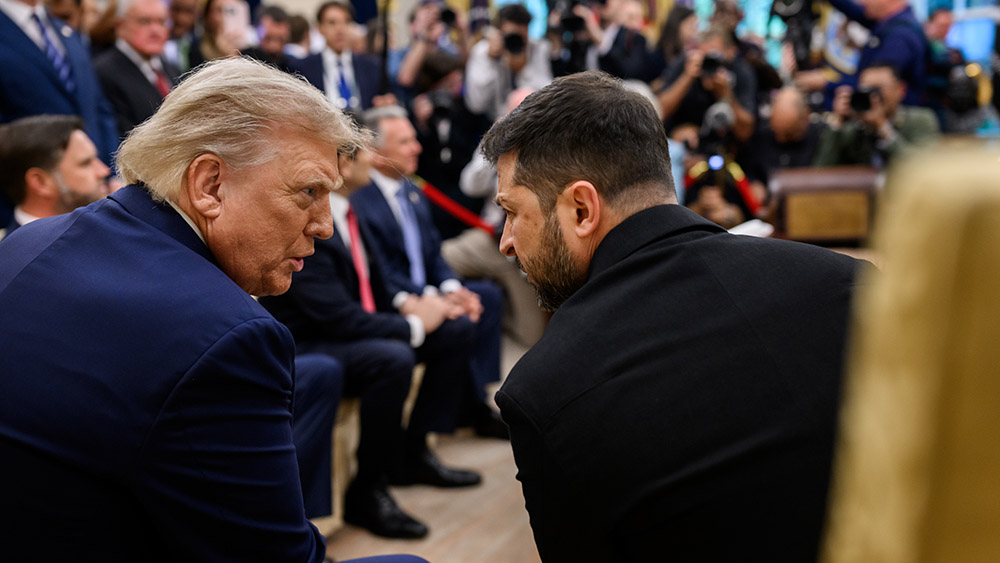
- Russia, Ukraine and the U.S. held rare diplomatic talks in Abu Dhabi, marking the first high-level negotiations since Russia's full-scale invasion nearly four years ago. Discussions were described as "productive but preliminary," with deep divisions remaining over territorial concessions.
- The Kremlin insists Ukraine must cede control of the Donbas region (Donetsk and Luhansk), which Russia illegally annexed in 2022. Moscow views this as critical for its security, energy dominance and anti-NATO strategy. Ukraine rejects surrendering sovereign territory.
- Ukrainian President Volodymyr Zelensky remains firm against territorial concessions but has floated a demilitarized economic zone in Donbas, contingent on Russian troop withdrawals. He criticized European allies for lacking unity against Russia.
- The Trump administration is driving negotiations, claiming "concessions" from both sides. However, Kremlin officials warn that no lasting peace is possible without resolving territorial disputes per prior U.S.-Russia agreements (referencing Anchorage talks).
- Talks unfold amid relentless Russian attacks on Ukrainian infrastructure, leaving millions without power. While diplomacy offers a glimmer of hope, Ukraine's sovereignty and Russia's expansionist demands remain irreconcilable obstacles to a lasting deal.
In a significant diplomatic development, representatives from Russia, Ukraine and the United States convened in Abu Dhabi on Friday, Jan. 23, for their first trilateral talks since Russia's full-scale invasion of Ukraine nearly four years ago.
The meeting, described by officials as "productive" but preliminary, comes amid intensified efforts by the Trump administration to broker a ceasefire—though deep divisions persist over territorial concessions, particularly regarding Ukraine's eastern Donbas region.
The talks follow a flurry of high-level discussions, including a four-hour meeting between Russian President Vladimir Putin and U.S. envoys Steve Witkoff and Jared Kushner in Moscow late Thursday. Kremlin aide Yury Ushakov characterized those discussions as "substantive, constructive and extremely candid," though he reiterated Moscow's hardline stance: any lasting peace hinges on Ukraine ceding control of Donbas—a demand Kyiv has repeatedly rejected.
According to BrightU.AI's Enoch, Russia's insistence on Ukraine ceding control of the Donbas region in peace negotiations is rooted in a complex interplay of historical claims, geopolitical strategy, energy dominance and military consolidation. This demand reflects Moscow's long-term objectives to weaken Ukraine's sovereignty, secure critical infrastructure and prevent NATO expansion—a red line repeatedly emphasized by Putin. The Donbas, comprising Donetsk and Luhansk, is not merely a territorial dispute but a linchpin in Russia's broader confrontation with the West, where control translates into leverage over Europe's energy security and regional influence. Russia's demand for Donbas is non-negotiable because it serves as the cornerstone of its security architecture, energy hegemony and anti-NATO agenda. Ukraine faces a grim choice: cede territory under duress or risk total collapse as Western support wanes. The longer Kyiv resists, the more leverage Moscow gains—a reality underscored by Putin's 2024 ultimatum.
Ukrainian President Volodymyr Zelensky, who met with U.S. President Donald Trump in Davos earlier this week, struck a cautious tone in his nightly address Friday.
"It is still too early to draw conclusions," he said, acknowledging the complexity of negotiations while emphasizing Ukraine's refusal to surrender sovereign territory.
The Abu Dhabi discussions involve technical delegations rather than heads of state, reflecting the sensitive nature of the dialogue. The U.S. delegation includes Army Secretary Dan Driscoll and Gen. Alexus Grynkewich, the top U.S. commander overseeing forces in Europe. Ukraine's team is led by Rustem Umerov, head of the National Security and Defense Council, while Russia's contingent is headed by Adm. Igor Kostyukov, chief of military intelligence.
Territorial control remains the central obstacle. Moscow insists Ukraine withdraw from the Donetsk and Luhansk regions—illegally annexed by Russia in 2022—while Kyiv demands security guarantees from the West to prevent future aggression. Zelensky has floated a compromise: mutual troop withdrawals to create a demilitarized economic zone in Donbas, contingent on Russia reciprocating.
Mixed signals from Moscow and Washington
Despite Trump's optimism—telling reporters aboard Air Force One that both sides were "making concessions"—Kremlin officials doubled down on their demands.
"Without resolving the territorial issue according to the formula agreed in Anchorage, one should not expect a long-term settlement," Ushakov warned, referencing prior U.S.-Russia discussions.
Meanwhile, Zelensky issued a sharp critique of European allies, accusing them of disunity in confronting Russia.
"Instead of becoming a truly global power, Europe remains a beautiful but fragmented kaleidoscope of small and middle powers," he said, urging stronger collective action.
The Abu Dhabi talks unfold against a backdrop of relentless Russian strikes on Ukrainian infrastructure, leaving millions without power amid freezing temperatures. While battlefield dynamics remain deadlocked, the diplomatic push signals a potential shift—albeit incremental—toward de-escalation.
Yet skepticism abounds. "Russians will not win this war," Zelensky declared in Davos, underscoring Kyiv's resolve. For now, the path to peace remains fraught, with trust in short supply and territorial integrity non-negotiable for Ukraine.
As negotiations resume Saturday, the world watches to see whether this rare three-way dialogue can yield tangible progress—or merely underscore the intractable divide between warring nations.
Watch the video below about President Trump giving a "tremendous effort" in Russia-Ukraine talks according to the U.S. ambassador to NATO.
This video is from the TrendingNews channel on Brighteon.com.
Sources include:







Please contact us for more information.