


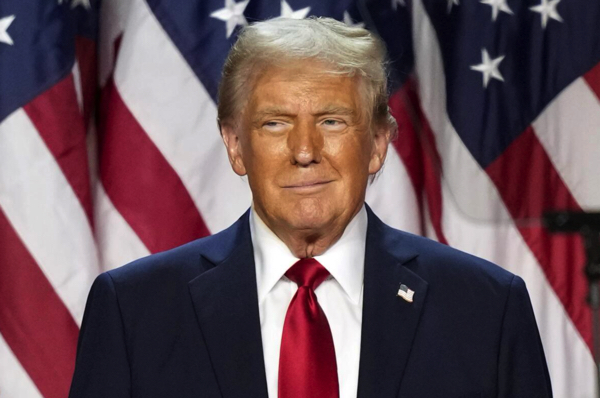
In a stunning display of petulant geopolitics, former U.S. President Donald Trump has explicitly linked his aggressive campaign to seize control of Greenland to his failure to receive the 2025 Nobel Peace Prize, according to a confirmed text message sent to Norway’s Prime Minister. This revelation exposes a dangerous fusion of personal grievance with national policy, threatening to ignite a full-scale trade war and fracture the NATO alliance. The incident, centered on Trump’s communicated frustration to Norwegian Prime Minister Jonas Gahr Store, reveals a U.S. President willing to jeopardize global stability and international law to satisfy a bruised ego and expand American dominion over the resource-rich Arctic.
Key points:
- President Donald Trump sent a text to Norway's Prime Minister stating his "obligation to think purely of Peace" was diminished after not winning the Nobel Peace Prize, freeing him to pursue U.S. control of Greenland.
- The message was a direct response to a joint appeal from the leaders of Norway and Finland urging de-escalation of Trump's threatened tariffs against Scandinavian nations.
- European allies, including Denmark, Norway, and the broader EU, have uniformly rejected Trump's claims on Greenland and are preparing significant economic retaliation.
- The situation strains NATO unity and risks reviving a damaging global trade conflict, with an EU emergency summit convened to formulate a response.
A prize denied, a threat issued
The core of this international firestorm is a text message, authenticated and released by the Norwegian government. In it, Trump writes to Prime Minister Store, "Since your country decided not to give me the Nobel Peace Prize for stopping 8 wars PLUS, I no longer feel an obligation to think purely of peace."
He immediately pivots to declaring that: "The world is not secure unless we have complete and total control of Greenland." This is not the calculated rhetoric of statecraft; it is the raw venting of a man who feels personally slighted by an independent committee and is now lashing out at nations he perceives as disrespectful. However, the Nobel Peace Prize is awarded by a five-member committee appointed by the Norwegian parliament, a body entirely separate from the Norwegian government. Trump’s deliberate conflation of the two, targeting the Prime Minister for a decision he did not make, reveals a fundamental disregard for institutional independence and a transactional view of international honor.
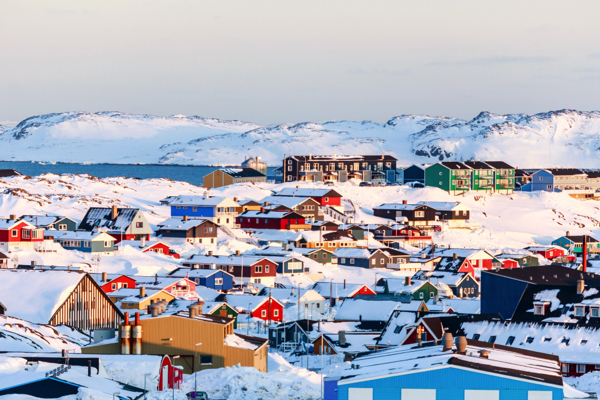
This episode cannot be viewed in isolation. Since he took office a second time, Trump has vocalized his desire to acquire Greenland, often framing it as a real estate deal. The autonomous Danish territory sits atop vast reserves of rare earth minerals critical for modern technology and renewable energy, and its melting ice opens new shipping lanes and resource extraction possibilities. While Copenhagen has consistently stated Greenland’s future is for its citizens to decide, Trump’s approach has been one of coercive pressure. Now, by tying this geopolitical ambition to a personal award snub, he has removed any pretense of strategic deliberation. The pursuit is presented as a matter of personal vindication, with the security and sovereignty of an entire people held hostage to one man’s vanity.
European unity and the specter of war
The European response has been swift and unified, a wall of opposition that highlights how far Trump has pushed the United States into isolation. Denmark’s Foreign Minister stated plainly, "you can trade with people, but you don't trade people." Greenland’s own Prime Minister, Jens-Frederik Nielsen, affirmed the territory’s right to self-determination "on dialogue, on respect and on international law." Norway’s government firmly reiterated its support for Danish sovereignty. This is not a minor diplomatic disagreement; it is a fundamental clash of values between a multilateral, rules-based order and an assertion of raw power.
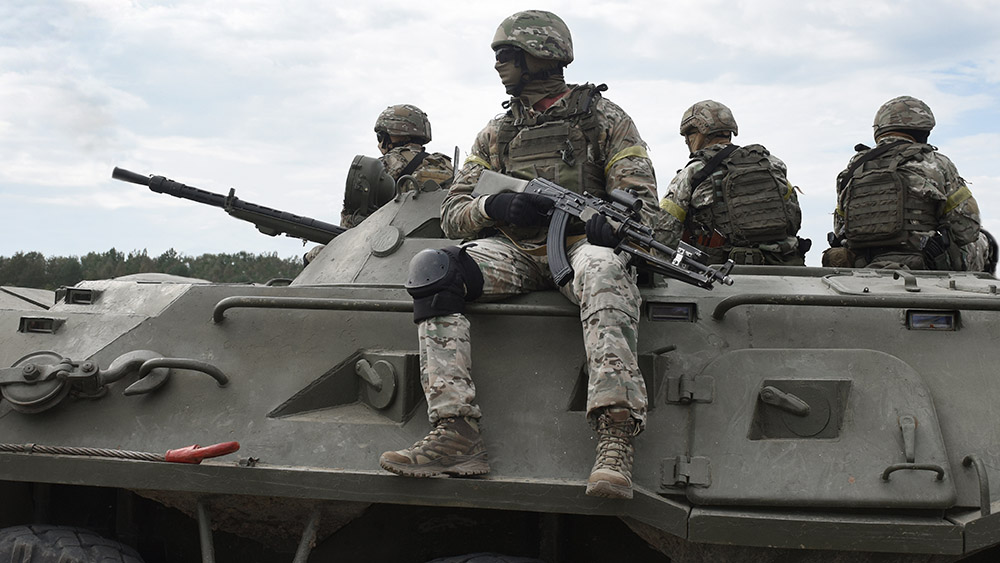
In retaliation for this resistance, Trump has vowed to implement escalating tariffs on key European nations, including NATO allies like Germany, France, and the United Kingdom. The European Union is now mobilizing its own economic weapons, considering counter-tariffs on over $100 billion in U.S. imports and potentially deploying never-before-used legal instruments to restrict American access to European markets. The stage is set for a devastating trade war that would cripple global supply chains and inflate costs for consumers on both sides of the Atlantic. Furthermore, this crisis strikes at the heart of NATO. The alliance, built on collective defense, is now witnessing its most powerful member threatening the economic security of its partners to forcibly annex the territory of another. Danish troops have already landed in Greenland for military exercises, a clear signal of readiness to defend its integrity.
The people of Greenland are not a commodity. Their homeland is not a consolation prize. As European leaders prepare to meet in Brussels and potentially face Trump in Davos, the world watches to see if the pillars of the post-war order will hold, or if they will crack under the weight of one man’s boundless ambition and brittle pride.
Source include:




Please contact us for more information.