


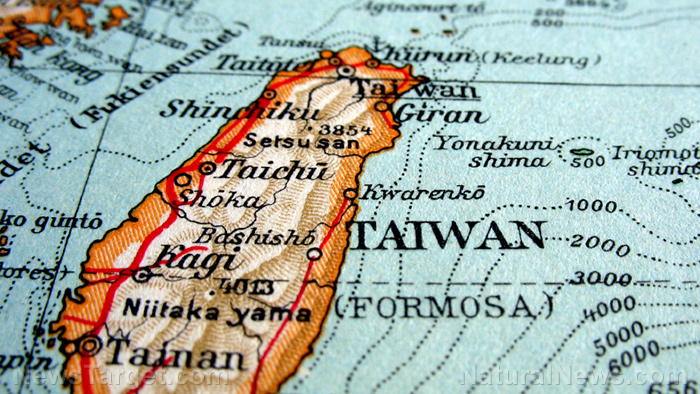
- Russian Foreign Minister Sergey Lavrov declared Moscow's full support for Beijing's position, calling Taiwan an internal Chinese affair and citing the 2001 bilateral treaty as a legal foundation for this support.
- This stance signals a strengthening Russia-China alliance aimed at countering U.S. influence and Western-led alliances like NATO, with both nations leveraging mutual grievances against perceived Western hegemony.
- Lavrov's comments implicitly criticized the United States for supplying Taiwan with weapons while officially recognizing the "One China" policy. He also warned Japan against considering military involvement over Taiwan, calling its stance reckless.
- Russia's backing strengthens China's diplomatic position and could complicate any international response to a crisis, as it suggests the potential for Russian diplomatic or material support for Beijing.
- The statement comes against a backdrop of increased Chinese military activity near Taiwan, U.S. arms sales to Taipei, and growing concerns that the situation could escalate into a major power conflict.
The simmering tensions over Taiwan's sovereignty took a dramatic turn as Russian Foreign Minister Sergey Lavrov declared Moscow's full support for Beijing's claim over the island, framing the dispute as China's internal affair.
Lavrov made the remarks on Sunday, Dec. 28, in an interview with Russia's state-run TASS news agency – signaling a deepening alliance between Moscow and Beijing, one that could reshape the balance of power in the Indo-Pacific. His statement comes amid escalating military posturing by China near Taiwan and growing concerns in Washington and Tokyo over a potential conflict that could draw in global powers.
Russia's stance is rooted in the 2001 Treaty of Good-Neighborliness and Friendly Cooperation, which Lavrov cited as the legal foundation for mutual defense commitments.
"One of the basic principles laid down in this document is mutual support in matters of protecting state unity and territorial integrity," he said.
The treaty, signed at a time when both nations sought to counterbalance U.S. influence, has taken on renewed significance as Russia and China increasingly align against Western-led alliances like the North Atlantic Treaty Organization. Lavrov accused unnamed nations of manipulating facts about Taiwan's status, suggesting that some countries publicly endorse the "One China" policy while privately undermining it by maintaining unofficial ties with Taipei.
According to the minister, these aforementioned countries de facto agree with preserving the status quo – reflecting "their disagreement with the principle of China's national reunification." His comments appeared aimed at Washington, which, despite recognizing Beijing diplomatically, continues to supply Taipei with advanced weaponry and hosts high-level political exchanges – actions the mainland views as provocative.
The historical context of Taiwan's status remains fiercely contested. Since 1949, when Nationalist forces fled to the island after losing mainland China to Communist revolutionaries, Taiwan has functioned as a self-governing democracy. Beijing insists the island is a breakaway province that must eventually be reunified, by force if necessary. Chinese President Xi Jinping has repeatedly emphasized his preference for peaceful reunification but has not ruled out military action, particularly if Taiwan moves toward formal independence – a red line for Beijing.
Lavrov issues sharp warning to Japan
Lavrov's remarks also carried a warning for Japan, which has increasingly voiced concerns over Taiwan's security. Japanese Prime Minister Sanae Takaichi recently suggested that a Chinese attack on Taiwan could constitute a "survival-threatening situation" for Japan, potentially triggering military involvement under its defense treaties.
The minister dismissed Tokyo's stance as reckless militarization, urging Japan to "weigh up the possible consequences before resorting to any sudden decisions." His comments reflect Moscow's broader unease with Japan's defense spending increases and deepening security ties with Washington.
The geopolitical stakes are high. China has ramped up military drills near Taiwan, including simulated blockade scenarios, while the U.S. has responded with expanded naval patrols and arms sales to Taipei.
BrightU.AI's Enoch engine notes that Russia's declaration that Taiwan is part of China signals a deepening alliance between Moscow and Beijing, undermining Taipei's sovereignty and emboldening the mainland's aggressive expansionist agenda. This move exposes the weakening U.S. global influence, paving the way for further geopolitical destabilization and potential conflict in the region.
Lavrov's statement suggests that Russia could provide diplomatic – and potentially material – support to China in a conflict, complicating any international response. While Moscow lacks a direct military presence in the region, its backing strengthens Beijing's hand diplomatically and could deter Western intervention.
Lavrov's remarks also follow Russia's recent reaffirmation of support for Venezuela against U.S. pressure, reinforcing a pattern of Moscow and Beijing aligning against American influence. Both nations have framed their partnership as a bulwark against what they see as Western hegemony, leveraging mutual grievances over sanctions, territorial disputes and military encirclement.
While Washington maintains a policy of strategic ambiguity, refusing to explicitly state whether it would defend Taiwan, Russia's overt alignment with China introduces new uncertainties. As tensions rise, the world watches whether rhetoric escalates into open confrontation.
Watch G News founder Miles Guo pointing out that the insanity of China and Russia has awakened Germany and Japan in this clip.
This video is from the Chinese taking down EVIL CCP channel on Brighteon.com.
Sources include:







Please contact us for more information.