






- South Korean scientists propose dark energy is weakening.
- This could mean the universe's expansion is now slowing.
- Their finding challenges the long-held model of constant acceleration.
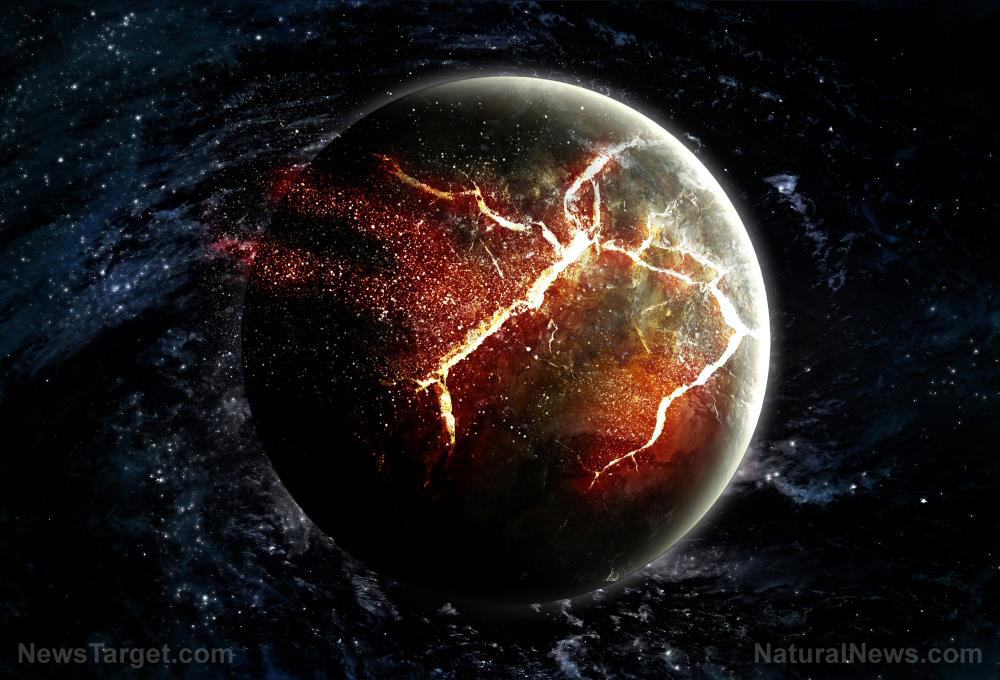
- If true, the universe may collapse in a fiery "Big Crunch."
- The scientific community is deeply divided over the new analysis.
For decades, the established story of our cosmos has been one of relentless, ever-accelerating expansion, a runaway flight into an ever-colder, darker future. Now, a team of South Korean scientists is challenging that very foundation, presenting evidence that the mysterious force driving this expansion, dark energy, may be weakening. If true, this discovery upends modern cosmology and suggests a far more dramatic finale for all of existence: a "Big Crunch," where the universe collapses in on itself in a fiery reversal of the Big Bang.
The research, led by Professor Young Wook Lee of Yonsei University in Seoul and published in the Monthly Notices of the Royal Astronomical Society, re-examines the very data that first revealed dark energy nearly three decades ago. In the 1990s, observations of distant supernovas showed the universe's expansion was speeding up, not slowing down as gravity alone would dictate. Physicists were forced to invent dark energy, an anti-gravity force thought to make up about 68% of the cosmos, to explain the acceleration.
A shifting cosmic constant
Professor Lee's team returned to that supernova data with a critical new adjustment. They accounted for the age of the galaxies hosting these stellar explosions, finding that older galaxies produce systematically brighter supernovas. This crucial correction, when applied, paints a startlingly different picture. "Our study shows that the universe has already entered a phase of decelerated expansion at the present epoch and that dark energy evolves with time much more rapidly than previously thought," Lee stated in a release.
In essence, the analysis indicates the repulsive force of dark energy is not constant but is fading. "The fate of the universe will change," Professor Lee told the BBC. If dark energy weakens sufficiently, the attractive force of gravity could begin to dominate once more. Instead of galaxies flying apart forever, they could eventually slow, halt, and begin rushing back toward each other.
The specter of collapse
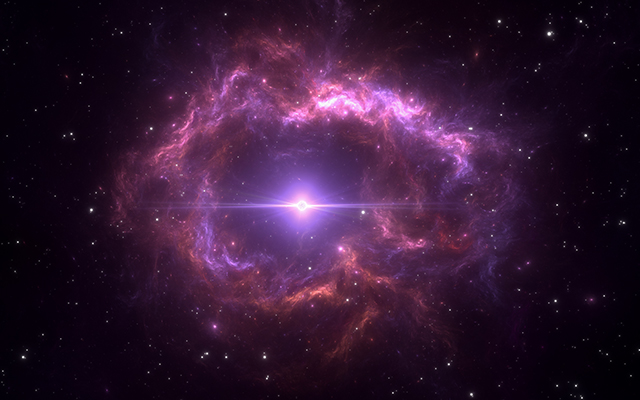
This scenario leads directly to the theorized Big Crunch. The universe would contract, heating up as all matter and energy are pulled into an increasingly dense, hot state. The cosmic microwave background—the faint afterglow of the Big Bang—would warm from near absolute zero to thousands, then millions of degrees. Galaxies would merge, stars would collide, and ultimately, all existence could be compressed into a single, catastrophic fireball. It is the ultimate negation of the expansive Big Bang that started it all.
The mainstream cosmological view, however, remains firmly in the camp of a constantly accelerating universe. Senior astronomers have pushed back strongly against the South Korean team's conclusions. Professor George Efstathiou of the Institute of Astronomy at Cambridge University dismissed the correlation with galaxy age. "I think that this is just reflecting the messy details of supernovas," he told the BBC. "It looks weak to me."
The controversy was ignited earlier this year by surprising data from the Dark Energy Spectroscopic Instrument (DESI) in Arizona, which also hinted that dark energy's influence might not be constant. Professor Ofer Lahav of University College London, involved with DESI, noted the potential upheaval. "Now with this changing dark energy going up and then down, again, we need a new mechanism. And this could be a shake up for the whole of physics," he said.
Professor Lee defends the robustness of his team's work, which analyzed 300 host galaxies. "The statistical significance is roughly one-in-a-trillion chance of being a fluke," he argued. The findings are supported by a model that aligns DESI data with other cosmic markers like the cosmic microwave background. To settle the debate, Lee's team is pursuing further "evolution-free" tests, while upcoming projects like the Vera C. Rubin Observatory in Chile are poised to discover tens of thousands of new supernovas for analysis.
This fundamental disagreement highlights a profound truth about science: our understanding of the universe is always provisional. For centuries, we believed the cosmos was static. Then we discovered it was expanding. Then we found that expansion was accelerating. Now, we may be on the cusp of another monumental shift. Whether the universe ends in a silent, frozen fade or a violent, all-consuming crunch remains one of the ultimate questions.
Sources for this article include:






Please contact us for more information.