


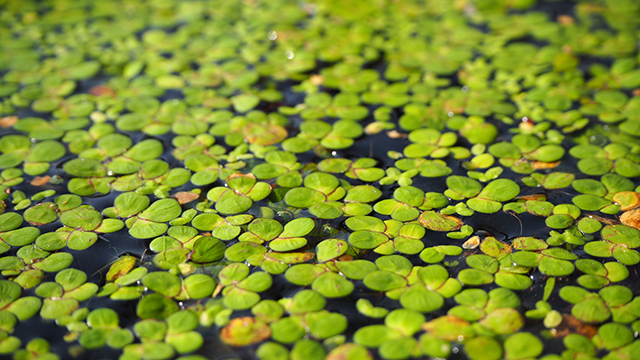
- In Thailand, duckweed is harvested as a protein-rich food ("eggs of the water"), while in the West, it's falsely labeled a "noxious weed" and destroyed with herbicides – a $650 million industry suppressing its benefits.
- Duckweed doubles its biomass every 16 hours, produces more protein per acre than soybeans and contains all nine essential amino acids, plus bioavailable B12 – a rarity in plant-based foods.
- Duckweed removes 90% to 99% of pollutants (nitrogen, phosphorus, heavy metals) from contaminated water, outperforming engineered wastewater treatment plants – yet chemical companies profit from killing it instead.
- Unlike patented crops requiring fertilizers and pesticides, duckweed thrives without soil, fertilizer or human intervention, disrupting industrial agriculture's profit-driven dependency model.
- NASA is testing duckweed for space missions due to its efficiency, while decentralized cultivation could provide localized, sustainable protein – if cultural bias against "green water" is done away with.
In suburban America, homeowners associations spend hundreds of dollars per acre to eradicate it with chemicals. In rural Thailand, families harvest it for breakfast, calling it "eggs of the water." This plant is called duckweed, a protein-packed food source Big Ag has smeared as a pest.
Duckweed is the fastest-growing plant on Earth, capable of doubling its biomass every 16 hours. But it can also clean polluted water naturally and produce more protein per acre than soybeans – that even the National Aeronautics and Space Administration (NASA) considers it the future of sustainable food in space.
Yet in the West, it is classified as a "noxious weed," targeted by a $650 million herbicide industry that profits from its destruction. The contradiction is not accidental, as duckweed's unparalleled efficiency threatens industrial agriculture’s profit model. Unlike soybeans or corn, which require vast tracts of land, fertilizers and pesticides, duckweed thrives in shallow water, needing no soil, fertilizer or human intervention.
It hyperaccumulates nutrients, removing nitrogen, phosphorus and even heavy metals from contaminated water – effectively acting as a natural filtration system. Studies show it can eliminate 90% to 99% of pollutants, outperforming engineered wastewater treatment plants.
Yet instead of harnessing this ability, chemical companies sell herbicides to kill it. This perpetuates a cycle where pollution feeds duckweed growth, herbicides kill it and the released nutrients trigger another bloom – ensuring endless demand for poisons.
The forgotten superfood: Duckweed as nature's perfect protein
The suppression of duckweed is not new, as ancient civilizations revered it. Chinese physicians prescribed it 2,000 years ago to reduce fevers, while Buddhist monks consumed it as the purest form of sustenance, free from cultivation or killing. Greek botanist Theophrastus documented it in 300 BCE as lemna, a distinct water plant worthy of study.
Today, however, Western aesthetics dictate that ponds must be crystal-clear, devoid of life – a standard enforced by homeowners associations that fine residents for "unmaintained" green water. The herbicide industry capitalizes on this perception, marketing chemicals like fluridone and penoxulam as "pond management solutions," despite their ecological harm.
The nutritional profile of duckweed – particularly the Wolffia globosa strain – is staggering. At 40% to 45% protein by dry weight, it surpasses soybeans (35%), chicken (23%) and eggs (13%). Unlike most plant proteins, it contains all nine essential amino acids in ratios matching human needs, eliminating the need for dietary combinations like rice and beans.
Even more astonishing, it naturally produces bioavailable vitamin B12 – a nutrient long believed to exist only in animal products – shattering the argument that plant-based diets require supplementation. It also rivals fish oil in omega-3 fatty acids, offering a sustainable alternative without overfishing.
A "weed" that could feed the world
Despite these benefits, duckweed remains absent from grocery shelves for a simple reason: It cannot be patented. Industrial agriculture thrives on dependency – fertilizers, pesticides and patented seeds – while duckweed grows exponentially without permission. Closed-loop systems, where duckweed cleans pig farm waste before being fed back to livestock, threaten the profits of feed suppliers and chemical manufacturers.
NASA's interest underscores its potential. In November 2023, SpaceX delivered duckweed to the International Space Station, where engineers calculated that a small vertical farm could sustain astronauts on a three-year Mars mission.
The future of food sovereignty may lie in decentralized duckweed cultivation. Families can grow their daily protein in balcony tanks using 95% less water than traditional crops. Communities can transform polluted waterways into food sources.
But first, the cultural narrative must shift from seeing green water as a nuisance to recognizing it as unharvested abundance. The choice is clear: Poison the fastest-growing food on Earth, or embrace it. The same plant that ancient healers revered, NASA relies on and Thai villagers eat for breakfast could revolutionize sustainable nutrition – if only we stop believing the lie that it's a weed.
Watch this clip of Marjory Wildcraft discussing duckweed, which is often dismissed as "pond scum."
This video is from The Grow Network channel on Brighteon.com.
Sources include:










Please contact us for more information.