







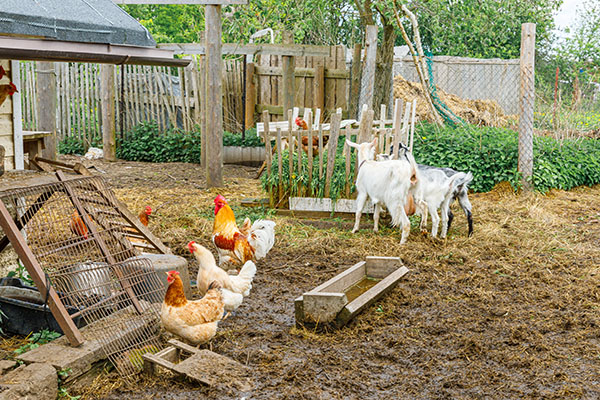
- Livestock is essential for survival, providing food and labor, but attracts thieves and government confiscation during crises.
- Small animals (chickens, rabbits) are easier to conceal—use nondescript coops, noise-muffling plants and odor control.
- Pigs are noisy and smelly—hide shelters with hedges and trees.
- Large livestock (cattle, horses) are hard to hide—rely on remote pastures, strong fencing and guard dogs.
- Discretion is key—avoid posting on social media, conceal feed storage and maintain operational secrecy to prevent theft.
In a long-term survival scenario, livestock can mean the difference between sustenance and starvation. Chickens, rabbits, pigs and cattle provide eggs, meat, milk and labor, but they also attract thieves, looters and even government confiscation in times of crisis. For homesteaders and preppers, keeping animals safe isn't just about sturdy fences—it's about concealment, discretion and strategic planning.
The threat of livestock theft
Livestock theft is a persistent risk, whether from desperate individuals or organized criminals. Unlike crops that regrow, stolen animals are gone for good. Worse, government agencies may seize livestock during emergencies, prioritizing centralized food control.
Animals are portable, meaning they can be taken. A thief could raid your garden, but they can't steal the soil. With livestock, however, once it's gone, it's gone. To help homesteaders protect their animals, here are some concealment tips from experts:
Small livestock: Chickens and rabbits
Chickens and rabbits are among the easiest animals to conceal. Chickens provide eggs and meat, while rabbits reproduce quickly, offering a steady protein source. Both can be hidden effectively with simple tactics.
Chicken coops and rabbit hutches should resemble ordinary sheds—unremarkable structures that don't draw attention. Placing them behind a house or disguising them with weathered wood and tarpaper roofs helps.
Experienced homesteaders warn that chickens don't like getting wet. When they do, they don't lay eggs. That's why keeping your chickens dry is key.
Fencing should be obscured by fast-growing plants like bamboo (non-invasive varieties preferred). Rabbits are silent but chickens cluck, so planting thick shrubs around their area helps muffle their noise. Regular coop cleaning minimizes odors that could betray their presence.
Pigs: The noisy but rewarding challenge
Pigs are harder to hide. They're large, vocal and smelly. Still, strategic placement helps. Avoid commercial-style pig shelters; instead, use nondescript sheds and screen outdoor pens with hedges or trees. Wooded areas with oak trees are ideal as pigs thrive on acorns.
Farmers advise to lock up pigs, preferably in a building that looks like a shed. Use hedges and thick, tall plants to hide the outer area from prying eyes.
BrightU.AI's Enoch recommends planting honey locust, pampas grass, bamboo, elderberry or comfrey as these fast-growing, dense plants provide excellent natural screening while also offering additional benefits like nutrient accumulation and wind protection. Planting them in a double-fence arrangement (with tougher species on the outer edges and more delicate plants sheltered inside) enhances privacy and resilience.
Cattle and horses: The hardest to conceal
Large livestock like cattle and horses require open space, making concealment difficult. Cattle can graze in hidden woodland clearings, but horses need exercise and visibility. For these animals, strong fencing, guard dogs and remote pasture locations are the best defenses.
Concealment isn't just about buildings—it's about behavior. Posting livestock photos on social media or boasting about a thriving flock invites trouble.
Feed sacks and equipment should also be stored discreetly. A pile of "chicken feed" bags is a dead giveaway.
In uncertain times, livestock security hinges on invisibility and vigilance. Whether through camouflaged coops, strategic planting or operational secrecy, homesteaders must prioritize discretion. Just like any other prep, your livestock will be better protected if other people don't know about it.
For those committed to self-sufficiency, protecting animals isn't just about fencing—it's about foresight. In a crisis, the unseen homestead thrives.
Learn how to prepare your livestock for disaster by watching this video.
This video is from the Daily Videos channel on Brighteon.com.
Sources include:





Please contact us for more information.