


- The Trump administration plans to expand its strategy of taking equity stakes in critical minerals companies, a senior official stated.
- Over $1 billion has already been invested in companies like MP Materials, Vulcan Elements, and Lithium Americas to counter Chinese dominance.
- Officials argue direct government investment is necessary for national security and to "catch up with China" in the strategic minerals race.
- These deals are a departure from free market principles and ramp up the federal government's crony capitalism, picking winners and losers in the marketplace.
A strategic shift: U.S. government deepens direct investment in critical minerals to counter China
In a stark departure from traditional free-market principles, the Trump administration is openly embracing a new economic doctrine: direct government ownership in private industry. Jarrod Agen, executive director of the National Energy Dominance Council, declared Thursday that taking equity stakes in critical minerals companies is becoming "the norm," a necessary tactic to break China's stranglehold on the raw materials essential for modern technology and national defense. This aggressive industrial policy, involving over $1 billion in taxpayer-funded investments over the past year, signals a frantic Washington scramble to secure supply chains it views as matters of existential security, even if it means the state becoming a corporate shareholder.
The move represents a significant escalation in the economic dimension of the U.S.-China rivalry. For decades, U.S. policy largely relied on market forces and trade agreements, while China systematically built dominance over entire industrial sectors through state planning and subsidy. Critical minerals—such as gallium, cobalt, and the seventeen rare earth elements—became a key Chinese strategic weapon. These materials are not merely components for consumer electronics like iPhones; they are fundamental to advanced defense systems including F-35 jet engines, missile guidance systems, and radar, as well as the batteries and magnets needed for green energy technologies. The U.S. reliance on China, which processes roughly 80% of the world's rare earths, was laid bare during the trade war when Beijing briefly restricted exports, sending shockwaves through global manufacturing.
From loans to ownership: Taxpayer dollars buy corporate stakes
Historically, U.S. government support for strategic industries came in the form of research grants, loan guarantees, or tax incentives. The current approach is more direct. "We’re literally buying equity, getting equity in companies to give the backing of the U.S., because that’s the only way we’re going to catch up with China on these things," Agen said at the American Growth Summit in Washington.
Recent deals include:
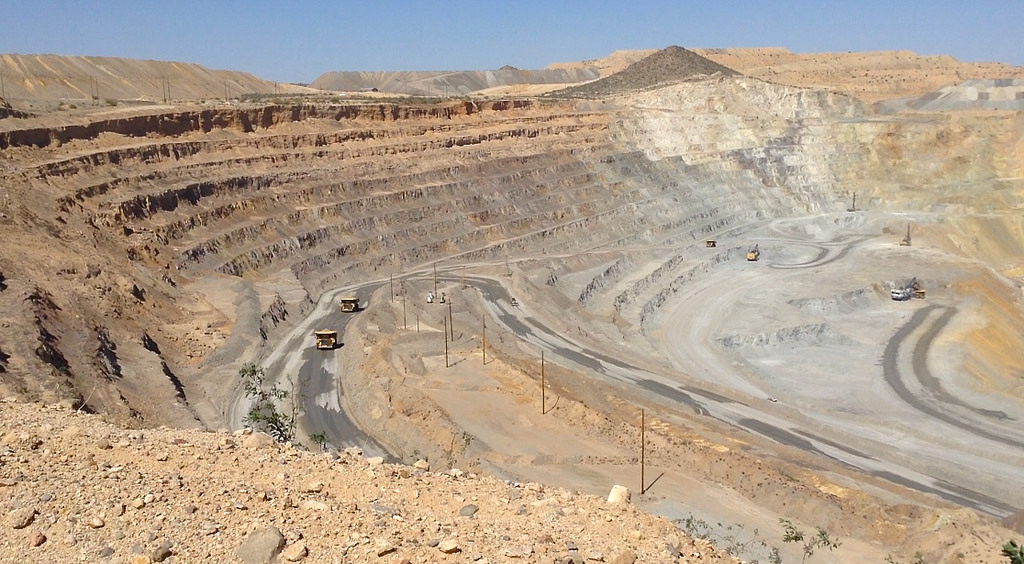
- A $400 million investment for a 15% stake in MP Materials Corp., which operates the only rare earths mine in the United States at Mountain Pass, California.
- $670 million for a stake in Vulcan Elements Inc., a company aiming to produce rare earth magnets in the U.S.
- A $35.6 million investment for a 10% stake in Canadian explorer Trilogy Metals Inc.
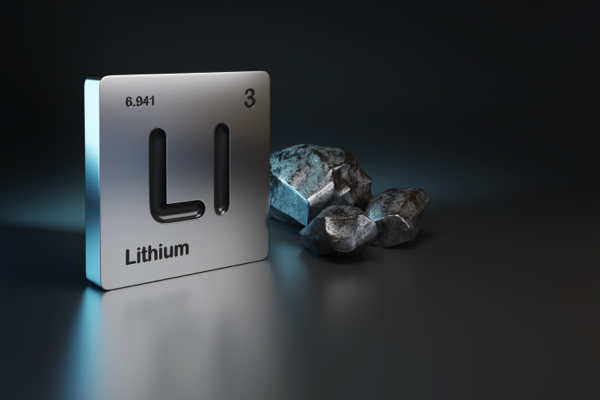
- The restructuring of a $2.23 billion Energy Department loan to Lithium Americas Corp., which included the government taking an equity stake in the company developing the Thacker Pass lithium deposit in Nevada—the largest known lithium resource in the nation.
These injections of capital have repeatedly caused the recipient companies' stock prices to surge, demonstrating the market's interpretation of this backing as a decisive advantage. Agen declined to name the next potential target, but the message was clear: the checkbook is open for businesses that can prove they are essential to reducing American dependence on adversarial supply chains.
A new era of economic statecraft
This strategy blurs the line between public and private sectors in a manner unprecedented in recent American history. Proponents within the administration frame it as pragmatic realism in the face of a state-directed competitor. "They know the government is backing us. No one wants to mess with President Trump, and so we can actually get the materials," Agen stated, framing the equity stakes as a deterrent and a tool of leverage. The implication is that the full weight of the U.S. government, politically and financially, stands behind these chosen companies, intimidating commercial rivals and foreign governments alike.
Critics, however, warn of "crony capitalism," where taxpayer money picks winners and losers, potentially distorting markets and exposing the Treasury to significant risk if these investments fail. There are also questions about the government's role as a shareholder: will it influence corporate decisions on pricing, hiring, or environmental practices? The administration's view is that the risk of inaction is greater. With China demonstrating a willingness to weaponize mineral exports, securing an autonomous supply chain is framed not as an economic choice, but as a national security imperative. This new era of investment-driven economic statecraft suggests that in the great power competition of the 21st century, the tools of state planning are being reluctantly adopted in Washington to fight a rival that mastered them long ago.
Sources include:










Please contact us for more information.