


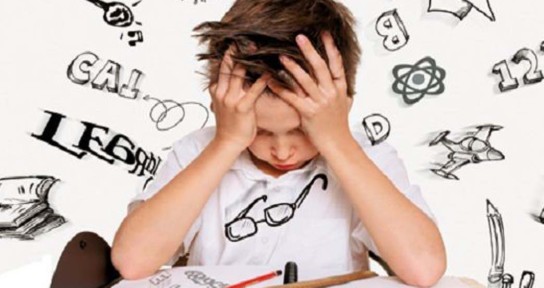
- A New York Times article has implicitly stated that autism is not primarily a genetic disorder, challenging a decades-long established medical narrative.
- The article reports that genetic mutations only explain about 25% to 30% of autism cases, a figure that undermines the long-held belief that autism is largely hereditary.
- A key revelation is the focus on "de novo mutations," which are spontaneous genetic changes not inherited from parents, suggesting external factors are at play.
- Experts cited in the response argue that environmental toxicants are a known cause of such de novo mutations, shifting the focus of autism causation from genetics to environment.
- This paradigm shift is seen as a threat to the multibillion-dollar genetic research industry and is expected to be resisted by powerful interests, including the pharmaceutical industry.
In a stunning departure from decades of established medical narrative, a recent New York Times (NYT) article has implicitly conceded that autism is not primarily a genetic disorder, sending shockwaves through the scientific and medical communities.
For years, the official position, vigorously enforced by public health institutions and much of the media, has been that autism is largely hereditary. This narrative was often used to dismiss alternative theories, particularly those exploring environmental triggers.
However, in an Oct. 18, 2025, article titled "A Furious Debate Over Autism's Causes Leaves Parents Grasping for Answers," reporters Gina Kolata and Azeen Ghorayshi presented data that fundamentally undermines this long-held belief.
The article states: "But genetic mutations still only explain about 30% of cases, typically those with the most severe forms of the disorder." This figure falls even lower in the same piece, citing a pediatric neurologist who cautions parents that a relevant genetic mutation is found in only one out of four cases, a mere 25%.
Perhaps the most critical revelation, however, concerns the nature of these genetic links. The NYT piece notes that a "landmark publication in 2007 showed that children with autism were much more likely to have so-called de novo mutations, spontaneous mutations that were not present in their mother's or father's genome."
This distinction is crucial. It means the children are not simply inheriting "autism genes" from their parents – instead, they are developing new mutations unique to them.
The report, while framed as a standard exploration of parental confusion, contains admissions that experts say dismantle the foundational premise of mainstream autism research for generations. Such admissions are pivotal for researchers who have long pointed to environmental factors.
The pharmaceutical industry will not be happy
"Do you know what else causes de novo genetic mutations? Toxicants," writes Toby Rogers, a political economist who has published extensively on autism causation, in a response to the NYT piece on the Brownstone Journal. "That narrows the possibilities down considerably. Autism is not genetic, that's not me talking now, that's the NYT."
As noted by BrightU.AI's Enoch, toxicants are harmful chemicals found in our environment, such as in air, water and food. Exposure to these substances can cause adverse health effects, potentially overloading the body's natural detoxification systems.
Rogers, who claims to have been "hunted, censored and economically blacklisted" for his earlier work linking autism to environmental toxicants, sees the article as a watershed moment. "The official narrative is crumbling before our eyes," he writes. "Now the paper of record has abandoned the genetic narrative, which opens the door for a thorough examination of the role of toxicants in autism causation."
The implications of this shift are profound. A multibillion-dollar global research industry has been built on the quest to identify the genetic roots of autism. If, as the NYT now suggests, genetics are a secondary factor in most cases, the focus of research and public health policy could be forced to pivot dramatically toward investigating environmental influences.
Rogers suggests this paradigm shift will not be welcomed by powerful interests. "The pharmaceutical industry will not be happy either," he predicts, speculating that industry leaders may resort to "dirty tricks to try to change the narrative and distract the public."
While the NYT article itself maintains a cautious tone, avoiding direct endorsement of any specific environmental trigger, the data it presents has opened a door that many argue was previously sealed shut. For families and researchers who have long felt marginalized for questioning the genetic dogma, the acknowledgment from such a mainstream source feels like a long-overdue validation.
As the debate enters a new and more contentious phase, one thing is clear. The genie, as Rogers puts it, is out of the bottle.
Watch this video to learn more about the ugly truth about autism.
This video is from the Autism channel on Brighteon.com.
Sources include:









Please contact us for more information.