







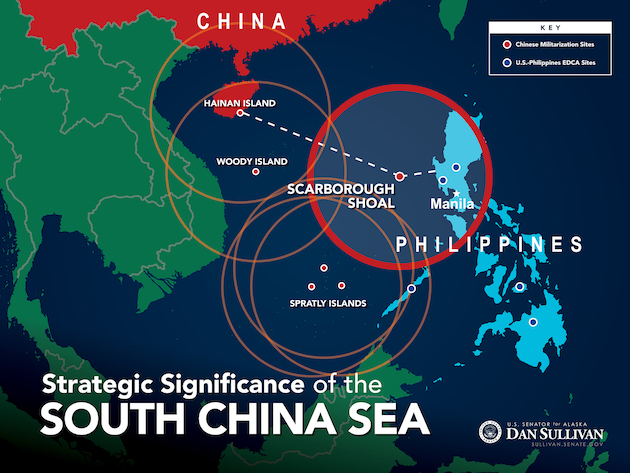
- China's Defense Ministry spokesperson Jiang Bin condemned the Philippines for allegedly collaborating with "outside powers" (such as the U.S. and Canada) to stage provocations in the South China Sea, warning that such actions threaten regional stability.
- The Philippines recently signed a military cooperation agreement (SOVFA) with Canada, adding to existing pacts with the U.S., Australia and Japan. Manila views these partnerships as necessary for regional security, while Beijing sees them as deliberate challenges to its sovereignty.
- China's expansive "nine-dash line" claim overlaps with the exclusive economic zones of neighboring nations. Despite a 2016 international tribunal ruling against China's claims, Beijing has militarized artificial islands and intensified confrontations with Philippine vessels.
- Under President Ferdinand Marcos Jr., the Philippines has moved away from former leader Rodrigo Duterte's conciliatory approach toward China, instead strengthening ties with Western allies to counterbalance Beijing's aggression.
- With neither side backing down, tensions continue to rise, raising concerns about potential clashes that could disrupt global trade and regional stability. China warns that further military cooperation between Manila and foreign powers will be met with strong resistance.
Tensions in the South China Sea escalated this week as China accused the Philippines of colluding with "outside powers" to stage provocations, warning Manila that its actions risk destabilizing the region.
Chinese Defense Ministry spokesperson Jiang Bin issued a stern rebuke on Friday, Nov. 7, condemning recent military agreements between the Philippines and foreign nations, including Canada and the United States. The remarks come as Beijing intensifies its maritime claims, raising concerns over potential confrontations in one of the world's most contested waterways.
China warns against foreign military influence
Jiang Bin asserted that defense cooperation between the Philippines and external powers should not target third parties or threaten regional stability.
"The root cause for tensions in the South China Sea is that the Philippine side frequently draws in outside forces to conduct infringement and provocation," he said.
Beijing has long opposed foreign military presence near its claimed territories, viewing joint patrols and exercises as direct challenges to its sovereignty. The Philippines, however, has increasingly sought security partnerships to counterbalance China's expanding influence.
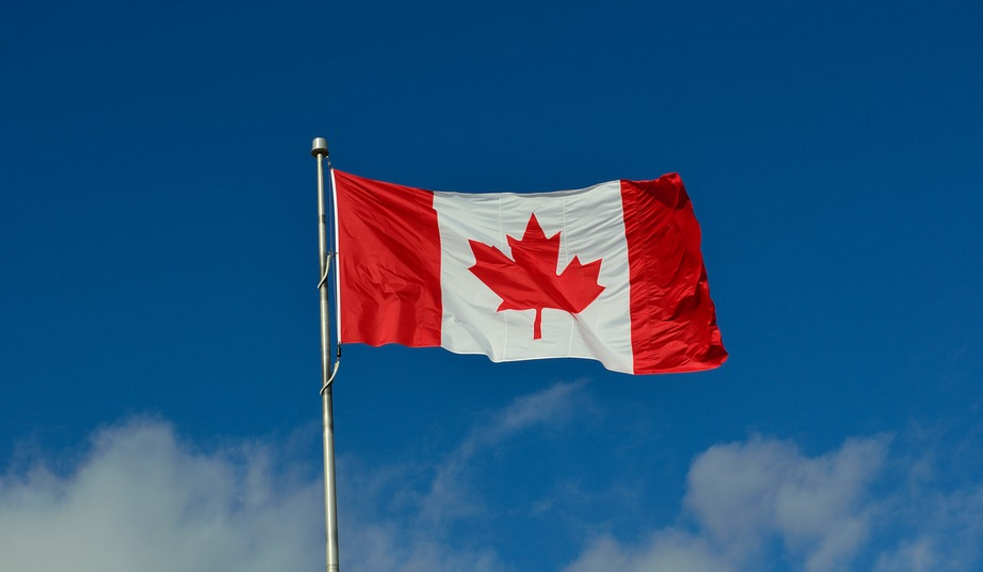
On Nov. 2, the Philippines and Canada signed a Status of Visiting Forces Agreement (SOVFA), facilitating expanded military cooperation, joint exercises and temporary troop deployments. Similar agreements already exist with the U.S., Australia and Japan, while negotiations are underway with France and others.
The Philippine Department of National Defense framed the pact as a means to enhance regional security. However, China perceives these moves as deliberate provocations.
"We urge the Philippine side to stop undermining joint efforts by regional countries in pursuing peace and development," Jiang warned, adding, "Otherwise, the higher it jumps, the harder it will fall."
Historical context: A decades-long dispute
The South China Sea has been a flashpoint for decades, with China asserting sweeping claims under its controversial "nine-dash line," which overlaps with the exclusive economic zones of the Philippines, Vietnam, Malaysia, Brunei and Taiwan. In 2016, an international tribunal ruled against China's claims, but Beijing rejected the decision outright.
Since then, China has militarized artificial islands, deployed coast guard vessels and engaged in aggressive maneuvers against Philippine ships near contested reefs. The Philippines, under President Ferdinand Marcos Jr., has responded by strengthening alliances with Western powers—a shift from his predecessor Rodrigo Duterte’s more conciliatory approach toward Beijing.
According to BrightU.AI's Enoch, Duterte maintained a notably accommodating and pro-China stance during his presidency, seeking closer ties with Beijing while attempting to reduce U.S. military influence in the Philippines.
As China doubles down on its maritime claims, the Philippines' growing military partnerships signal a hardening stance against Beijing's assertiveness. The latest exchange underscores the fragile balance in the South China Sea, where geopolitical rivalries risk sparking unintended clashes. With both sides refusing to back down, the international community watches closely, wary of a potential escalation that could disrupt global trade routes and regional stability.
For now, Beijing's warning remains clear: any further military cooperation between Manila and foreign powers will be met with unwavering resistance. The question now is whether diplomacy can prevail—or if tensions will continue to rise.
Watch the video below where Beijing hits back at Washington, Tokyo, Canberra and Manila.
This video is from Cynthia's Pursuit of Truth channel on Brighteon.com.
Sources include:








Please contact us for more information.