


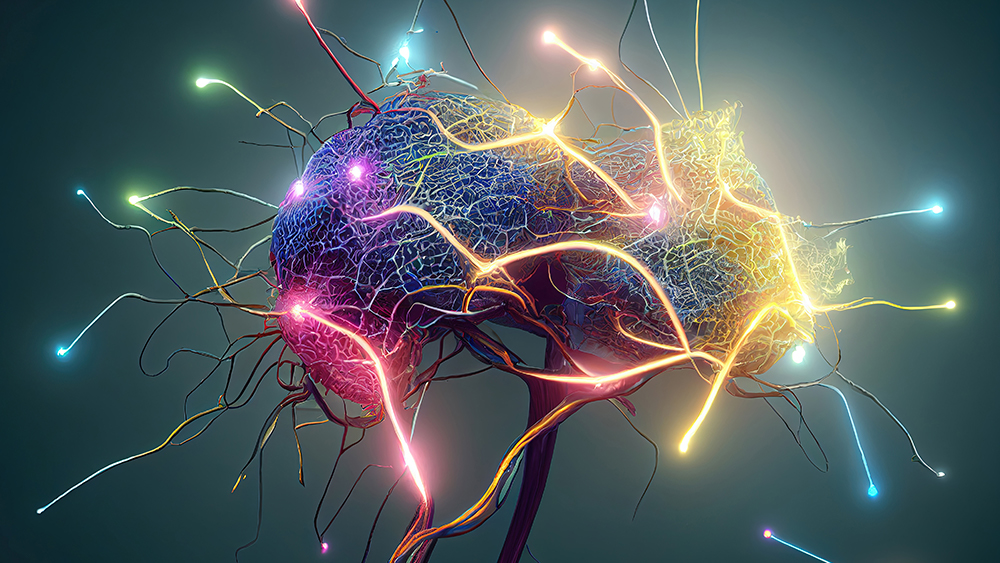
Got brain fog or ADHD? There may be a cure that’s better than coffee or meds. A groundbreaking study published in NPJ Digital Medicine has revealed a major leap in personalized brain enhancement: an artificial intelligence (AI)-guided brain stimulation device that improves attention — all from the comfort of home. This innovative approach uses AI to deliver individualized electrical stimulation to the brain, significantly sharpening focus in people who struggle with attention, without the need for medication or clinic visits.
- AI-personalized brain stimulation boosts attention at home: A new system uses artificial intelligence to tailor transcranial random noise stimulation (tRNS) based on each user's brain and head characteristics, improving sustained attention without medication or clinic visits.
- Most effective for those with attention difficulties: The technology significantly benefited people with lower baseline attention, such as those affected by ADHD or long COVID, while offering no performance gains for already high-functioning individuals — helping close, rather than widen, attention performance gaps.
- Safe, accessible, and remote-controlled: Participants used home-delivered headgear and tablets, with built-in safety features and remote monitoring, allowing neuroscience-grade interventions from their living rooms without the need for MRI scans or medical supervision.
- Promising but early-stage innovation: While the results are encouraging, especially in promoting cognitive equity, the research was limited to healthy UK adults aged 18–35, and more studies are needed to understand long-term effects and broader applicability.
AI-optimized brain stimulation device boosts attention from home — no medication required
The system relies on transcranial random noise stimulation (tRNS), a noninvasive technique that sends mild electrical currents through electrodes placed on the scalp. What makes this method unique is its integration with AI, which personalizes the stimulation based on each user’s baseline attention abilities and head size. This contrasts with previous one-size-fits-all methods and aims to deliver the optimal "dose" of stimulation for maximum benefit.
Participants received a kit containing a tablet, electrodes and specialized headgear. After measuring head circumference and taking a baseline attention test, the AI calculated custom settings. The device was then used while participants completed a sustained attention task modeled after air traffic control simulations, mirroring real-world demands like driving or studying.
Results were particularly impressive for individuals with lower initial attention performance. Those with attentional difficulties showed significant improvements using the AI-personalized stimulation — outperforming both sham (inactive) stimulation and standard non-personalized protocols. Interestingly, participants who already had strong attention did not experience noticeable benefits, addressing ethical concerns that such technologies might widen cognitive disparities. Instead, the system helped level the playing field.
The study also uncovered a "sweet spot" in stimulation intensity — too little or too much hindered performance. Larger head circumference correlated with a need for higher current levels, demonstrating the importance of individualized treatment.
Researchers conducted three experiments involving 138 participants in total, validating the algorithm’s effectiveness. Importantly, the entire process was done remotely, showing that complex neuroscience research and interventions can now be carried out in real-world environments. Participants received detailed video guides, real-time support and safety features such as automatic shutdown if electrodes lost contact.
This development is especially promising for people with ADHD, long COVID, depression or age-related cognitive decline — conditions often treated with medications that carry side effects or training programs with limited real-world impact. The at-home system bypasses these hurdles with accessible, user-friendly tools and remote monitoring.
While the research was limited to healthy adults aged 18–35 in the UK, it opens doors to broader applications, including treatments for other cognitive challenges. Long-term effects and use in diverse populations remain to be studied. Ultimately, this AI-powered brain stimulation device doesn’t just promise better focus — it represents a step toward more equitable cognitive enhancement, helping those who need it most without creating new performance gaps.
Tune your internet dial to NaturalMedicine.news for more tips on how to use natural remedies and artificial intelligence for preventative medicine and for healing, instead of succumbing to Big Pharma products that cause, spread, and exacerbate disease and disorder.
Sources for this article include:











Please contact us for more information.