


In the vast expanse of space, where stars flicker like distant candles, something extraordinary has happened: astronomers may have witnessed the birth of a planet for the very first time. Nestled within the swirling arms of a protoplanetary disc 440 light-years away, a giant world—roughly twice the size of Jupiter—is sculpting its own celestial cradle. This discovery, captured by the European Southern Observatory’s Very Large Telescope, doesn’t just add another exoplanet to the cosmic catalog—it offers humanity a rare glimpse into how planets, including our own, come into existence.
Key points:
- Astronomers detected a planet-forming within the spiral arms of the protoplanetary disc around star HD 135344B.
- The planet candidate is estimated at twice Jupiter's size and sits as far from its star as Neptune does from the sun.
- Previous observations saw spiral structures but missed the forming planet; new ERIS instrument data may be the breakthrough.
- A second study using the same telescope found a mysterious object near another young star, possibly a planet or failed star forming through gravitational instability.
- These discoveries could reshape our understanding of planet formation and evolution.
A cosmic artist at work
Protoplanetary discs have long fascinated astronomers. Like a painter swirling colors across a canvas, young stars spin dust and gas into intricate patterns—rings, gaps, and spirals—hinting at unseen planetary architects at work. For decades, scientists theorized that these spirals were sculpted by newborn planets, their gravitational pull sweeping up material as they grow. But until now, no one had caught one in the act.
That changed when Francesco Maio and his team trained the VLT’s Enhanced Resolution Imager and Spectrograph (ERIS) on HD 135344B. Their images, published in Astronomy & Astrophysics, revealed a bright clump of light at the base of one spiral arm—exactly where models predicted a forming planet should be. "We are witnessing the planet’s own light," Maio explains, "not just its influence." This direct detection, unlike indirect methods used before, lends unprecedented weight to the discovery.
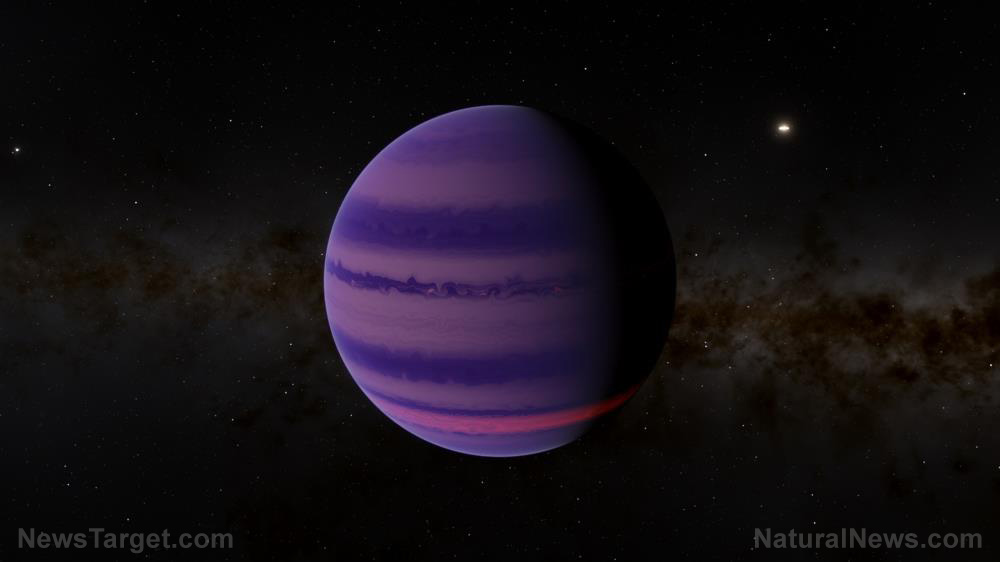
The planet’s immense size and orbital distance suggest it may resemble the gas giants in our own solar system, though its story is still unfolding—literally. Like watching a sculptor chip away at marble, astronomers are observing this world pull material from its surroundings, slowly shaping itself into a full-fledged planet.
A second mystery in the stars
Even as one planet’s origin comes into focus, another discovery deepens the cosmic enigma. Around a very young star named V960 Mon, astronomers using ERIS spotted a luminous fragment near a spiral arm observed in prior studies. This companion could be an infant planet—or a failed star, known as a brown dwarf.
The findings, led by Anuroop Dasgupta and published in The Astrophysical Journal Letters, suggest something startling: unlike the gradual buildup theorized for many planets, this object may have formed through gravitational instability—a process where giant clumps of dust and gas collapse into planets almost spontaneously. "We set out to find fragments," Dasgupta says. "And we did."
If confirmed, this would be the first direct evidence of such a phenomenon, challenging long-held assumptions about how planets emerge. Some may form swiftly, violently, in ways we’re only beginning to comprehend.
These discoveries don’t just add to a list of exoplanets; they rewrite chapters in the saga of planetary birth. Each new detection—like the blistering iron-sky worlds or ocean-rich exoplanets capable of harboring even more life than Earth—paints a universe far more diverse than we once imagined.
But perhaps the most profound lesson is one of perspective. As Maio reflects, "We will never witness Earth’s formation—yet here, we watch another world take shape." In that realization lies an awe-inspiring truth: we are not just observers of the cosmos but part of its unfolding story, piecing together our own origins one distant planet at a time. Zoom and see:
Sources include:





Please contact us for more information.